Shaffer Jeffrey G, Mather Frances J, Wele Mamadou, Li Jian, Tangara Cheick Oumar, Kassogue Yaya, Srivastav Sudesh K, Thiero Oumar, Diakite Mahamadou, Sangare Modibo, Dabitao Djeneba, Toure Mahamoudou, Djimde Abdoulaye A, Traore Sekou, Diakite Brehima, Coulibaly Mamadou B, Liu Yaozhong, Lacey Michelle, Lefante John J, Koita Ousmane, Schieffelin John S, Krogstad Donald J, Doumbia Seydou O
Department of Global Biostatistics and Data Science, Tulane University School of Public Health and Tropical Medicine, New Orleans, LA, United States.
Faculty of Medicine and Odontostomatology, University of Sciences, Techniques and Technologies of Bamako, Bamako, Mali.
Front Genet. 2019 Apr 12;10:331. doi: 10.3389/fgene.2019.00331. eCollection 2019.
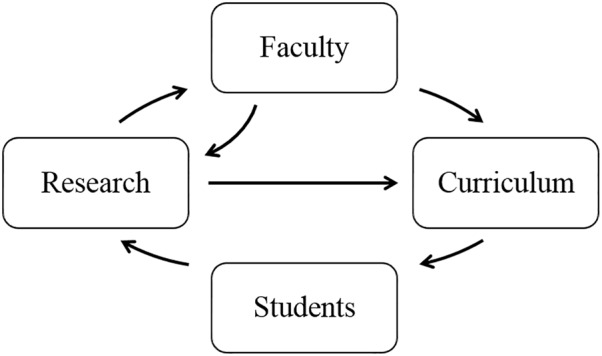
Bioinformatics and data science research have boundless potential across Africa due to its high levels of genetic diversity and disproportionate burden of infectious diseases, including malaria, tuberculosis, HIV and AIDS, Ebola virus disease, and Lassa fever. This work lays out an incremental approach for reaching underserved countries in bioinformatics and data science research through a progression of capacity building, training, and research efforts. Two global health informatics training programs sponsored by the Fogarty International Center (FIC) were carried out at the University of Sciences, Techniques and Technologies of Bamako, Mali (USTTB) between 1999 and 2011. Together with capacity building efforts through the West Africa International Centers of Excellence in Malaria Research (ICEMR), this progress laid the groundwork for a bioinformatics and data science training program launched at USTTB as part of the Human Heredity and Health in Africa (H3Africa) initiative. Prior to the global health informatics training, its trainees published first or second authorship and third or higher authorship manuscripts at rates of 0.40 and 0.10 per year, respectively. Following the training, these rates increased to 0.70 and 1.23 per year, respectively, which was a statistically significant increase ( < 0.001). The bioinformatics and data science training program at USTTB commenced in 2017 focusing on student, faculty, and curriculum tiers of enhancement. The program's sustainable measures included institutional support for core elements, university tuition and fees, resource sharing and coordination with local research projects and companion training programs, increased student and faculty publication rates, and increased research proposal submissions. Challenges reliance of high-speed bandwidth availability on short-term funding, lack of a discounted software portal for basic software applications, protracted application processes for United States visas, lack of industry job positions, and low publication rates in the areas of bioinformatics and data science. Long-term, incremental processes are necessary for engaging historically underserved countries in bioinformatics and data science research. The multi-tiered enhancement approach laid out here provides a platform for generating bioinformatics and data science technicians, teachers, researchers, and program managers. Increased literature on bioinformatics and data science training approaches and progress is needed to provide a framework for establishing benchmarks on the topics.
由于非洲存在高度的遗传多样性以及诸如疟疾、结核病、艾滋病毒和艾滋病、埃博拉病毒病和拉沙热等传染病的不成比例负担,生物信息学和数据科学研究在非洲具有无限潜力。这项工作提出了一种渐进式方法,通过一系列能力建设、培训和研究努力,让生物信息学和数据科学研究覆盖那些服务不足的国家。1999年至2011年期间,由福格蒂国际中心(FIC)赞助的两个全球健康信息学培训项目在马里巴马科的科学、技术与工艺大学(USTTB)开展。连同通过西非疟疾研究国际卓越中心(ICEMR)所做的能力建设努力,这一进展为USTTB发起的生物信息学和数据科学培训项目奠定了基础,该项目是非洲人类遗传与健康(H3Africa)倡议的一部分。在全球健康信息学培训之前,其学员每年以第一或第二作者身份发表论文的比率为0.40,以第三或更高作者身份发表论文的比率为0.10。培训之后,这些比率分别增至每年0.70和1.23,这是具有统计学显著性的增长(<0.001)。USTTB的生物信息学和数据科学培训项目于2017年启动,重点是学生、教师和课程层面的提升。该项目的可持续措施包括机构对核心要素的支持、大学学费、资源共享以及与当地研究项目和配套培训项目的协调、学生和教师发表率的提高以及研究提案提交数量的增加。面临的挑战包括高速带宽可用性依赖短期资金、缺乏针对基础软件应用的折扣软件门户、美国签证申请流程冗长、缺乏行业工作岗位以及生物信息学和数据科学领域的发表率较低。长期的渐进式过程对于让历史上服务不足的国家参与生物信息学和数据科学研究而言是必要的。这里提出的多层次提升方法为培养生物信息学和数据科学技术人员、教师、研究人员和项目管理人员提供了一个平台。需要增加关于生物信息学和数据科学培训方法及进展的文献,以便为确立这些主题的基准提供一个框架。