Department of Orthopaedic Surgery, Leiden University Medical Center, Leiden, The Netherlands.
PLoS One. 2013;8(4):e59500. doi: 10.1371/journal.pone.0059500. Epub 2013 Apr 3.
Although Total Hip and Knee Replacements (THR/TKR) improve Health-Related Quality of Life (HRQoL) at the group level, up to 30% of patients are dissatisfied after surgery due to unfulfilled expectations. We aimed to assess whether the pre-operative radiographic severity of osteoarthritis (OA) is related to the improvement in HRQoL after THR or TKR, both at the population and individual level.
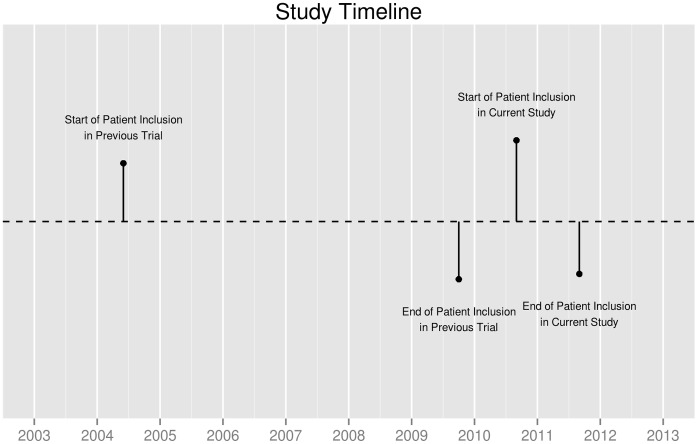
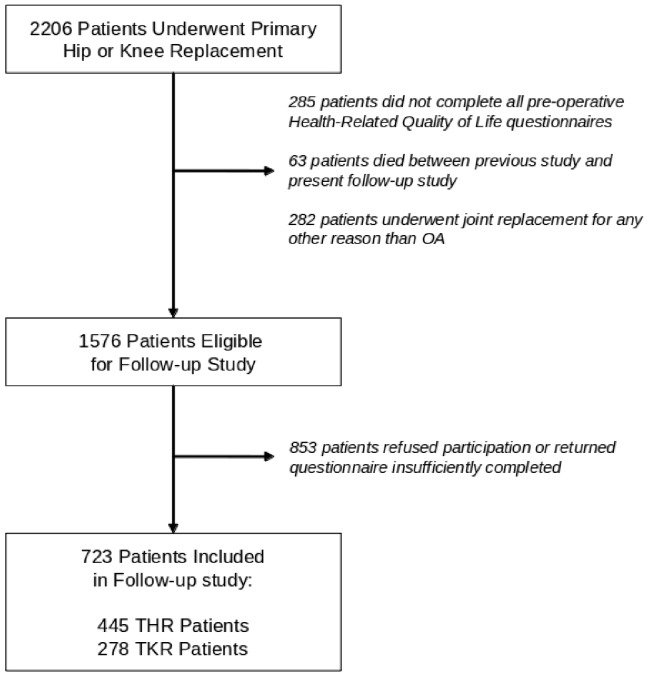
In this multi-center observational cohort study, HRQoL of OA patients requiring THR or TKR was measured 2 weeks before surgery and at 2-5 years follow-up, using the Short-Form 36 (SF36). Additionally, we measured patient satisfaction on a 11-point Numeric Rating Scale (NRSS). The radiographic severity of OA was classified according to Kellgren and Lawrence (KL) by an independent experienced musculoskeletal radiologist, blinded for the outcome. We compared the mean improvement and probability of a relevant improvement (defined as a patients change score ≥ Minimal Clinically Important Difference) between patients with mild OA (KL Grade 0-2) and severe OA (KL Grade 3+4), whilst adjusting for confounders.
Severe OA patients improved more and had a higher probability of a relevant improvement in physical functioning after both THR and TKR. For TKR patients with severe OA, larger improvements were found in General Health, Vitality and the Physical Component Summary Scale. The mean NRSS was also higher in severe OA TKR patients.
Patients with severe OA have a better prognosis after THR and TKR than patients with mild OA. These findings might help to prevent dissatisfaction after THR and TKR by means of patient selection or expectation management.
尽管全髋关节和膝关节置换术(THR/TKR)可改善整体健康相关生活质量(HRQoL),但仍有 30%的患者因期望未得到满足而对手术结果不满意。我们旨在评估术前骨关节炎(OA)的放射学严重程度是否与 THR 或 TKR 后 HRQoL 的改善相关,分别从人群和个体水平进行评估。
在这项多中心观察性队列研究中,使用 36 项简短健康调查量表(SF36),在 THR 或 TKR 术前 2 周和术后 2-5 年随访时,测量 OA 患者的 HRQoL。此外,我们还使用 11 点数字评分量表(NRSS)测量了患者满意度。由一位独立的经验丰富的肌肉骨骼放射科医生根据 Kellgren 和 Lawrence(KL)分类法对 OA 的放射学严重程度进行分类,结果对医生设盲。我们比较了轻度 OA(KL 分级 0-2)和重度 OA(KL 分级 3+4)患者之间的平均改善和相关改善(定义为患者的变化评分≥最小临床重要差异)的可能性,同时调整了混杂因素。
在 THR 和 TKR 后,严重 OA 患者的身体机能改善更多,且有相关改善的可能性更高。对于重度 OA 的 TKR 患者,一般健康、活力和生理成分综合评分的改善更大。重度 OA 的 TKR 患者的 NRSS 均值也更高。
与轻度 OA 患者相比,重度 OA 患者在 THR 和 TKR 后有更好的预后。这些发现可能有助于通过患者选择或期望管理来预防 THR 和 TKR 后的不满。