Institute of Biology, Leiden University, Leiden RA, the Netherlands.
BMC Genomics. 2013 Apr 15;14:255. doi: 10.1186/1471-2164-14-255.
Staphylococcus epidermidis bacteria are a major cause of biomaterial-associated infections in modern medicine. Yet there is little known about the host responses against this normally innocent bacterium in the context of infection of biomaterials. In order to better understand the factors involved in this process, a whole animal model with high throughput screening possibilities and markers for studying the host response to S. epidermidis infection are required.
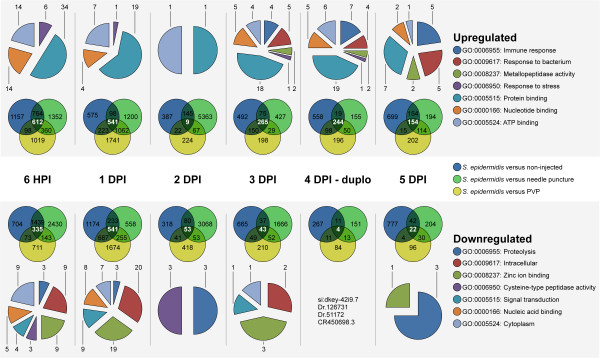
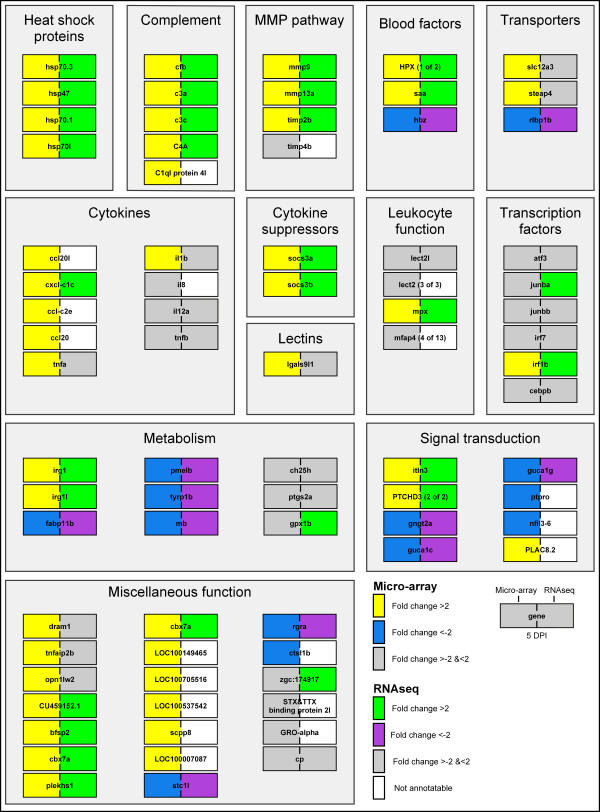
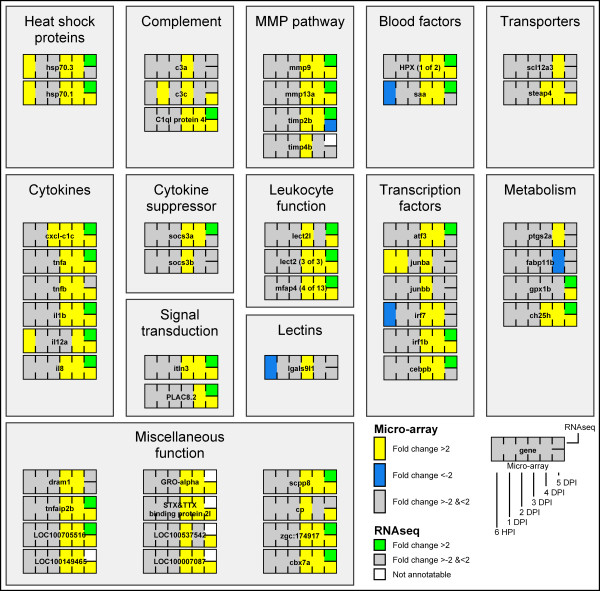
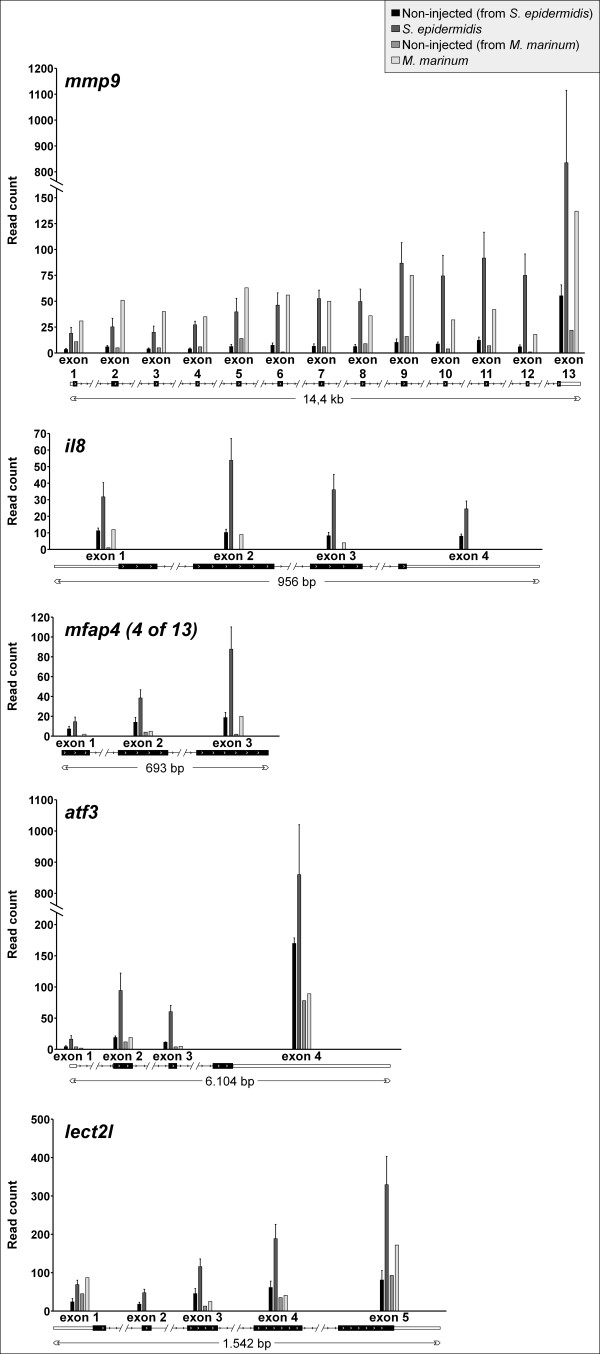
We have used a zebrafish yolk injection system to study bacterial proliferation and the host response in a time course experiment of S. epidermidis infection. By combining an automated microinjection system with complex object parametric analysis and sorting (COPAS) technology we have quantified bacterial proliferation. This system was used together with transcriptome analysis at several time points during the infection period. We show that bacterial colony forming unit (CFU) counting can be replaced by high throughput flow-based fluorescence analysis of embryos enabling high throughput readout. Comparison of the host transcriptome response to S. epidermidis and Mycobacterium marinum infection in the same system showed that M. marinum has a far stronger effect on host gene regulation than S. epidermidis. However, multiple genes responded differently to S. epidermidis infection than to M. marinum, including a cell adhesion gene linked to specific infection by staphylococci in mammals.
Our zebrafish embryo infection model allowed (i) quantitative assessment of bacterial proliferation, (ii) identification of zebrafish genes serving as markers for infection with the opportunistic pathogen S. epidermidis, and (iii) comparison of the transcriptome response of infection with S. epidermidis and with the pathogen M. marinum. As a result we have identified markers that can be used to distinguish common and specific responses to S. epidermidis. These markers enable the future integration of our high throughput screening technology with functional analyses of immune response genes and immune modulating factors.
表皮葡萄球菌是现代医学中生物材料相关感染的主要原因。然而,在生物材料感染的情况下,人们对这种通常无害的细菌的宿主反应知之甚少。为了更好地了解这一过程中涉及的因素,需要一种具有高通量筛选可能性和研究宿主对表皮葡萄球菌感染反应的标记物的全动物模型。
我们使用斑马鱼卵黄注射系统来研究表皮葡萄球菌感染的时间过程中的细菌增殖和宿主反应。通过将自动微注射系统与复杂对象参数分析和分类(COPAS)技术相结合,我们对细菌增殖进行了量化。该系统与感染期间几个时间点的转录组分析一起使用。我们表明,细菌集落形成单位(CFU)计数可以通过基于高通量荧光分析的胚胎高速流式细胞术来替代,从而实现高通量读数。在相同系统中比较表皮葡萄球菌和海洋分枝杆菌感染的宿主转录组反应表明,海洋分枝杆菌对宿主基因调控的影响远大于表皮葡萄球菌。然而,与海洋分枝杆菌感染相比,多个基因对表皮葡萄球菌感染的反应不同,包括与哺乳动物中葡萄球菌特定感染相关的细胞黏附基因。
我们的斑马鱼胚胎感染模型允许(i)定量评估细菌增殖,(ii)鉴定作为表皮葡萄球菌机会性病原体感染标志物的斑马鱼基因,以及(iii)比较表皮葡萄球菌和病原体分枝杆菌感染的转录组反应。结果,我们确定了可用于区分表皮葡萄球菌的常见和特定反应的标记物。这些标记物使我们能够将我们的高通量筛选技术与免疫反应基因和免疫调节因子的功能分析相结合。