Department of Biological Sciences, Purdue University, West Lafayette, Indiana, United States of America.
PLoS Pathog. 2013;9(4):e1003290. doi: 10.1371/journal.ppat.1003290. Epub 2013 Apr 4.
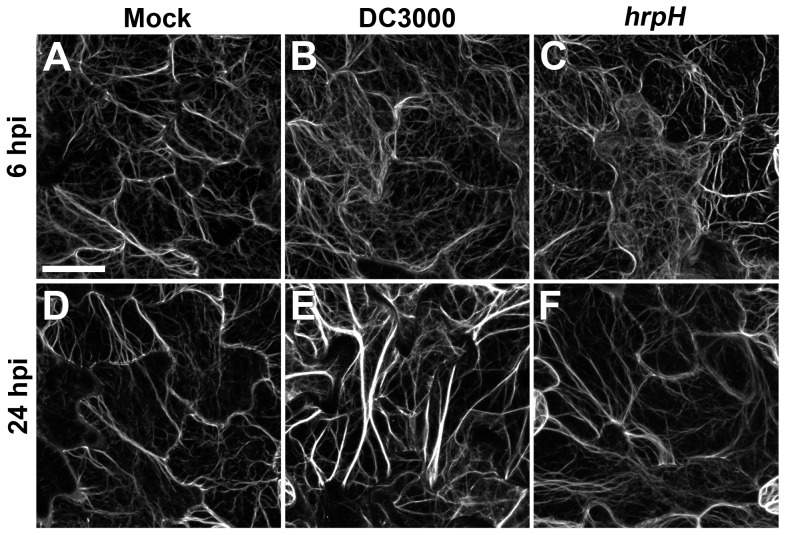
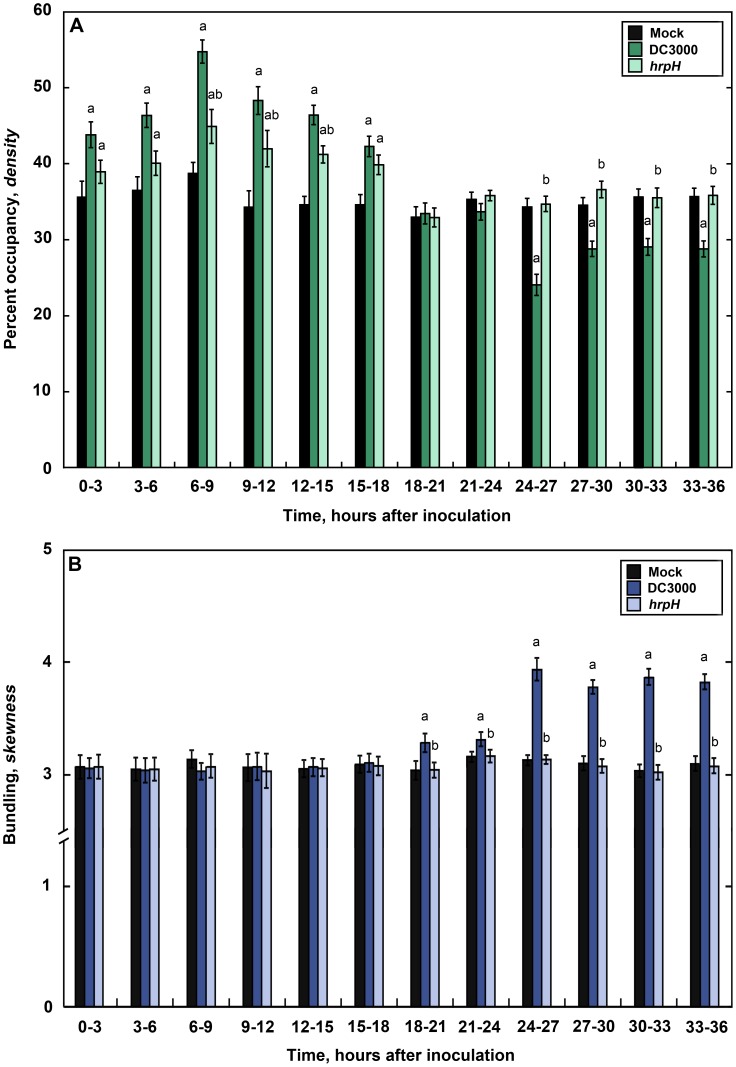
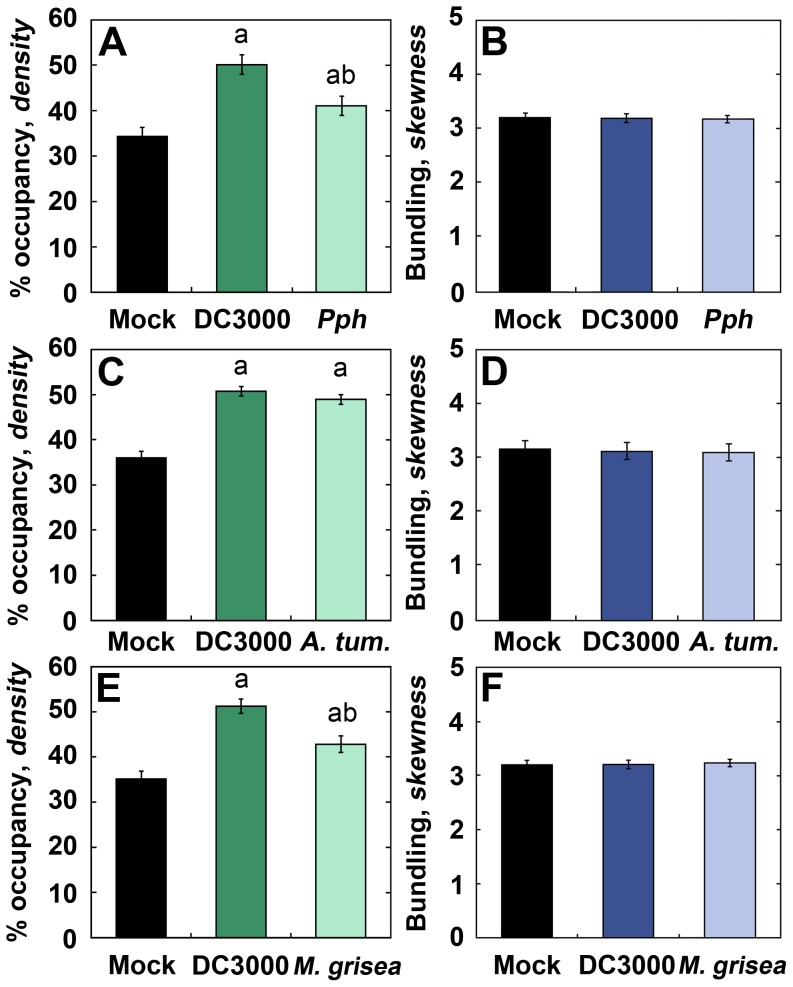
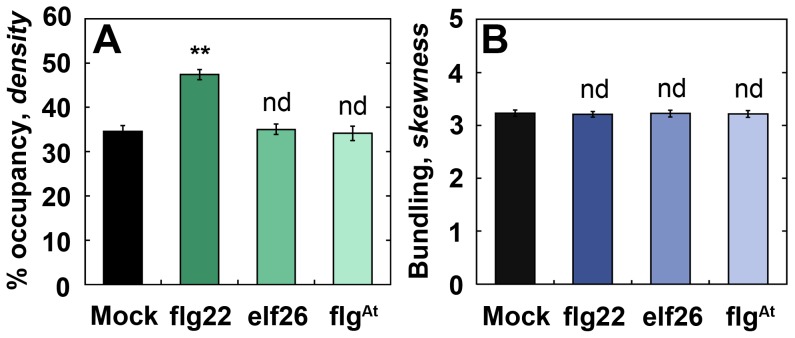
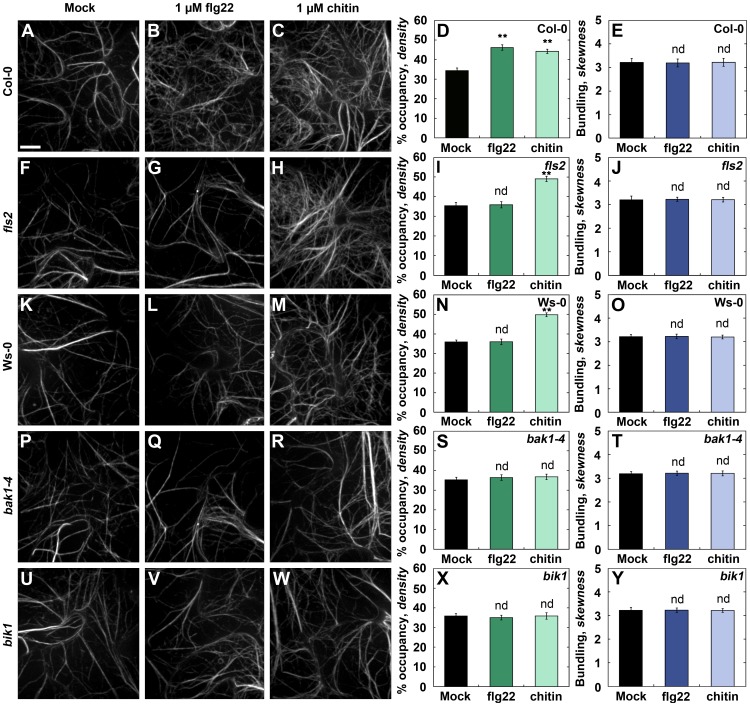
Plants are constantly exposed to a large and diverse array of microbes; however, most plants are immune to the majority of potential invaders and susceptible to only a small subset of pathogens. The cytoskeleton comprises a dynamic intracellular framework that responds rapidly to biotic stresses and supports numerous fundamental cellular processes including vesicle trafficking, endocytosis and the spatial distribution of organelles and protein complexes. For years, the actin cytoskeleton has been assumed to play a role in plant innate immunity against fungi and oomycetes, based largely on static images and pharmacological studies. To date, however, there is little evidence that the host-cell actin cytoskeleton participates in responses to phytopathogenic bacteria. Here, we quantified the spatiotemporal changes in host-cell cytoskeletal architecture during the immune response to pathogenic and non-pathogenic strains of Pseudomonas syringae pv. tomato DC3000. Two distinct changes to host cytoskeletal arrays were observed that correspond to distinct phases of plant-bacterial interactions i.e. the perception of microbe-associated molecular patterns (MAMPs) during pattern-triggered immunity (PTI) and perturbations by effector proteins during effector-triggered susceptibility (ETS). We demonstrate that an immediate increase in actin filament abundance is a conserved and novel component of PTI. Notably, treatment of leaves with a MAMP peptide mimic was sufficient to elicit a rapid change in actin organization in epidermal cells, and this actin response required the host-cell MAMP receptor kinase complex, including FLS2, BAK1 and BIK1. Finally, we found that actin polymerization is necessary for the increase in actin filament density and that blocking this increase with the actin-disrupting drug latrunculin B leads to enhanced susceptibility of host plants to pathogenic and non-pathogenic bacteria.
植物经常暴露于大量多样的微生物中;然而,大多数植物对大多数潜在的入侵者具有免疫力,而只对一小部分病原体敏感。细胞骨架由一个动态的细胞内框架组成,它可以快速响应生物胁迫,并支持许多基本的细胞过程,包括囊泡运输、内吞作用以及细胞器和蛋白质复合物的空间分布。多年来,基于静态图像和药理学研究,肌动蛋白细胞骨架被认为在植物对真菌和卵菌的先天免疫中发挥作用。然而,迄今为止,几乎没有证据表明宿主细胞肌动蛋白细胞骨架参与对植物病原菌细菌的反应。在这里,我们量化了在对番茄丁香假单胞菌 pv 的致病性和非致病性菌株的免疫反应过程中宿主细胞细胞骨架结构的时空变化。观察到宿主细胞骨架排列发生了两种截然不同的变化,这与植物-细菌相互作用的两个不同阶段相对应,即模式触发免疫(PTI)期间对微生物相关分子模式(MAMPs)的感知,以及效应蛋白在效应触发易感性(ETS)期间对效应蛋白的干扰。我们证明,肌动蛋白丝丰度的立即增加是 PTI 的一个保守和新的组成部分。值得注意的是,用 MAMP 肽模拟物处理叶片足以引起表皮细胞中肌动蛋白组织的快速变化,并且这种肌动蛋白反应需要宿主细胞 MAMP 受体激酶复合物,包括 FLS2、BAK1 和 BIK1。最后,我们发现肌动蛋白聚合是增加肌动蛋白丝密度的必要条件,并且用肌动蛋白破坏药物 latrunculin B 阻断这种增加会导致宿主植物对致病性和非致病性细菌的敏感性增加。