Institute for Robotics and Cognitive Systems, University of Lübeck, Lübeck, Germany.
PLoS One. 2013 Apr 11;8(4):e60358. doi: 10.1371/journal.pone.0060358. Print 2013.
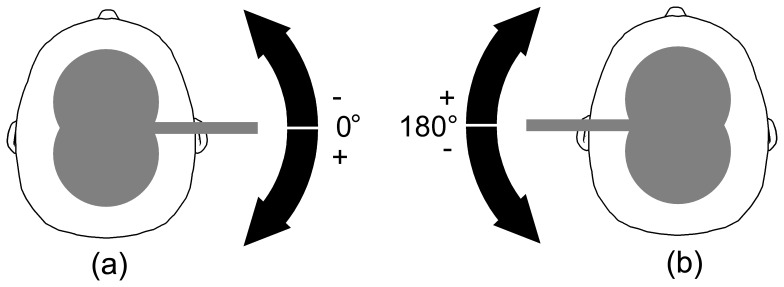
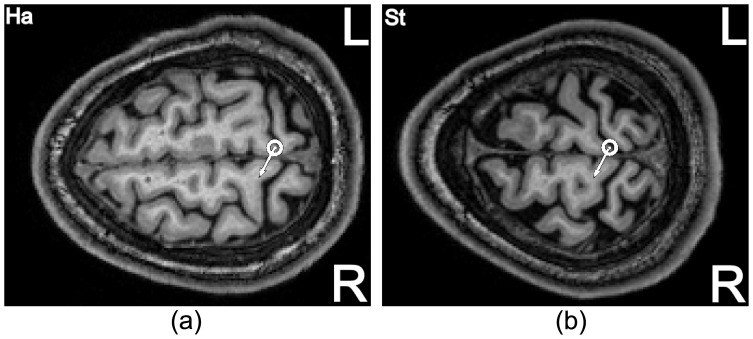
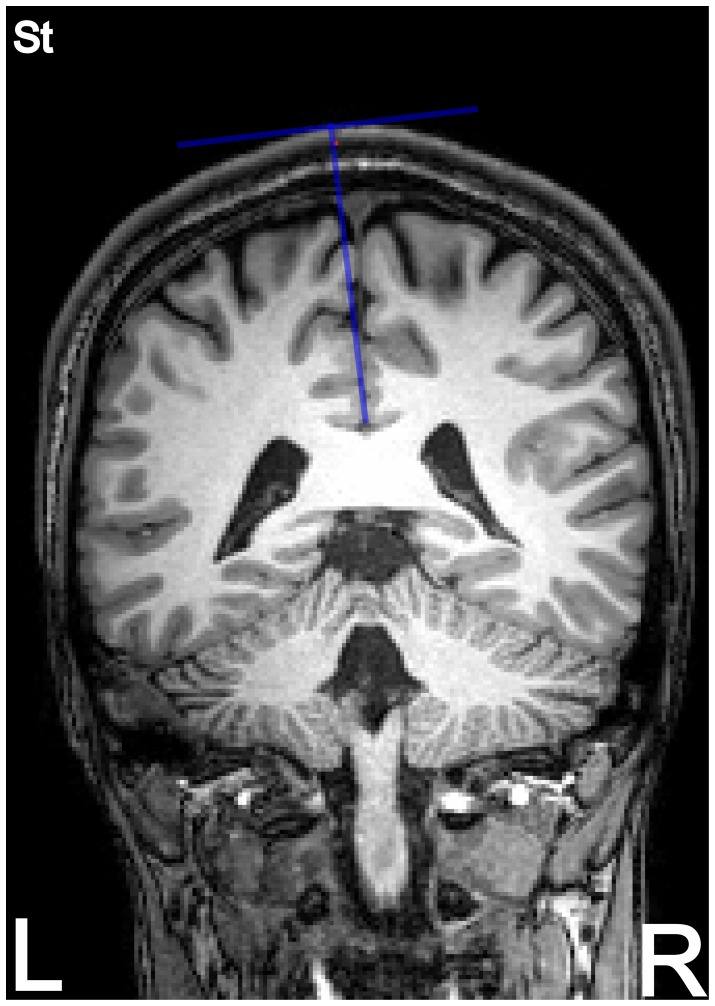
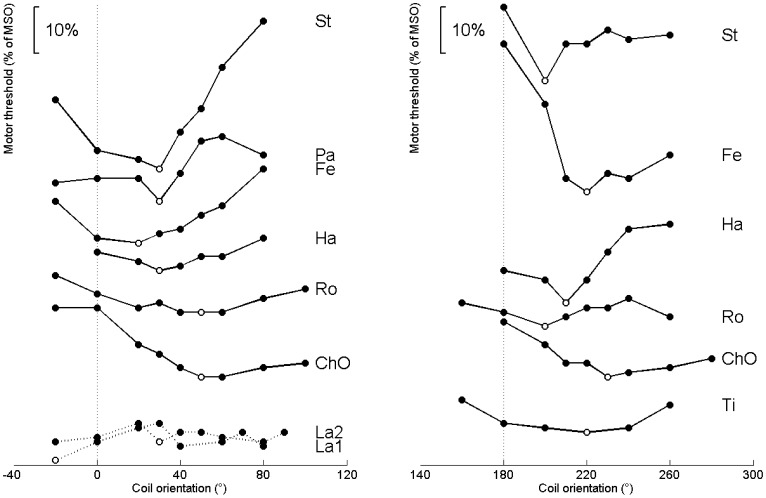
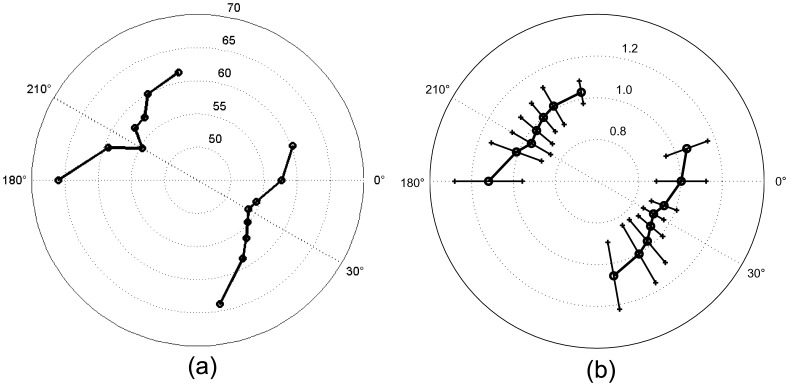
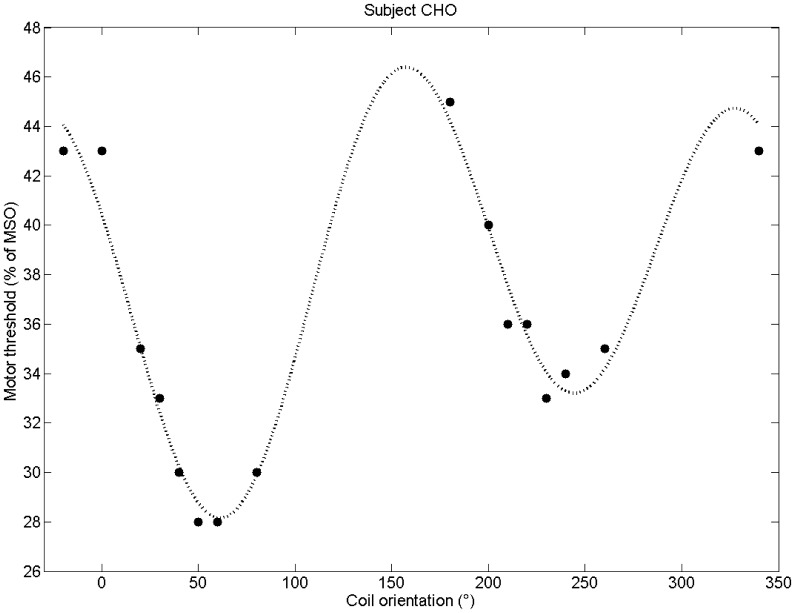
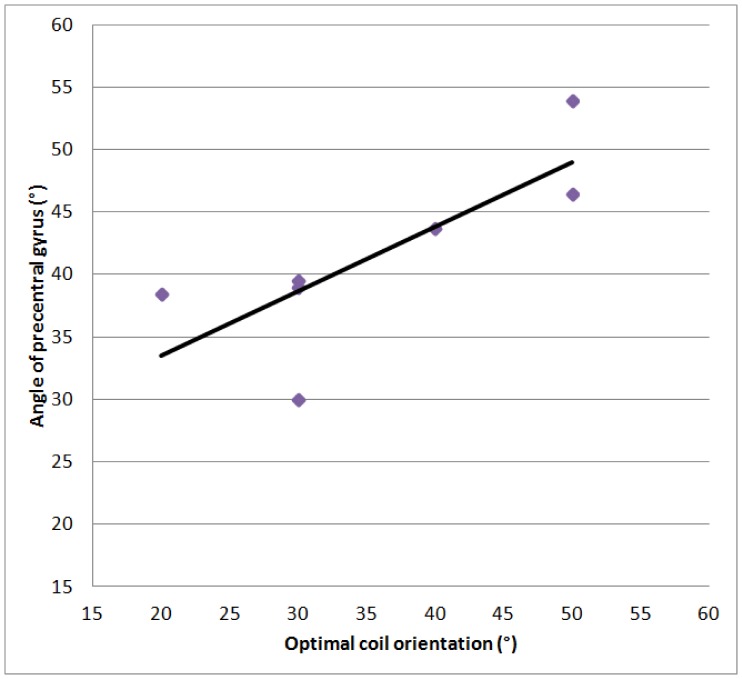
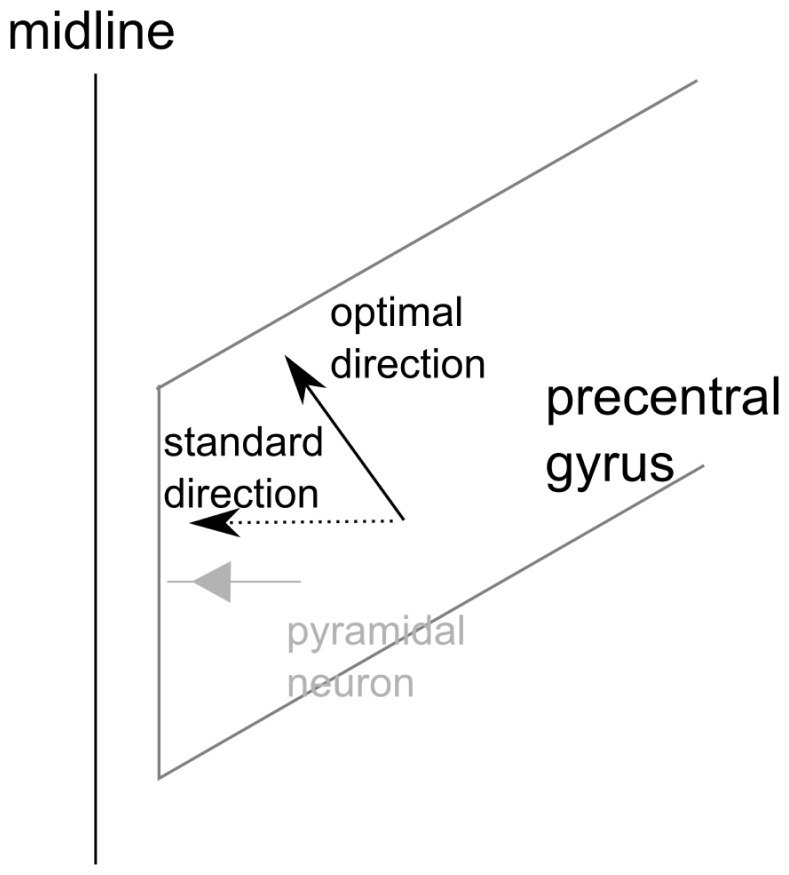
We study the impact of coil orientation on the motor threshold (MT) and present an optimal coil orientation for stimulation of the foot. The result can be compared to results of models that predict this orientation from electrodynamic properties of the media in the skull and from orientations of cells, respectively. We used a robotized TMS system for precise coil placement and recorded motor-evoked potentials with surface electrodes on the abductor hallucis muscle of the right foot in 8 healthy control subjects. First, we performed a hot-spot search in standard (lateral) orientation and then rotated the coil in steps of 10° or 20°. At each step we estimated the MT. For navigated stimulation and for correlation with the underlying anatomy a structural MRI scan was obtained. Optimal coil orientation was 33.1 ± 18.3° anteriorly in relation to the standard lateral orientation. In this orientation the threshold was 54 ± 18% in units of maximum stimulator output. There was a significant difference of 8.0 ± 5.9% between the MTs at optimal and at standard orientation. The optimal coil orientations were significantly correlated with the direction perpendicular to the postcentral gyrus ([Formula: see text]). Robotized TMS facilitates sufficiently precise coil positioning and orientation to study even small variations of the MT with coil orientation. The deviations from standard orientation are more closely matched by models based on field propagation in media than by models based on orientations of pyramidal cells.
我们研究了线圈方向对运动阈值(MT)的影响,并提出了一种用于足部刺激的最佳线圈方向。该结果可与分别从颅骨中媒质的动力学特性和细胞方向预测该方向的模型的结果进行比较。我们使用机器人化 TMS 系统进行精确的线圈放置,并在 8 名健康对照者的右脚外展肌上用表面电极记录运动诱发电位。首先,我们在标准(外侧)方向进行热点搜索,然后以 10°或 20°的步长旋转线圈。在每一步中,我们估计 MT。为了进行导航刺激和与潜在解剖结构相关联,我们获得了结构 MRI 扫描。相对于标准的外侧方向,最佳线圈方向在前 33.1°±18.3°。在此方向上,阈值为最大刺激器输出的 54%±18%。最佳方向和标准方向之间的 MT 差异有统计学意义,为 8.0%±5.9%。最佳线圈方向与垂直于中央后回的方向显著相关([公式:见文本])。机器人化 TMS 有助于进行足够精确的线圈定位和方向,从而研究线圈方向对 MT 的微小变化。偏离标准方向的偏差与基于媒质中场传播的模型更匹配,而与基于锥体细胞方向的模型不匹配。