Section of Ecology, Department of Biology, University of Turku, Turku, Finland.
PLoS One. 2013 Apr 11;8(4):e61284. doi: 10.1371/journal.pone.0061284. Print 2013.
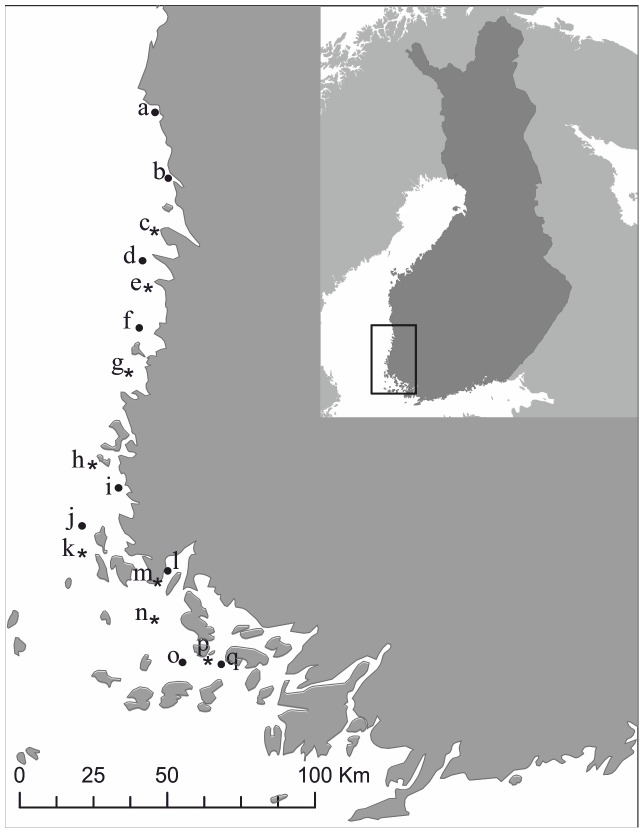
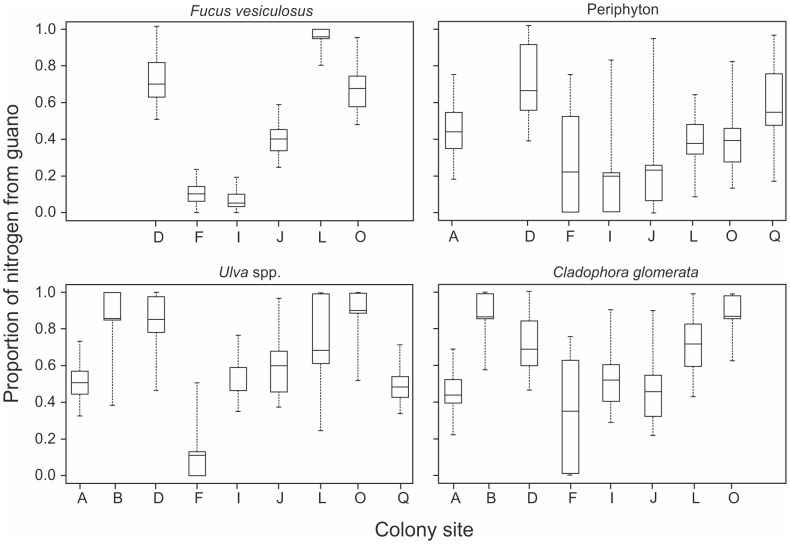
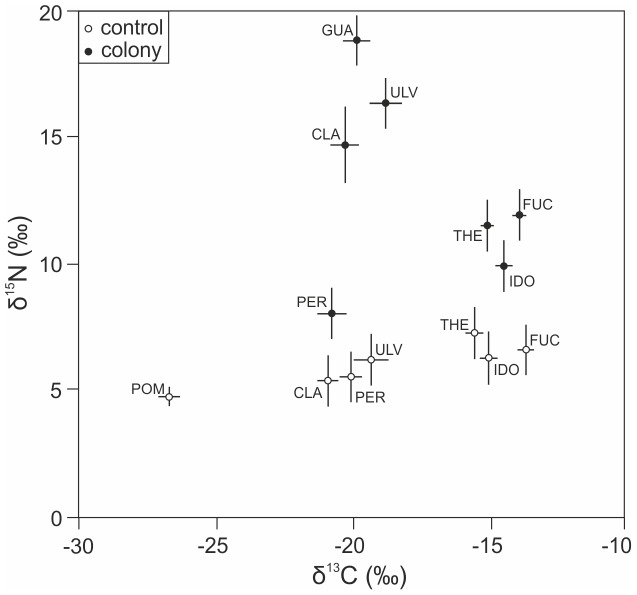
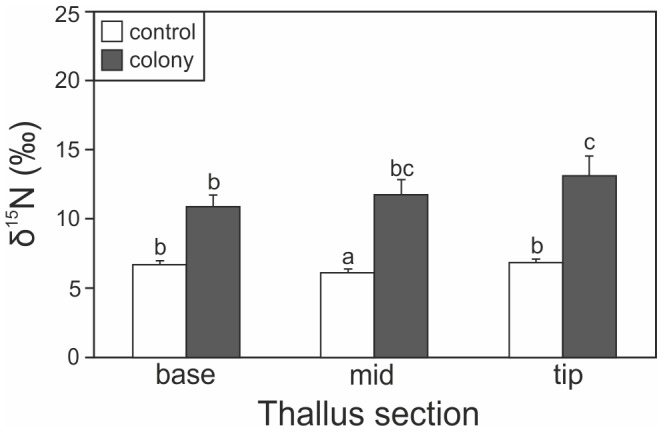
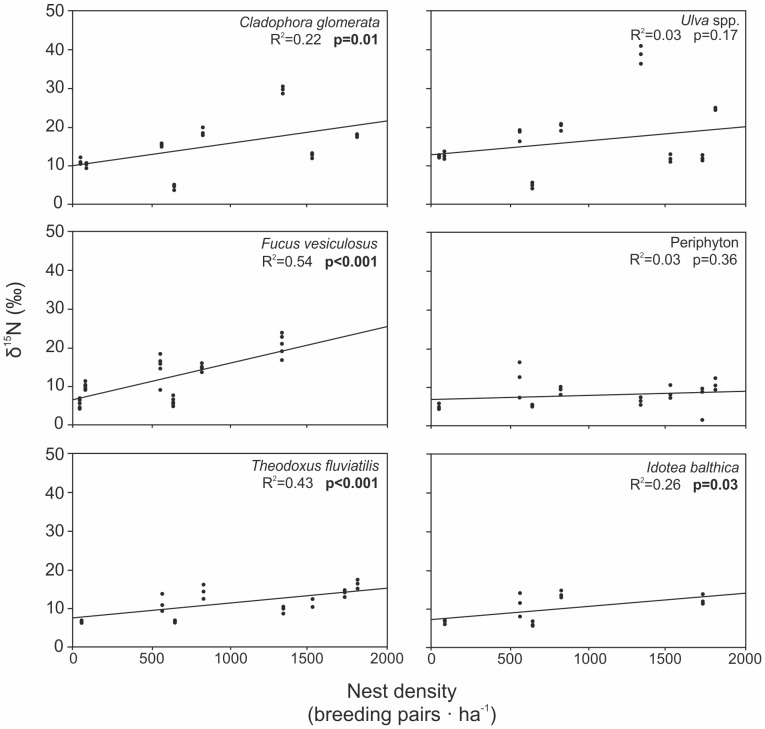
Nutrient enrichment in coastal marine systems can have profound impacts on trophic networks. In the Baltic Sea, the population of Great Cormorant (Phalacrocorax carbo sinensis) has increased nearly exponentially since the mid-1990 s, and colonies of these seabirds can be important sources of nitrogen enrichment for nearby benthic communities due to guano runoff. In this study we used stable isotope analyses and diet mixing models to determine the extent of nitrogen enrichment from cormorant colonies, as well as to examine any possible changes in herbivore diet preferences due to enrichment. We found significantly higher levels of δ(15)N in samples from colony islands than control islands for producers (the dominant macroalga Fucus vesiculosus, filamentous algae, and periphyton) and herbivores, as well as a positive correlation between enrichment and nest density in colony sites. We also found that enrichment increased over the breeding season of the cormorants, with higher enrichment in late summer than early summer. While the amount of total nitrogen did not differ between colony and control sites, the amount of guano-based nitrogen in algae was >50% in most sites, indicating high nitrogen enrichment from colonies. Herbivores (the isopod Idotea balthica and the gastropod Theodoxus fluviatilis) preferred feeding upon the dominant macroalga Fucus vesiculosus rather than on filamentous algae or periphyton in both control and colony, and there was a significant increase in periphyton consumption near colony sites. Overall, guano from cormorant colonies seems to have effects on both producers and herbivores, as well as the potential to modify algae-herbivore interactions.
沿海海洋系统中的营养富集会对营养网络产生深远影响。在波罗的海,自 20 世纪 90 年代中期以来,大鸬鹚(Phalacrocorax carbo sinensis)的数量呈指数增长,由于海鸟粪便的径流,这些海鸟的栖息地可能是附近底栖群落氮素富集的重要来源。在这项研究中,我们使用稳定同位素分析和饮食混合模型来确定来自鸬鹚栖息地的氮素富集程度,以及检查由于富集而导致食草动物饮食偏好可能发生的任何变化。我们发现,与对照岛屿相比,来自栖息地岛屿的样本中生产者(优势大型褐藻泡叶藻、丝状藻类和周丛生物)和食草动物的 δ(15)N 水平显著更高,并且在栖息地中,富集与巢穴密度呈正相关。我们还发现,随着鸬鹚繁殖季节的进行,富集会增加,夏末的富集会比初夏更高。虽然栖息地和对照地点的总氮含量没有差异,但藻类中的鸟粪基氮含量在大多数地点都超过 50%,表明栖息地的氮素富集会很高。食草动物(等足类动物 Idotea balthica 和腹足纲动物 Theodoxus fluviatilis)更喜欢以优势大型褐藻泡叶藻为食,而不是以丝状藻类或周丛生物为食,在栖息地附近,周丛生物的消耗显著增加。总体而言,鸬鹚栖息地的粪便似乎对生产者和食草动物都有影响,并有可能改变藻类-食草动物的相互作用。