Department of Veterinary Medicine, Laboratory of Comprehensive Veterinary Clinical Studies, Faculty of Bioresources, Nihon University, 1866 Kameino, Fujisawa, Kanagawa 252-0880, Japan.
Acta Vet Scand. 2013 Apr 17;55(1):32. doi: 10.1186/1751-0147-55-32.
The objectives of this study were to investigate the differences in the characteristics of short- and long-term surviving dogs, and the factors that predict poor outcome in Shiba dogs with chronic enteropathies (CE).
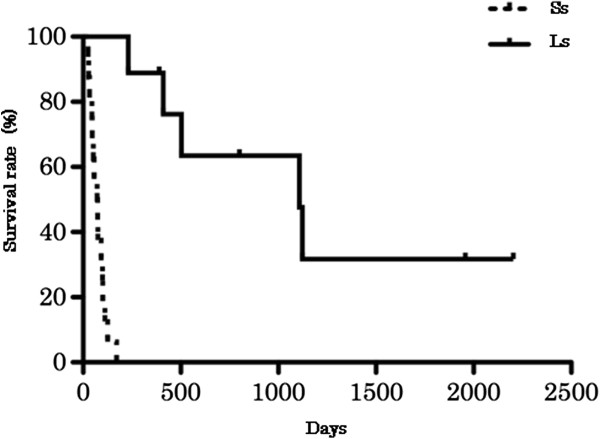
A total of 25 Shiba dogs were included in this study, and classified as either short-term (≤6 months) survivors (Ss; n=16) or long-term (>6 months) survivors (Ls; n=9). The clinical and clinicopathological variables, histopathology, response to therapy, and outcomes were investigated between groups. Furthermore, these factors were tested for their ability to predict poor outcome.
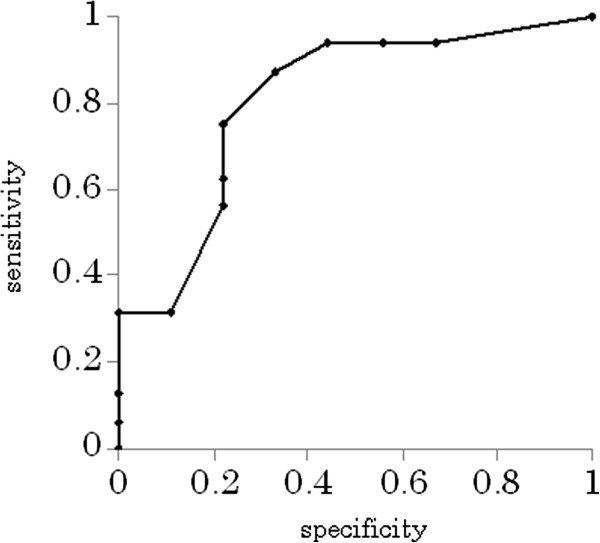
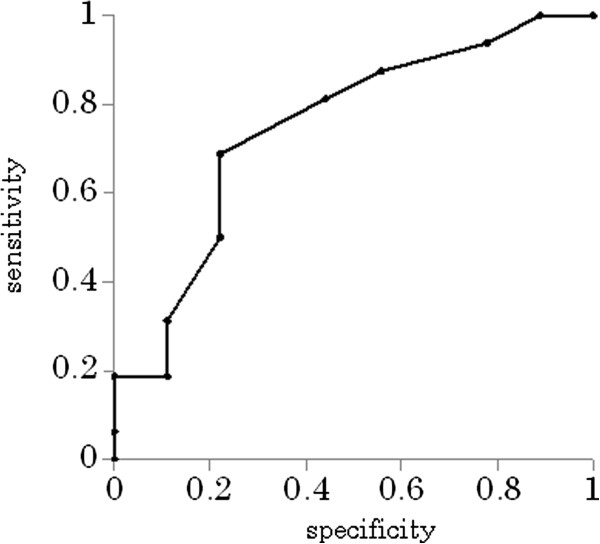
All CE dogs were diagnosed as having inflammatory bowel disease (IBD) with lymphocytic-plasmacytic enteritis (LPE). Age and canine inflammatory bowel disease activity index (CIBDAI) were significantly higher in the Ss group than in the Ls group (age: p = 0.035, CIBDAI: p = 0.018), as determined via univariate logistic regression analysis. According to receiver operator characteristic (ROC) curve analysis, the best predictors of poor outcome were age and CIBDAI, with the cutoffs determined as 7 years and 9 points, respectively. The majority of the cases (84%) responded to initial treatment; in particular, 75% of dogs in Ss group responded to therapy. The time to response (days) to the initial treatment in the Ss group (median 42.5 days, range: 20-91 days) was significantly shorter than that of the Ls group (median 285 days, range: 196-1026 days). Approximately half (55.5%) of the dogs in the Ls group died due to relapse of CE.
This study suggested that there is a high risk of early mortality in Shiba dogs with CE, particularly if the dogs are older (>7 years) and have a high CIBDAI score (>9 points). There appears to be a possibility of early mortality even if the initial treatment was efficacious. Furthermore, Shiba dogs with CE that become less responsive to initial therapy in the short-term (approximately 3 months) are more likely to have an early mortality. Thus, it is necessary to follow-up Shiba dogs with CE in the long-term, as approximately half of the long-term survivors eventually died due to a relapse of the signs.
本研究旨在探讨慢性肠道疾病(CE)短、长期存活犬的特征差异,以及预测柴犬慢性肠道疾病不良预后的因素。
本研究共纳入 25 只柴犬,分为短期(≤6 个月)存活犬(Ss;n=16)和长期(>6 个月)存活犬(Ls;n=9)。比较两组间的临床和临床病理变量、组织病理学、治疗反应和预后。进一步分析这些因素预测不良预后的能力。
所有 CE 犬均被诊断为具有淋巴细胞浆细胞性肠炎(LPE)的炎症性肠病(IBD)。单变量 logistic 回归分析显示,短期存活组(Ss 组)的年龄和犬炎症性肠病活动指数(CIBDAI)显著高于长期存活组(Ls 组)(年龄:p=0.035,CIBDAI:p=0.018)。根据受试者工作特征(ROC)曲线分析,不良预后的最佳预测因子是年龄和 CIBDAI,其截断值分别为 7 岁和 9 分。大多数病例(84%)对初始治疗有反应;特别是 Ss 组的 75%的犬对治疗有反应。短期存活组(Ss 组)的初始治疗反应时间(天)(中位数 42.5 天,范围:20-91 天)显著短于长期存活组(Ls 组)(中位数 285 天,范围:196-1026 天)。Ls 组中约一半(55.5%)的犬因 CE 复发而死亡。
本研究表明,柴犬 CE 具有较高的早期死亡率风险,尤其是犬年龄较大(>7 岁)且 CIBDAI 评分较高(>9 分)。即使初始治疗有效,也有可能早期死亡。此外,在短期(约 3 个月)内对初始治疗反应较差的 CE 柴犬更有可能早期死亡。因此,有必要对 CE 柴犬进行长期随访,因为大约一半的长期存活犬最终因疾病复发而死亡。