The Orthopedic Specialty Hospital, Murray, UT 84107, USA.
Nutrients. 2013 Apr 17;5(4):1253-75. doi: 10.3390/nu5041253.
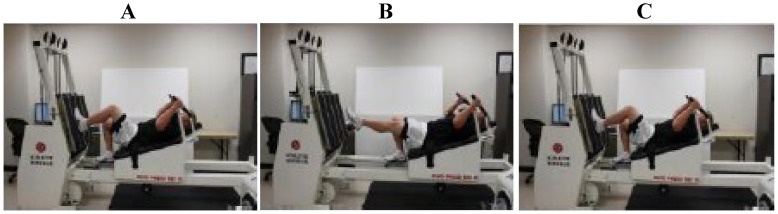
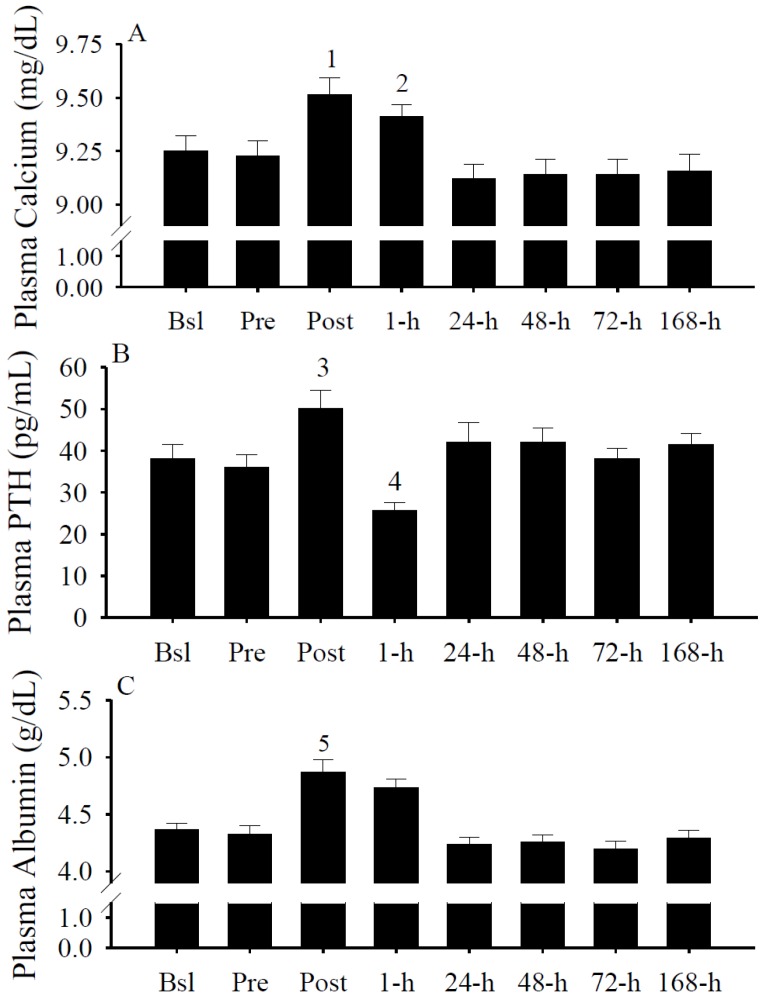
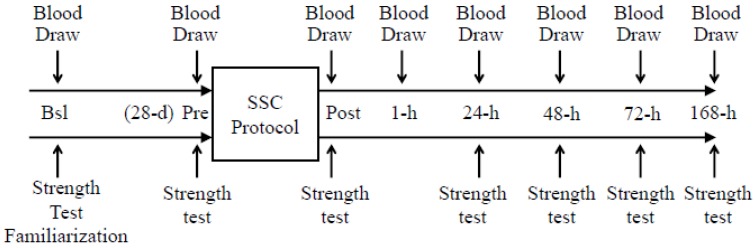
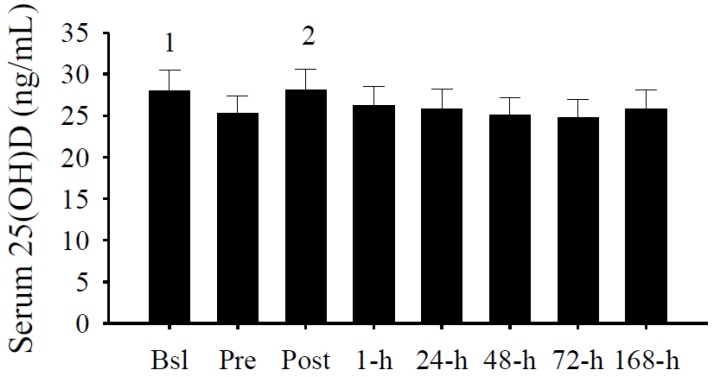
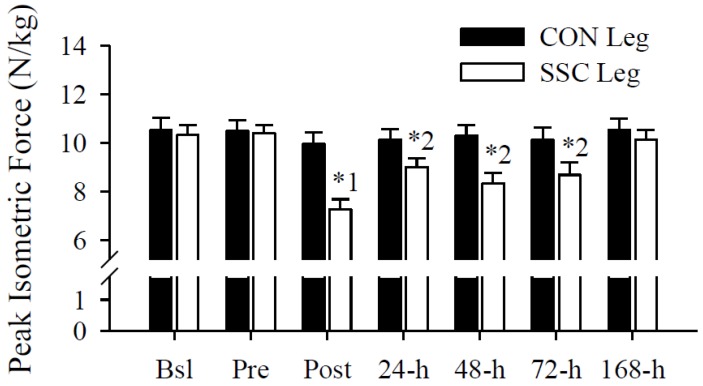
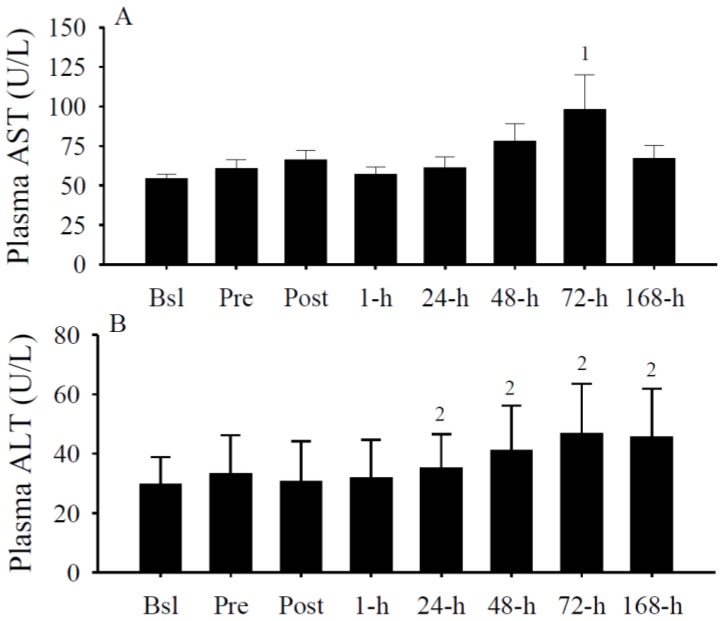
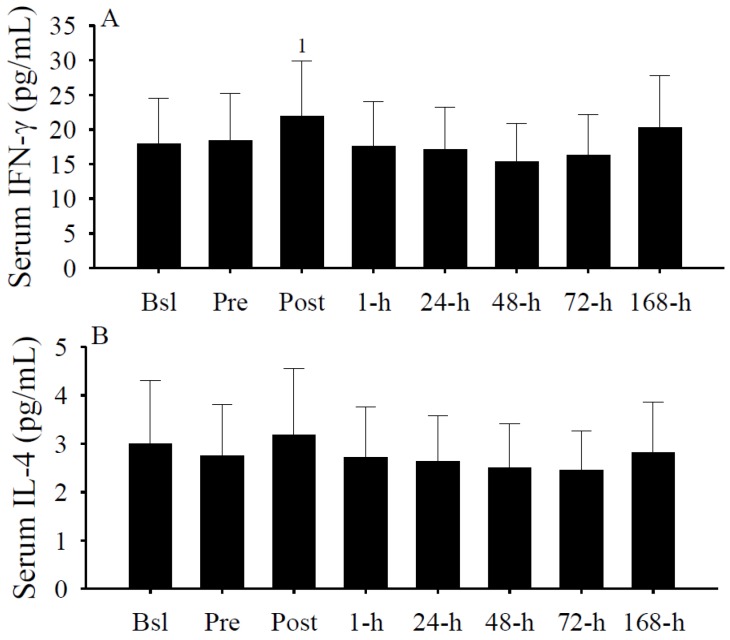
The primary purpose of this study was to identify if serum 25-hydroxyvitamin D (25(OH)D) concentrations predict muscular weakness after intense exercise. We hypothesized that pre-exercise serum 25(OH)D concentrations inversely predict exercise-induced muscular weakness. Fourteen recreationally active adults participated in this study. Each subject had one leg randomly assigned as a control. The other leg performed an intense exercise protocol. Single-leg peak isometric force and blood 25(OH)D, aspartate and alanine aminotransferases, albumin, interferon (IFN)-γ, and interleukin-4 were measured prior to and following intense exercise. Following exercise, serum 25(OH)D concentrations increased (p < 0.05) immediately, but within minutes, subsequently decreased (p < 0.05). Circulating albumin increases predicted (p < 0.005) serum 25(OH)D increases, while IFN-γ increases predicted (p < 0.001) serum 25(OH)D decreases. Muscular weakness persisted within the exercise leg (p < 0.05) and compared to the control leg (p < 0.05) after the exercise protocol. Serum 25(OH)D concentrations inversely predicted (p < 0.05) muscular weakness (i.e., control leg vs. exercise leg peak isometric force) immediately and days (i.e., 48-h and 72-h) after exercise, suggesting the attenuation of exercise-induced muscular weakness with increasing serum 25(OH)D prior to exercise. Based on these data, we conclude that pre-exercise serum 25(OH)D concentrations could influence the recovery of skeletal muscle strength after an acute bout of intense exercise.
本研究的主要目的是确定血清 25-羟维生素 D(25(OH)D)浓度是否可预测剧烈运动后的肌肉无力。我们假设运动前血清 25(OH)D 浓度与运动引起的肌肉无力呈负相关。14 名业余运动的成年人参与了这项研究。每位受试者的一条腿随机分配为对照。另一条腿进行剧烈运动方案。在剧烈运动前后测量单腿等长峰值力和血清 25(OH)D、天冬氨酸转氨酶和丙氨酸转氨酶、白蛋白、干扰素(IFN)-γ和白细胞介素-4。运动后,血清 25(OH)D 浓度立即升高(p<0.05),但在几分钟内随后降低(p<0.05)。循环白蛋白增加预测(p<0.005)血清 25(OH)D 增加,而 IFN-γ 增加预测(p<0.001)血清 25(OH)D 减少。运动后,运动腿的肌肉无力持续存在(p<0.05),与运动方案后对照腿相比(p<0.05)。运动后立即和几天(即 48 小时和 72 小时),血清 25(OH)D 浓度与肌肉无力呈负相关(p<0.05),即对照腿与运动腿的等长峰值力,提示运动前血清 25(OH)D 浓度增加可减轻运动引起的肌肉无力。基于这些数据,我们得出结论,运动前血清 25(OH)D 浓度可能影响剧烈运动后骨骼肌力量的恢复。