Xia Wenrui, Li Xiaoang, Han Ruixuan, Liu Xiaoke
Hospital of Chengdu University of Traditional Chinese Medicine, Chengdu, People's Republic of China.
Chengdu University of Traditional Chinese Medicine, Chengdu, People's Republic of China.
Open Access J Sports Med. 2024 Dec 13;15:209-228. doi: 10.2147/OAJSM.S485703. eCollection 2024.
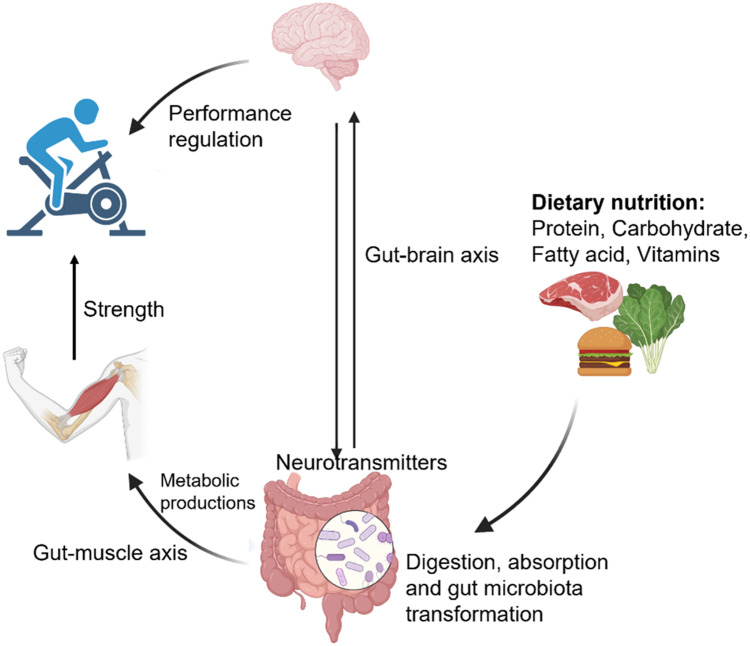
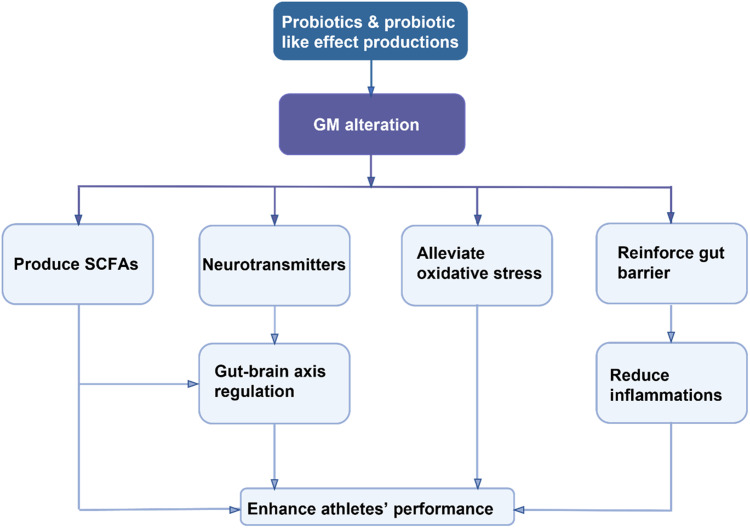
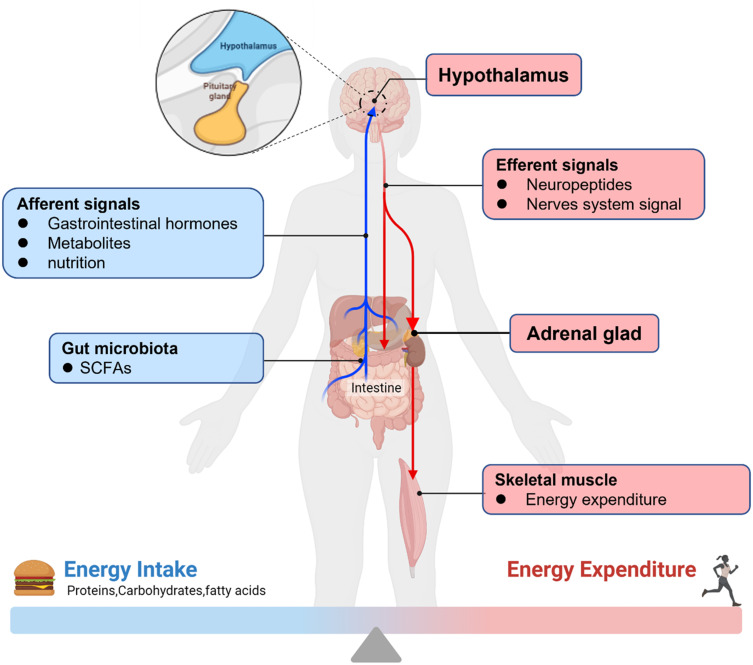
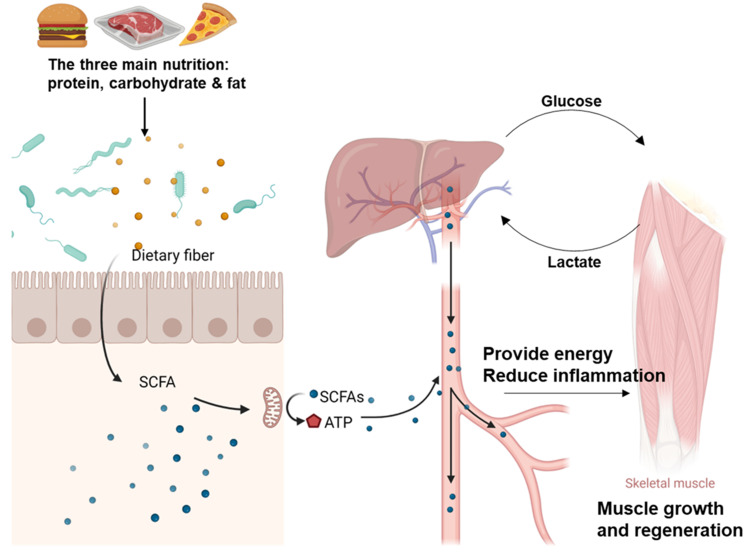
In recent years, exercise has shown a powerful ability to regulate the gut microbiota received with concern. For instance, compared with the sedentary group, high-level athletes showed a different gut microbiota composition and remarkable capability of physiological metabolism. In addition, different diet patterns (, high-fat diet, high carbohydrate diet ) have different effects on gut microbiota, which can also affect exercise performance. Furthermore, adaptations to exercise also might be influenced by the gut microbiota, due to its important role in the transformation and expenditure of energy obtained from the diet. Therefore, appropriate dietary supplementation is important during exercise. And exploring the mechanisms by which dietary supplements affect exercise performance by modulating gut microbiota is of considerable interest to athletes wishing to achieve health and athletic performance. In this narrative review, the relationship between gut microbiota, dietary supplements, training adaptations and performance is discussed as follows. (i) The effects of the three main nutritional supplements on gut microbiota and athlete fitness. (ii) Strategies for dietary supplements and how they exerted function through gut microbiota alteration based on the gut-brain axis. (iii) Why dietary supplement interventions on gut microbiota should be tailored to different types of exercise. Our work integrates these factors to elucidate how specific nutritional supplements can modulate gut microbiota composition and, consequently, influence training adaptations and performance outcomes, unlike previous literature that often focuses solely on the effects of exercise or diet independently. And provides a comprehensive framework for athletes seeking to optimize their health and performance through a microbiota-centric approach.
近年来,运动已显示出强大的调节肠道微生物群的能力,这一现象受到了关注。例如,与久坐不动的人群相比,高水平运动员表现出不同的肠道微生物群组成和显著的生理代谢能力。此外,不同的饮食模式(如高脂饮食、高碳水化合物饮食)对肠道微生物群有不同影响,这也会影响运动表现。此外,运动适应也可能受到肠道微生物群的影响,因为其在从饮食中获取的能量的转化和消耗中起着重要作用。因此,运动期间适当的膳食补充很重要。对于希望实现健康和运动表现的运动员来说,探索膳食补充剂通过调节肠道微生物群影响运动表现的机制具有相当大的吸引力。在这篇叙述性综述中,肠道微生物群、膳食补充剂、训练适应和运动表现之间的关系如下所述。(i)三种主要营养补充剂对肠道微生物群和运动员健康的影响。(ii)膳食补充剂的策略以及它们如何基于肠-脑轴通过改变肠道微生物群发挥作用。(iii)为什么针对肠道微生物群的膳食补充剂干预应根据不同类型的运动进行调整。我们的工作整合了这些因素,以阐明特定的营养补充剂如何调节肠道微生物群组成,进而影响训练适应和运动表现结果,这与以往通常只单独关注运动或饮食影响的文献不同。并为寻求通过以微生物群为中心的方法优化健康和运动表现的运动员提供了一个全面的框架。