Department of Biological Sciences, University of Ulsan, Ulsan 680-749, Korea.
Nucleic Acids Res. 2013 Jun;41(11):5614-25. doi: 10.1093/nar/gkt222. Epub 2013 Apr 16.
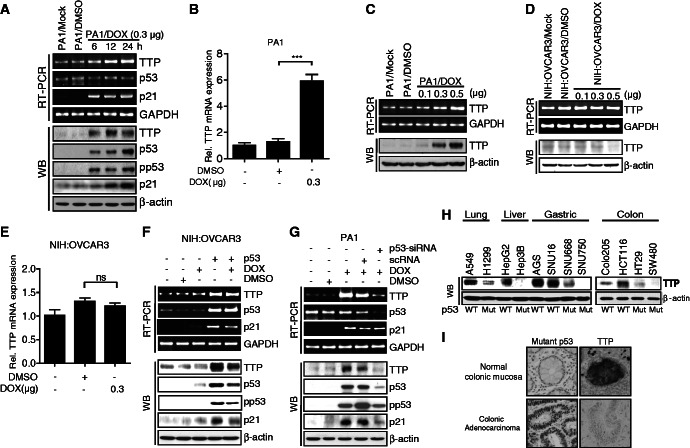
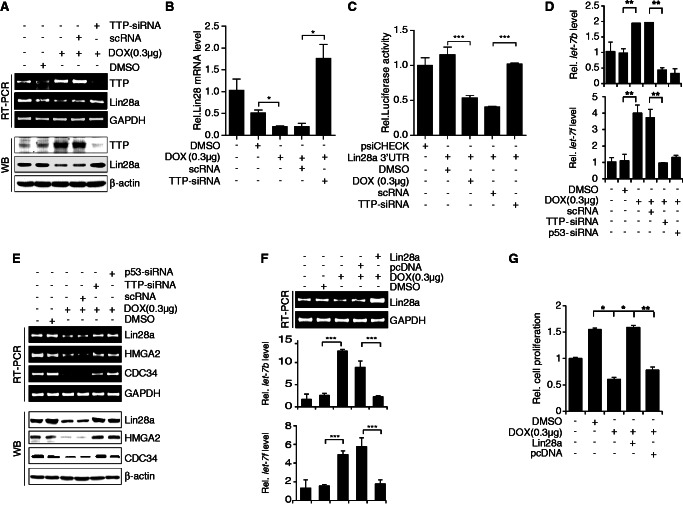
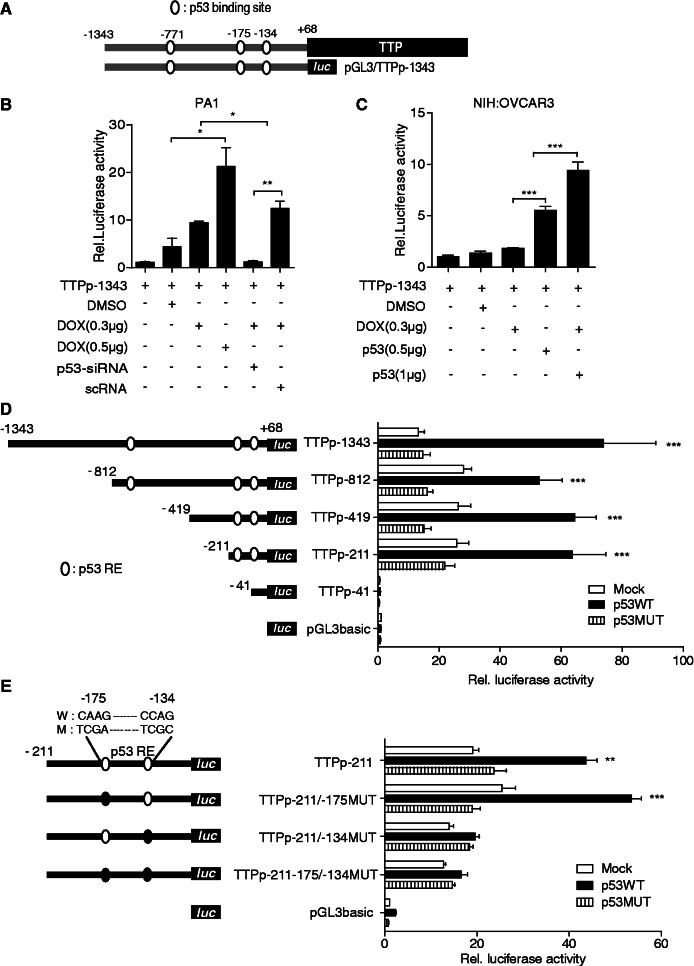
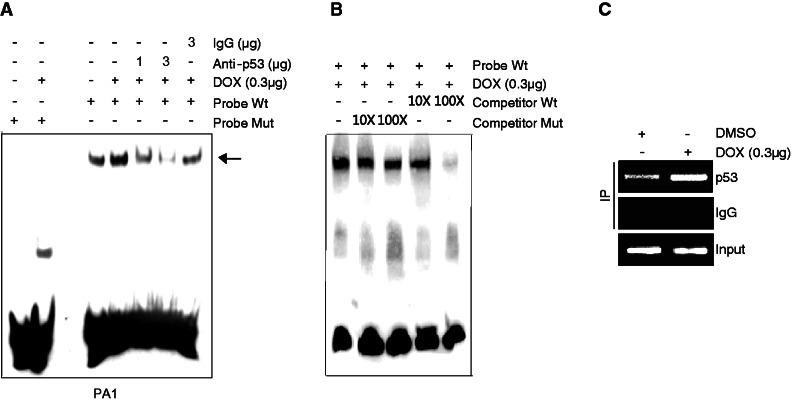
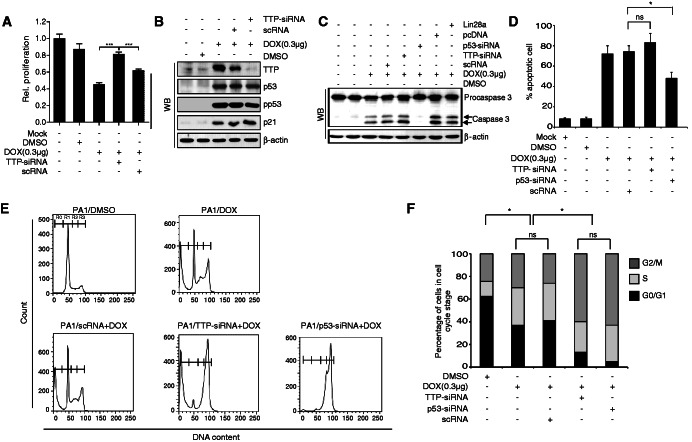
Tristetraprolin (TTP) and let-7 microRNA exhibit suppressive effects on cell growth through down-regulation of oncogenes. Both TTP and let-7 are often repressed in human cancers, thereby promoting oncogenesis by derepressing their target genes. However, the precise mechanism of this repression is unknown. We here demonstrate that p53 stimulated by the DNA-damaging agent doxorubicin (DOX) induced the expression of TTP in cancer cells. TTP in turn increased let-7 levels through down-regulation of Lin28a. Correspondingly, cancer cells with mutations or inhibition of p53 failed to induce the expression of both TTP and let-7 on treatment with DOX. Down-regulation of TTP by small interfering RNAs attenuated the inhibitory effect of DOX on let-7 expression and cell growth. Therefore, TTP provides an important link between p53 activation induced by DNA damage and let-7 biogenesis. These novel findings provide a mechanism for the widespread decrease in TTP and let-7 and chemoresistance observed in human cancers.
Tristetraprolin (TTP) 和 let-7 microRNA 通过下调癌基因对细胞生长表现出抑制作用。TTP 和 let-7 在人类癌症中经常受到抑制,从而通过解除其靶基因的抑制来促进致癌作用。然而,这种抑制的确切机制尚不清楚。我们在这里证明,DNA 损伤剂阿霉素 (DOX) 刺激的 p53 诱导癌细胞中 TTP 的表达。TTP 反过来通过下调 Lin28a 增加 let-7 的水平。相应地,具有 p53 突变或抑制的癌细胞在用 DOX 处理时不能诱导 TTP 和 let-7 的表达。通过小干扰 RNA 下调 TTP 减弱了 DOX 对 let-7 表达和细胞生长的抑制作用。因此,TTP 为 DNA 损伤诱导的 p53 激活与 let-7 生物发生之间提供了重要联系。这些新发现为在人类癌症中观察到的 TTP 和 let-7 广泛减少和化疗耐药提供了一种机制。