Park Seon Ah, Park Seung-Yong, Song Chang-Seon, Choi In-Soo, Kim Hwi Yool, Lee Joong-Bok, Lee Nak-Hyung
Department of Veterinary Infectious Diseases, College of Veterinary Medicine, Konkuk University, Seoul, Korea.
Clin Exp Vaccine Res. 2012 Jul;1(1):70-6. doi: 10.7774/cevr.2012.1.1.70. Epub 2012 Jul 31.
In spite of an extensive vaccination program, parvoviral infections still pose a major threat to the health of dogs.
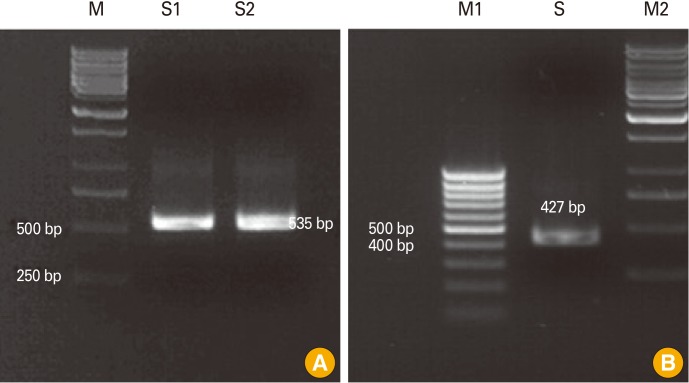
We isolated a novel canine parvovirus (CPV) strain from a dog with enteritis. Nucleotide and amino acid sequence analysis of the isolate showed that it is a novel type 2b CPV with asparagine at the 426th position and valine at the 555th position in VP2. To develop a vaccine against CPV infection, we passaged the isolate 4 times in A72 cells.
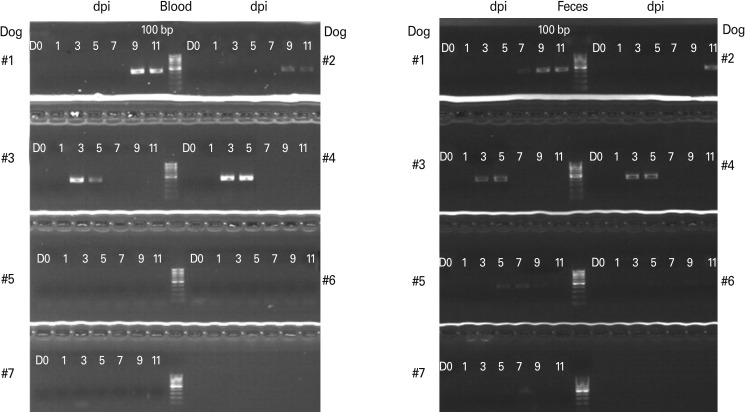
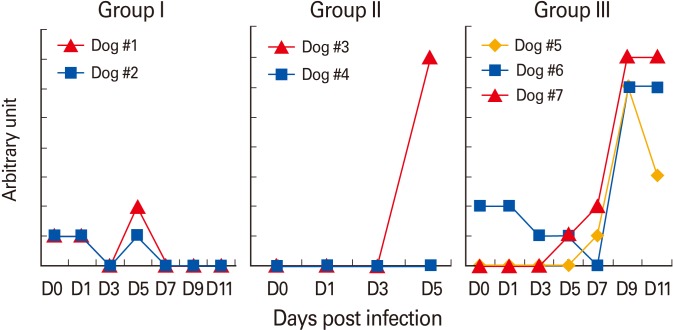
The attenuated isolate conferred complete protection against lethal homologous CPV infection in dogs such that they did not develop any clinical symptoms, and their antibody titers against CPV were significantly high at 7-11 days post infection.
These results suggest that the virus isolate obtained after passaging can be developed as a novel vaccine against paroviral infection.
尽管有广泛的疫苗接种计划,但细小病毒感染仍然对犬类健康构成重大威胁。
我们从一只患有肠炎的犬只中分离出一种新型犬细小病毒(CPV)毒株。对该分离株的核苷酸和氨基酸序列分析表明,它是一种新型2b型CPV,其VP2蛋白的第426位为天冬酰胺,第555位为缬氨酸。为开发一种针对CPV感染的疫苗,我们在A72细胞中对该分离株传代4次。
减毒后的分离株能使犬只对致死性同源CPV感染产生完全保护,使其不出现任何临床症状,且在感染后7 - 11天其针对CPV的抗体滴度显著升高。
这些结果表明,传代后获得的病毒分离株可开发为一种新型抗细小病毒感染疫苗。