Department of Dermatology and Venereology, Sahlgrenska University Hospital, S-413 45 Gothenburg, Sweden.
Contact Dermatitis. 2013 May;68(5):286-92. doi: 10.1111/cod.12053.
In studies in Gothenburg, Sweden, in the 1990s of an aluminium hydroxide-adsorbed pertussis toxoid vaccine, 745 of ~76 000 vaccinated children developed long-lasting itchy subcutaneous nodules at the vaccination site. Of 495 children with itchy nodules patch tested for aluminium allergy, 376 (76%) were positive.
To study the prognosis of the vaccine-induced aluminium allergy.
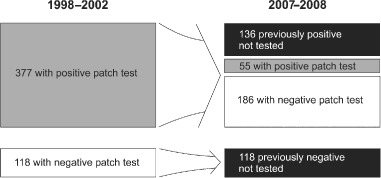
Two hundred and forty-one children with demonstrated aluminium allergy in the previous study were patch tested again 5-9 years after the initial test, with the same procedure as used previously.
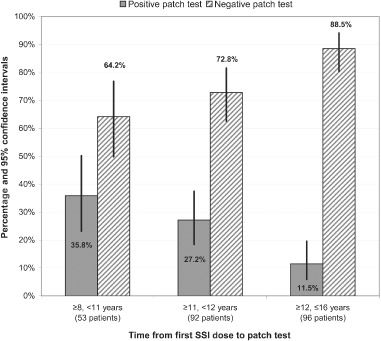
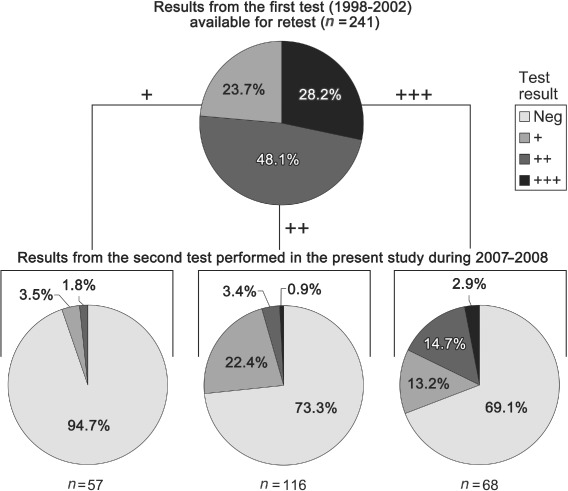
Contact allergy to aluminium was no longer demonstrable in 186 of the retested 241 children (77%). A negative test result was more common in children who no longer had itching at the vaccination site; it was also related to the age of the child, the time after the first aluminium-adsorbed vaccine dose, and the strength of the reaction in the first test.
Patch test reactivity to aluminium seems to disappear or weaken with time.
在 20 世纪 90 年代瑞典哥德堡的一项针对含氢氧化铝吸附百日咳毒素疫苗的研究中,约 76000 名接种疫苗的儿童中有 745 人在接种部位出现持久的瘙痒皮下结节。在 495 名有瘙痒结节的儿童中进行了针对铝过敏的斑贴试验,其中 376 名(76%)呈阳性。
研究疫苗引起的铝过敏的预后。
在先前的研究中,241 名儿童被证实存在铝过敏,在初次试验后 5-9 年再次进行斑贴试验,采用与之前相同的程序。
在重新测试的 241 名儿童中,有 186 名(77%)不再表现出对铝的接触过敏。在接种部位不再瘙痒的儿童中,阴性试验结果更为常见;这也与儿童的年龄、第一次接种含铝疫苗后的时间以及第一次试验中的反应强度有关。
随着时间的推移,铝斑贴试验的反应似乎消失或减弱。