Helen Wills Neuroscience Institute, University of California, Berkeley, California, USA.
Nat Neurosci. 2013 Jun;16(6):763-70. doi: 10.1038/nn.3381. Epub 2013 Apr 21.
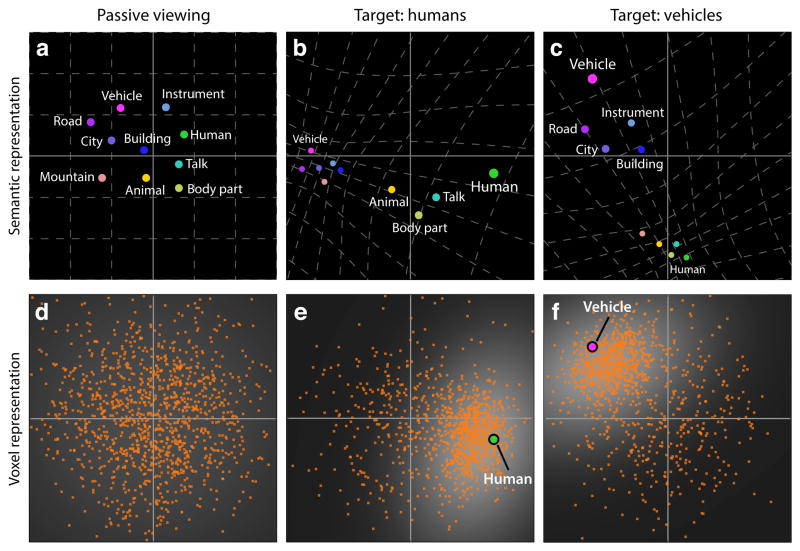
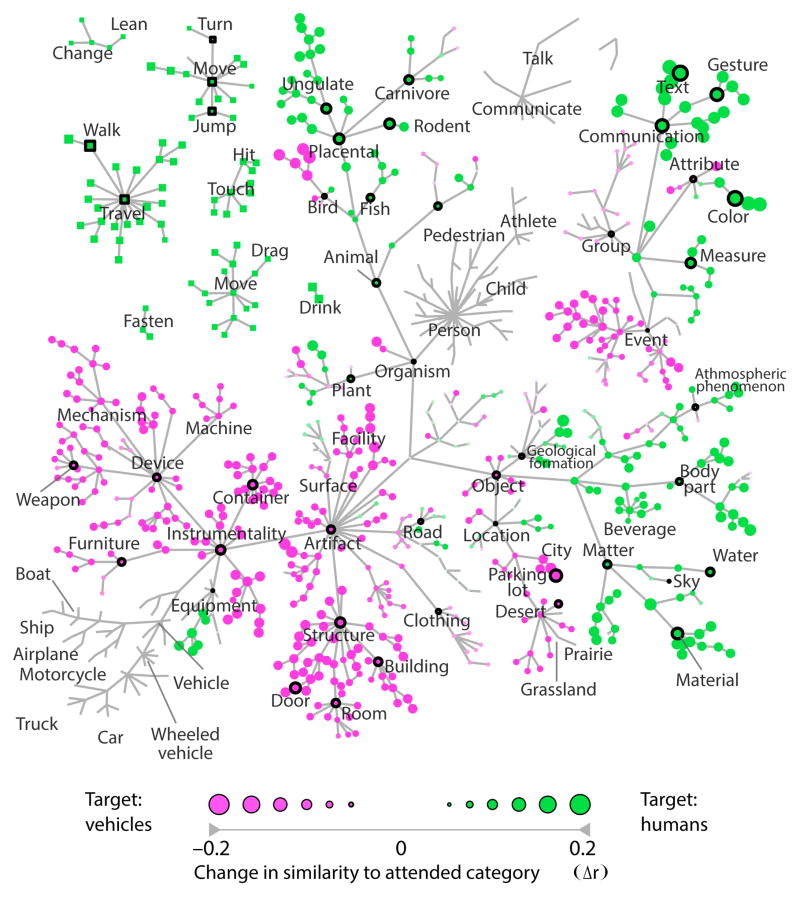
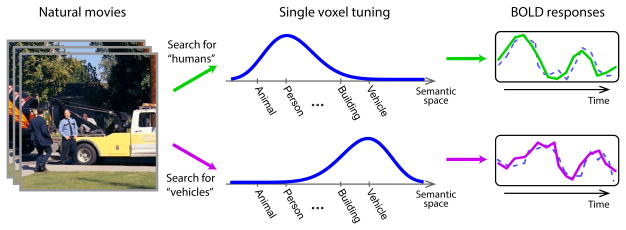
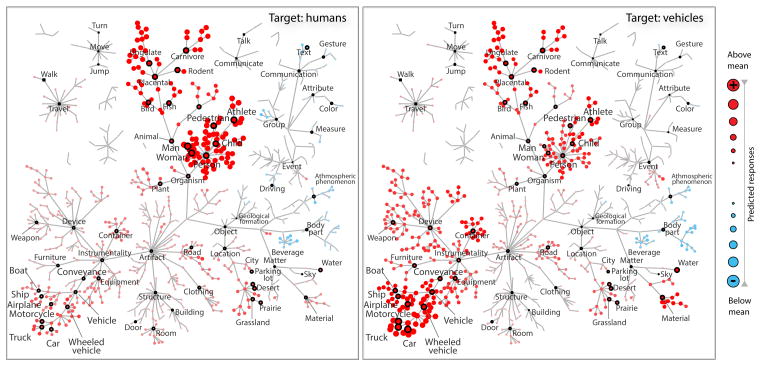
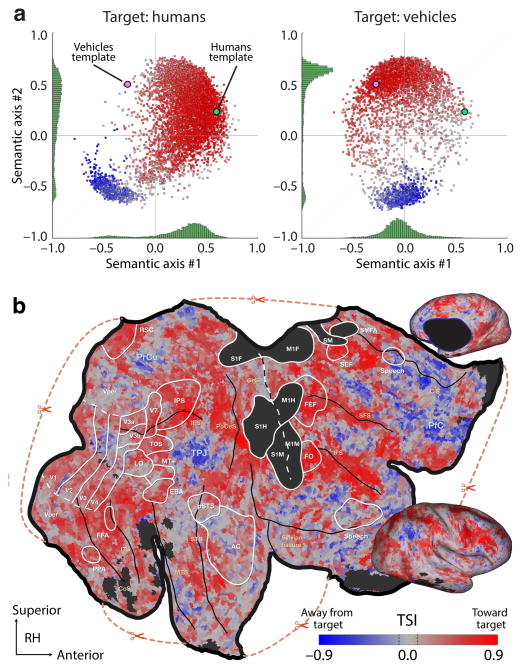
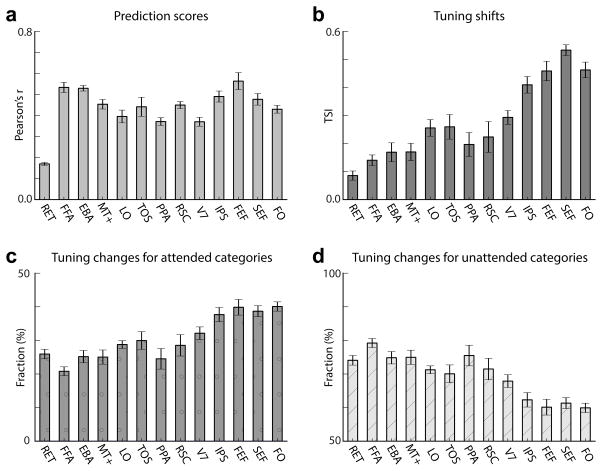
Little is known about how attention changes the cortical representation of sensory information in humans. On the basis of neurophysiological evidence, we hypothesized that attention causes tuning changes to expand the representation of attended stimuli at the cost of unattended stimuli. To investigate this issue, we used functional magnetic resonance imaging to measure how semantic representation changed during visual search for different object categories in natural movies. We found that many voxels across occipito-temporal and fronto-parietal cortex shifted their tuning toward the attended category. These tuning shifts expanded the representation of the attended category and of semantically related, but unattended, categories, and compressed the representation of categories that were semantically dissimilar to the target. Attentional warping of semantic representation occurred even when the attended category was not present in the movie; thus, the effect was not a target-detection artifact. These results suggest that attention dynamically alters visual representation to optimize processing of behaviorally relevant objects during natural vision.
关于注意如何改变人类感觉信息的皮质代表,目前所知甚少。基于神经生理学证据,我们假设注意引起调谐变化,以扩大注意刺激的表示,而以未注意刺激为代价。为了研究这个问题,我们使用功能磁共振成像来测量在自然电影中寻找不同物体类别时,语义表示如何在视觉搜索过程中发生变化。我们发现,枕颞和额顶叶皮层的许多体素都向被注意的类别调谐。这些调谐的变化扩大了被注意类别的表示,以及语义上相关但未被注意的类别的表示,并压缩了与目标语义上不相似的类别的表示。即使在电影中没有出现被注意的类别,注意力的语义表示的扭曲也会发生;因此,这种效果不是目标检测的假象。这些结果表明,注意力在自然视觉中动态地改变视觉表示,以优化对行为相关物体的处理。