Department of Neurobiology, Care Sciences, and Society, Centre for Family Medicine (CeFAM), Karolinska Institutet, Stockholm, Sweden.
BMJ Open. 2013 Apr 18;3(4). doi: 10.1136/bmjopen-2012-002373. Print 2013.
To estimate the cardiovascular mortality among persons with bipolar disorder in Sweden compared to the general population.
Population register-based cohort study with a 20-year follow-up.
Sweden.
The entire population of Sweden (n=10.6 million) of whom 17 101 persons were diagnosed with bipolar disorder between 1987 and 2006.
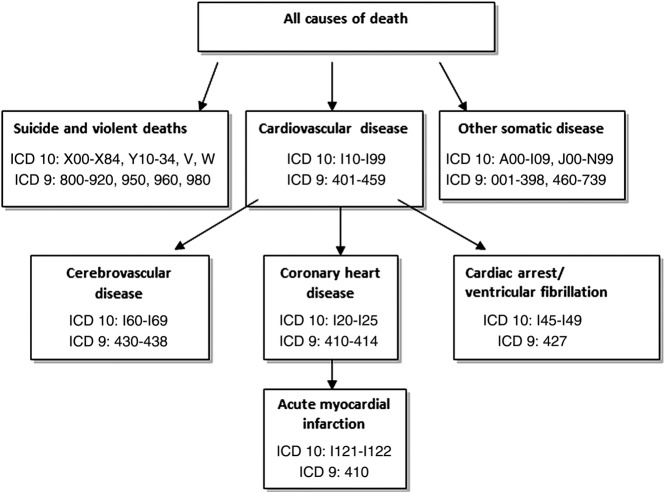
Mortality rate ratios (MRR), excess mortality (excess deaths), cardiovascular disorder (CVD) and specifically cerebrovascular disease, coronary heart disease, acute myocardial infarction, sudden cardiac deaths and hospital admission rate ratio (ARR).
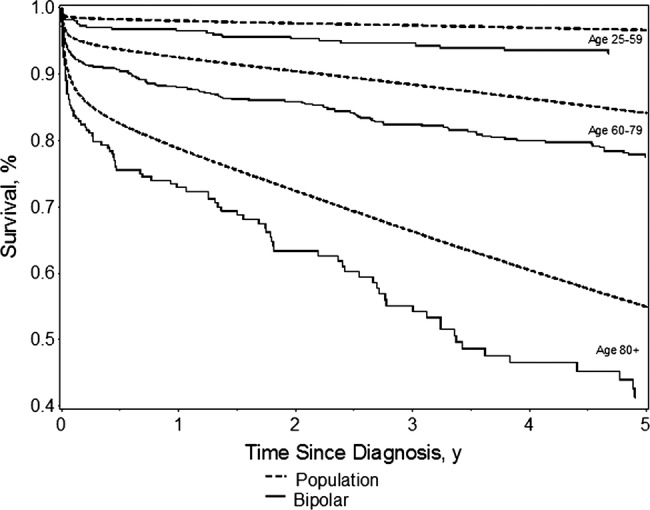
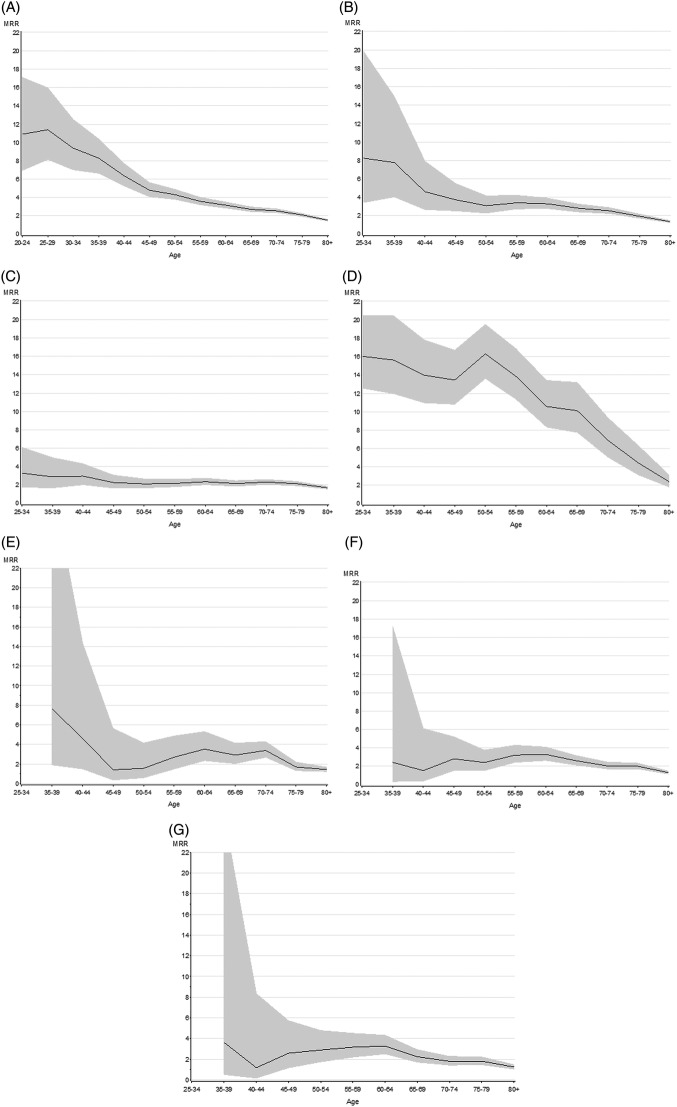
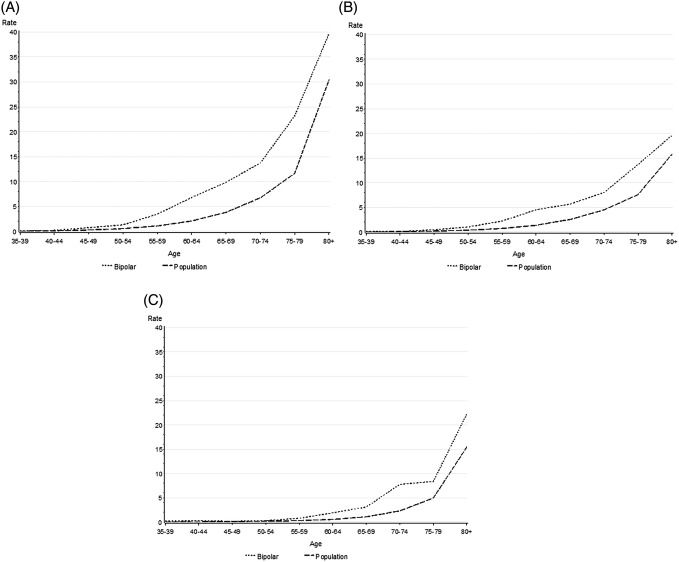
Persons with bipolar disorder died of CVD approximately 10 years earlier than the general population. One third (38%) of all deaths in persons with bipolar disorder were caused by CVD and almost half (44%) by other somatic diseases, whereas suicide and other external causes accounted for less than a fifth of all deaths (18%). Excess mortality of both CVD (n=824) and other somatic diseases (n=988) was higher than that of suicide and other external causes (n=675 deaths). MRRs for cerebrovascular disease, coronary heart disease and acute myocardial infarction were twice as high in persons with bipolar disorder compared to the general population. Despite the increased mortality of CVD, hospital admissions (ARR) for CVD treatment were only slightly increased in persons with bipolar disorder when compared to the general population.
The increased cardiovascular mortality in persons with bipolar disorder calls for renewed efforts to prevent and treat somatic diseases in this group. Specifically, our findings further imply that it would be critical to ensure that persons with bipolar disorder receive the same quality care for CVD as persons without bipolar disorder.
评估瑞典双相障碍患者与普通人群相比的心血管死亡率。
基于人群登记的队列研究,随访 20 年。
瑞典。
瑞典的全部人群(n=1060 万),其中 1987 年至 2006 年间有 17101 人被诊断为双相障碍。
死亡率比(MRR)、超额死亡率(超额死亡人数)、心血管疾病(CVD),特别是脑血管疾病、冠心病、急性心肌梗死、心源性猝死和住院率比(ARR)。
双相障碍患者死于 CVD 的时间比普通人群早约 10 年。双相障碍患者所有死亡中有三分之一(38%)是由 CVD 引起的,近一半(44%)是由其他躯体疾病引起的,而自杀和其他外部原因导致的死亡不到所有死亡的五分之一(18%)。CVD(n=824)和其他躯体疾病(n=988)的超额死亡率均高于自杀和其他外部原因(n=675 例死亡)的死亡率。与普通人群相比,双相障碍患者的脑血管疾病、冠心病和急性心肌梗死的 MRR 高出两倍。尽管 CVD 的死亡率增加,但与普通人群相比,双相障碍患者的 CVD 治疗住院人数(ARR)仅略有增加。
双相障碍患者心血管死亡率的增加需要重新努力预防和治疗这组患者的躯体疾病。具体而言,我们的研究结果进一步表明,确保双相障碍患者获得与非双相障碍患者相同质量的 CVD 护理至关重要。