Hospital of the University of Pennsylvania, Department of Orthopaedic Surgery, 3400 Spruce Street, Philadelphia, Pennsylvania 19104, USA.
Bone Joint Res. 2013 Mar 1;2(3):51-7. doi: 10.1302/2046-3758.23.2000152. Print 2013 Mar.
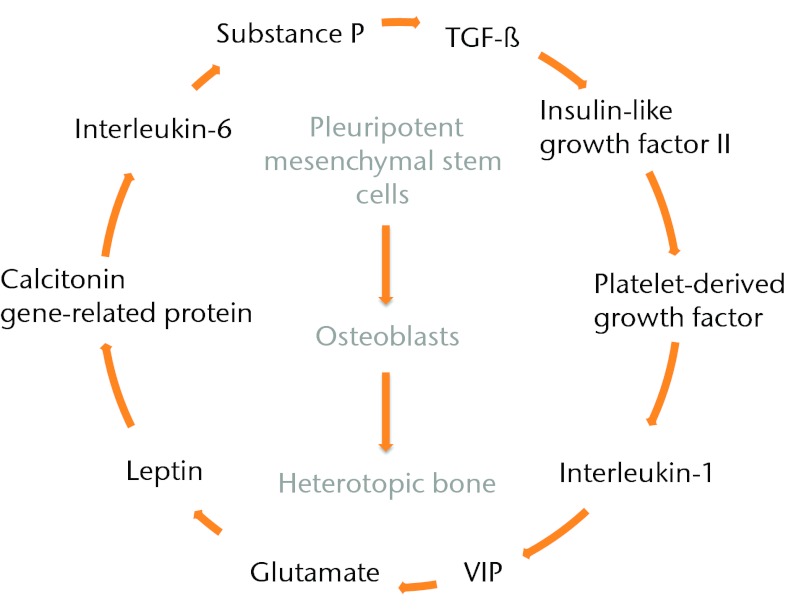
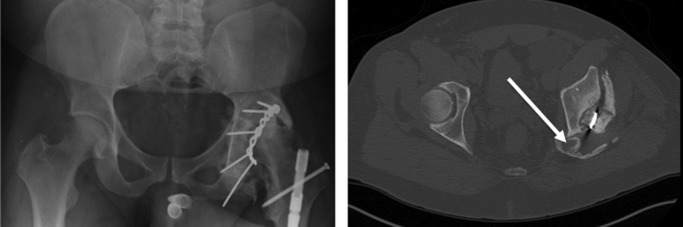
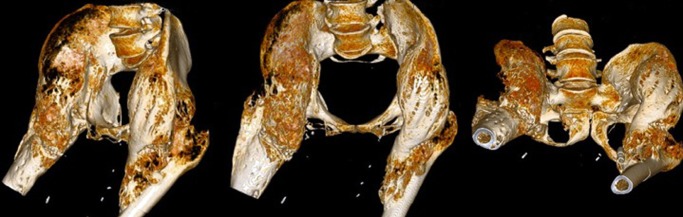
Neurogenic heterotopic ossification (NHO) is a disorder of aberrant bone formation affecting one in five patients sustaining a spinal cord injury or traumatic brain injury. Ectopic bone forms around joints in characteristic patterns, causing pain and limiting movement especially around the hip and elbow. Clinical sequelae of neurogenic heterotopic ossification include urinary tract infection, pressure injuries, pneumonia and poor hygiene, making early diagnosis and treatment clinically compelling. However, diagnosis remains difficult with more investigation needed. Our pathophysiological understanding stems from mechanisms of basic bone formation enhanced by evidence of systemic influences from circulating humor factors and perhaps neurological ones. This increasing understanding guides our implementation of current prophylaxis and treatment including the use of non-steroidal anti-inflammatory drugs, bisphosphonates, radiation therapy and surgery and, importantly, should direct future, more effective ones.
神经源性异位骨化(NHO)是一种异常骨形成的疾病,影响五分之一的脊髓损伤或创伤性脑损伤患者。异位骨在关节周围以特征性模式形成,导致疼痛和运动受限,尤其是在髋关节和肘关节周围。神经源性异位骨化的临床后果包括尿路感染、压疮、肺炎和卫生条件差,因此早期诊断和治疗具有重要的临床意义。然而,诊断仍然具有挑战性,需要进一步的检查。我们对病理生理学的理解源于基本骨形成机制,这些机制受到循环体液因素和可能的神经因素的系统影响的证据增强。这种不断增加的理解指导我们实施当前的预防和治疗措施,包括使用非甾体抗炎药、双膦酸盐、放射治疗和手术,而且重要的是,应该指导未来更有效的治疗措施。