Department of Molecular Biology, University of Bergen, Bergen, Norway.
PLoS One. 2013 Apr 15;8(4):e61012. doi: 10.1371/journal.pone.0061012. Print 2013.
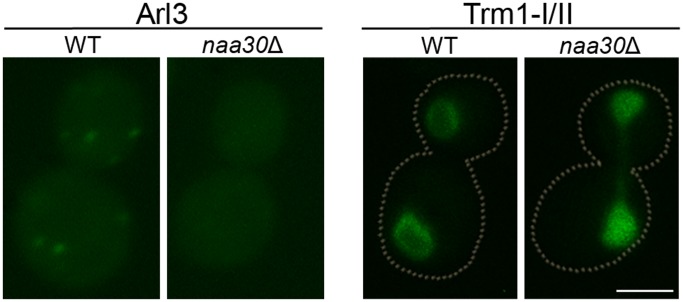
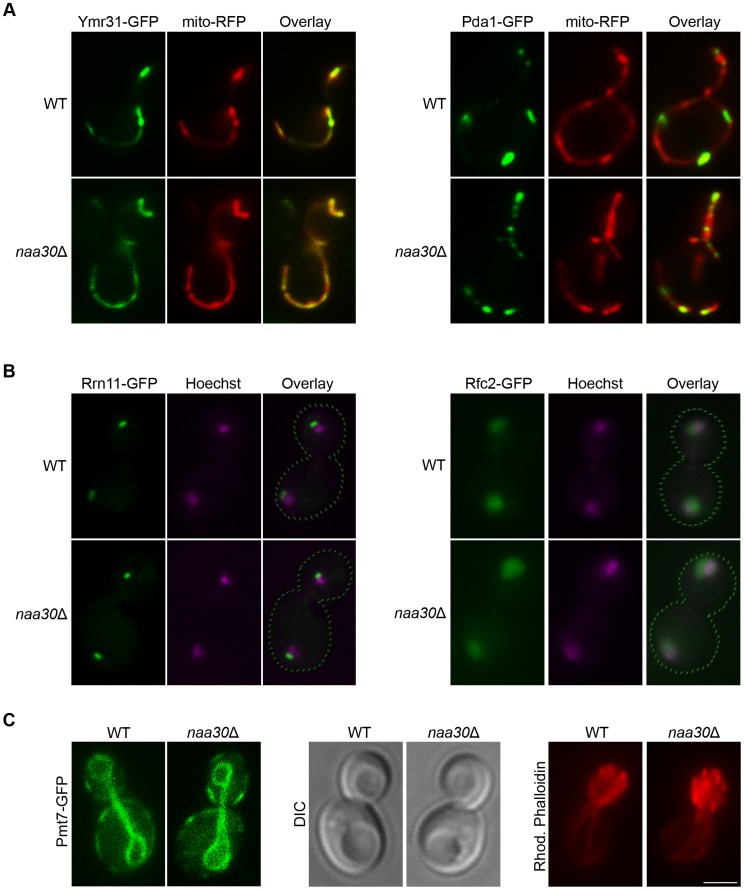
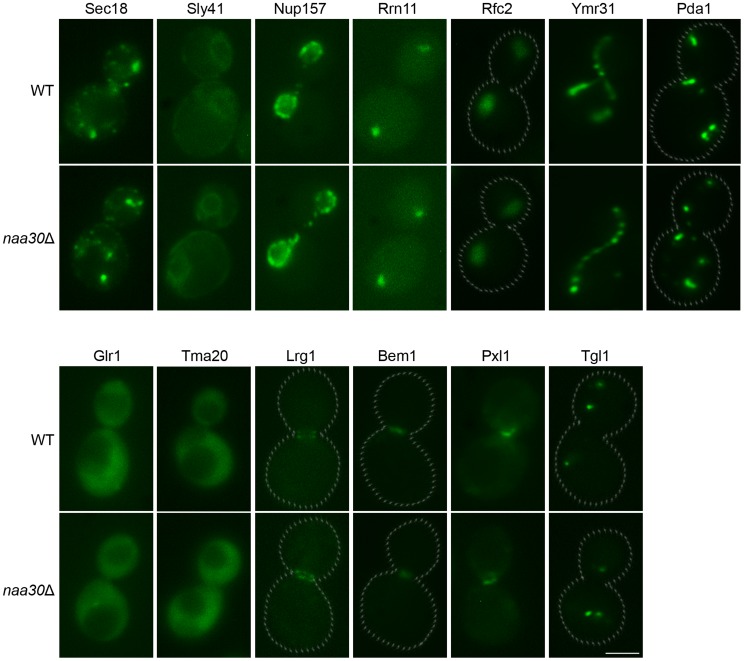
N-terminal acetylation has been suggested to play a role in the subcellular targeting of proteins, in particular those acetylated by the N-terminal acetyltransferase complex NatC. Based on previous positional proteomics data revealing N-terminal acetylation status and the predicted NAT substrate classes, we selected 13 suitable NatC substrates for subcellular localization studies in Saccharomyces cerevisiae. Fluorescence microscopy analysis of GFP-tagged candidates in the presence or absence of the NatC catalytic subunit Naa30 (Mak3) revealed unaltered localization patterns for all 13 candidates, thus arguing against a general role for the N-terminal acetyl group as a localization determinant. Furthermore, all organelle-localized substrates indicated undisrupted structures, thus suggesting that absence of NatC acetylation does not have a vast effect on organelle morphology in yeast.
N-端乙酰化被认为在蛋白质的亚细胞靶向中起作用,特别是那些被 N-端乙酰转移酶复合物 NatC 乙酰化的蛋白质。基于先前揭示 N-端乙酰化状态和预测的 NAT 底物类别的定位蛋白质组学数据,我们选择了 13 个合适的 NatC 底物用于酿酒酵母的亚细胞定位研究。在存在或不存在 NatC 催化亚基 Naa30(Mak3)的情况下,对 GFP 标记候选物进行荧光显微镜分析,结果发现 13 个候选物的定位模式均未发生改变,因此不支持 N-端乙酰基作为定位决定因素的一般作用。此外,所有定位于细胞器的底物均显示出未被破坏的结构,因此表明酵母中 NatC 乙酰化的缺失对细胞器形态没有巨大影响。