Department of Physiology and Neurobiology, Geisel School of Medicine at Dartmouth, Lebanon, New Hampshire, United States of America.
PLoS One. 2013 Apr 17;8(4):e62069. doi: 10.1371/journal.pone.0062069. Print 2013.
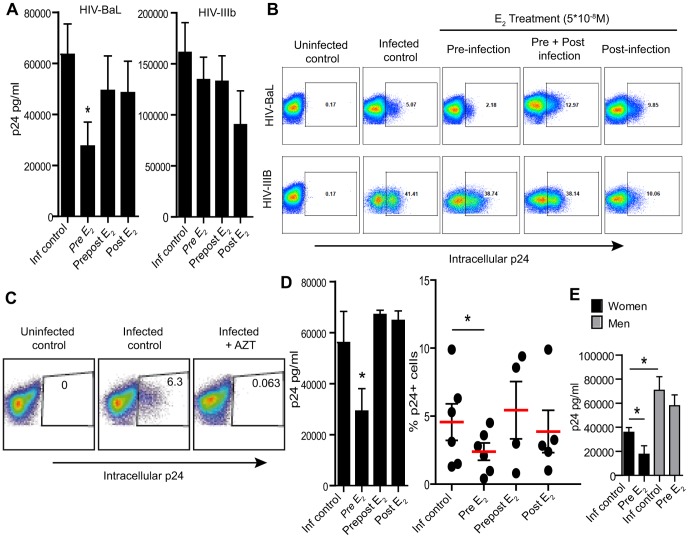
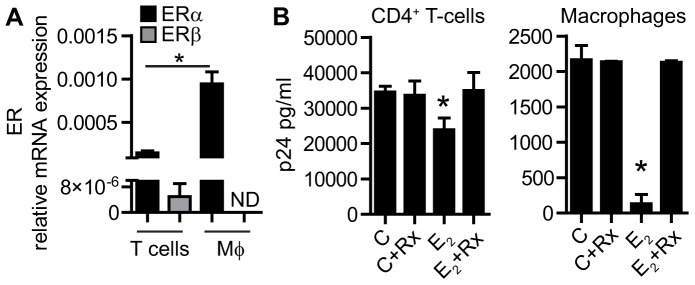
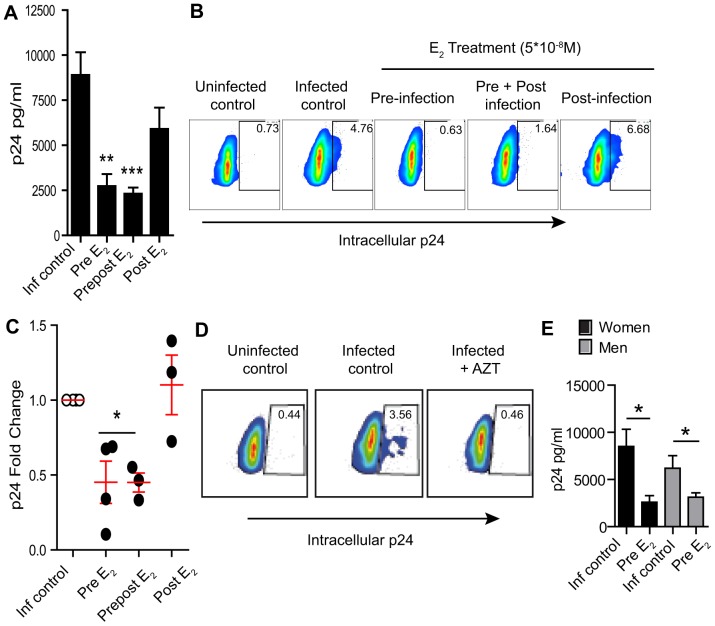
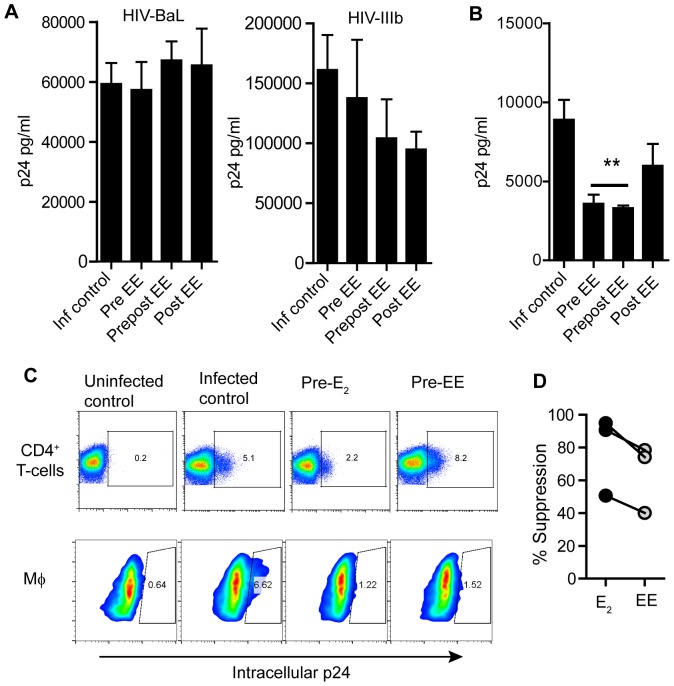
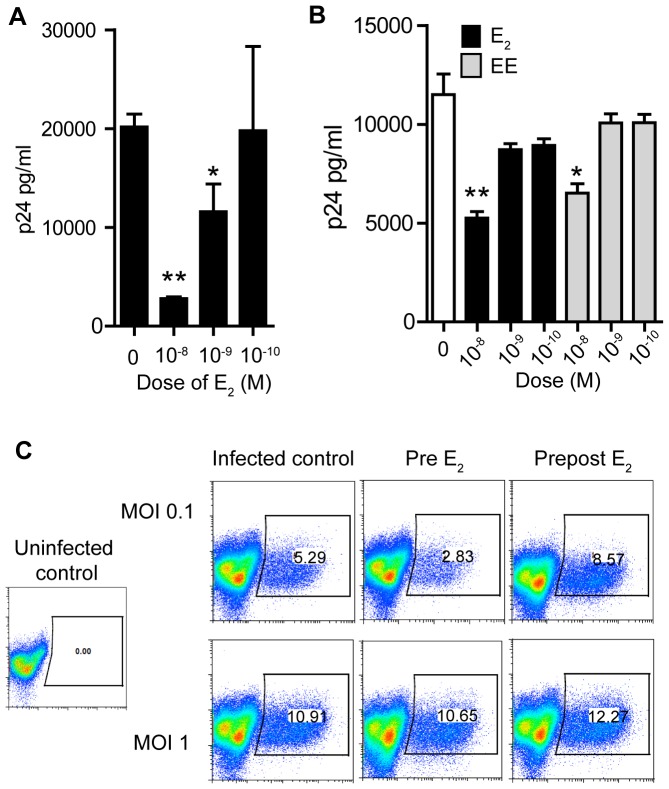
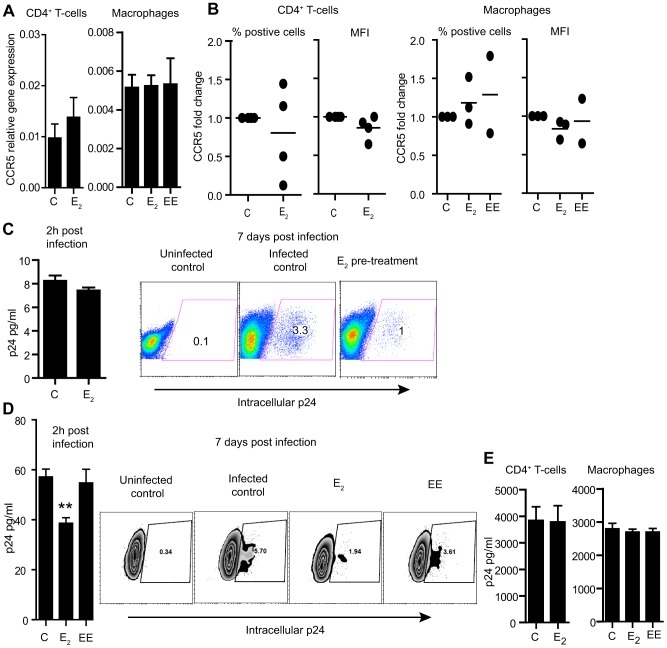
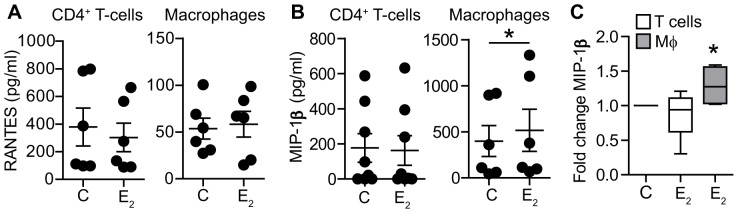
The magnitude of the HIV epidemic in women requires urgent efforts to find effective preventive methods. Even though sex hormones have been described to influence HIV infection in epidemiological studies and regulate different immune responses that may affect HIV infection, the direct role that female sex hormones play in altering the susceptibility of target cells to HIV-infection is largely unknown. Here we evaluated the direct effect of 17-β-estradiol (E2) and ethinyl estradiol (EE) in HIV-infection of CD4(+) T-cells and macrophages. Purified CD4(+) T-cells and monocyte-derived macrophages were generated in vitro from peripheral blood and infected with R5 and X4 viruses. Treatment of CD4(+) T-cells and macrophages with E2 prior to viral challenge reduced their susceptibility to HIV infection in a dose-dependent manner. Addition of E2 2 h after viral challenge however did not result in reduced infection. In contrast, EE reduced infection in macrophages to a lesser extent than E2 and had no effect on CD4(+) T-cell infection. Reduction of HIV-infection induced by E2 in CD4(+) T-cells was not due to CCR5 down-regulation, but was an entry-mediated mechanism since infection with VSV-G pseudotyped HIV was not modified by E2. In macrophages, despite the lack of an effect of E2 on CCR5 expression, E2-treatment reduced viral entry 2 h after challenge and increased MIP-1β secretion. These results demonstrate the direct effect of E2 on susceptibility of HIV-target cells to infection and indicate that inhibition of target cell infection involves cell-entry related mechanisms.
艾滋病病毒在女性中的流行程度需要紧急努力寻找有效的预防方法。尽管性激素在流行病学研究中被描述为影响艾滋病病毒感染,并调节可能影响艾滋病病毒感染的不同免疫反应,但女性性激素在改变靶细胞对艾滋病病毒感染易感性方面的直接作用在很大程度上尚不清楚。在这里,我们评估了 17-β-雌二醇(E2)和乙炔雌二醇(EE)在 CD4(+)T 细胞和巨噬细胞中感染艾滋病病毒的直接作用。从外周血中体外生成纯化的 CD4(+)T 细胞和单核细胞衍生的巨噬细胞,并感染 R5 和 X4 病毒。在病毒攻击前用 E2 处理 CD4(+)T 细胞和巨噬细胞可剂量依赖性地降低其对艾滋病病毒感染的易感性。然而,在病毒攻击后 2 小时添加 E2 并不会导致感染减少。相比之下,EE 对巨噬细胞的感染的减少程度小于 E2,并且对 CD4(+)T 细胞感染没有影响。E2 在 CD4(+)T 细胞中诱导的艾滋病病毒感染减少不是由于 CCR5 下调所致,而是一种进入介导的机制,因为 E2 不会改变用 VSV-G 假型化的 HIV 感染。在巨噬细胞中,尽管 E2 对 CCR5 表达没有影响,但 E2 处理可在 2 小时后降低病毒进入并增加 MIP-1β 分泌。这些结果表明 E2 对艾滋病病毒靶细胞易感性的直接作用,并表明抑制靶细胞感染涉及与细胞进入相关的机制。