MMWR Morb Mortal Wkly Rep. 2013 Apr 26;62(16):308-11.
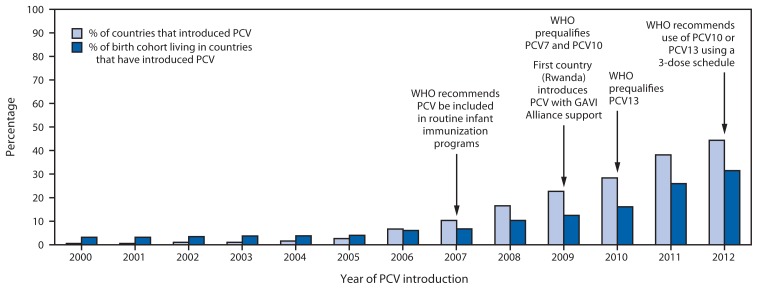
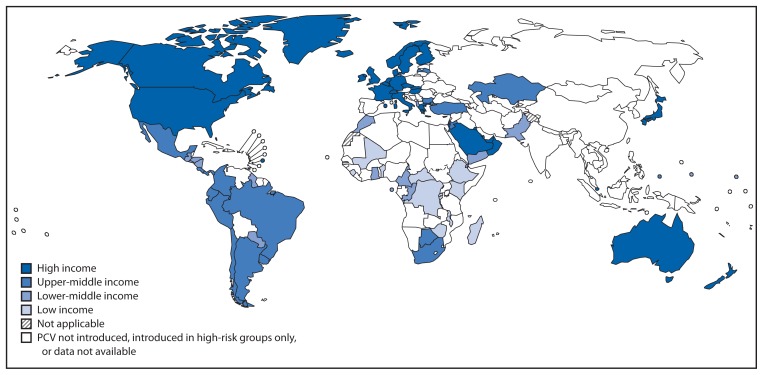
Pneumococcal conjugate vaccines (PCVs) are safe and effective for reducing illness and deaths caused by Streptococcus pneumoniae. Recommendations for PCV use from the World Health Organization (WHO) and funding from the GAVI Alliance have resulted in an increase in PCV introductions into national immunization programs, especially in lower-income countries. Additionally, new formulations that cover more serotypes commonly causing disease in lower- and middle-income countries have become available. This report uses WHO data from 2000-2012, stratified by country disease burden characteristics and World Bank country income groups, to describe global progress in PCV introduction. As of December 2012, a total of 86 (44%) WHO member states have added PCV to the routine infant immunization schedule of their national immunization programs; among those, 23 have introduced PCV with GAVI Alliance support. PCV introduction among WHO member states was most common in the Americas Region (60% of member states), followed by the Eastern Mediterranean Region (50%), European Region (49%), African Region (41%), and Western Pacific Region (33%); none of 11 WHO member states in the South-East Asia Region have introduced PCV. Proportions of low- and middle-income countries with PCV introductions were similar. The proportion of the world's birth cohort living in countries with PCV in national immunization programs increased from 1% in 2000 to 31% in 2012. These findings suggest that efforts to increase PCV introduction and use globally are succeeding; however, gaps in PCV use remain in Asia and countries with large birth cohorts, where concerted efforts should be focused.
肺炎球菌结合疫苗(PCV)安全有效,可降低肺炎链球菌引起的疾病和死亡。世界卫生组织(WHO)的建议和全球疫苗免疫联盟(GAVI Alliance)的资助使更多国家将 PCV 纳入国家免疫规划,特别是低收入国家。此外,新的疫苗配方可覆盖更多在中低收入国家引起疾病的血清型。本报告使用 2000 至 2012 年的 WHO 数据,按国家疾病负担特征和世界银行国家收入分组,描述 PCV 接种的全球进展情况。截至 2012 年 12 月,共有 86 个(44%)WHO 会员国将 PCV 纳入国家免疫规划的常规婴儿免疫接种计划;其中 23 个国家在 GAVI Alliance 的支持下引入了 PCV。在 WHO 会员国中,PCV 接种最常见于美洲区域(60%的会员国),其次是东地中海区域(50%)、欧洲区域(49%)、非洲区域(41%)和西太平洋区域(33%);东南亚区域的 11 个 WHO 会员国中没有一个引入了 PCV。中低收入国家引入 PCV 的比例相似。在国家免疫规划中使用 PCV 的世界出生队列比例从 2000 年的 1%增加到 2012 年的 31%。这些发现表明,全球增加 PCV 接种和使用的努力正在取得成功;然而,亚洲和出生队列庞大的国家在 PCV 使用方面仍存在差距,应集中精力解决这些问题。