Department of Clinical and Experimental Medicine/Gastroenterology, Center for Medical Image Science and Visualization CMIV, Linköping University, Linköping, Sweden.
Aliment Pharmacol Ther. 2013 Jun;37(12):1184-97. doi: 10.1111/apt.12319. Epub 2013 Apr 25.
Gut-directed hypnotherapy can reduce IBS symptoms, but the mechanisms underlying this therapeutic effect remain unknown.
To determine the effect of hypnotherapy and educational intervention on brain responses to cued rectal distensions in IBS patients.
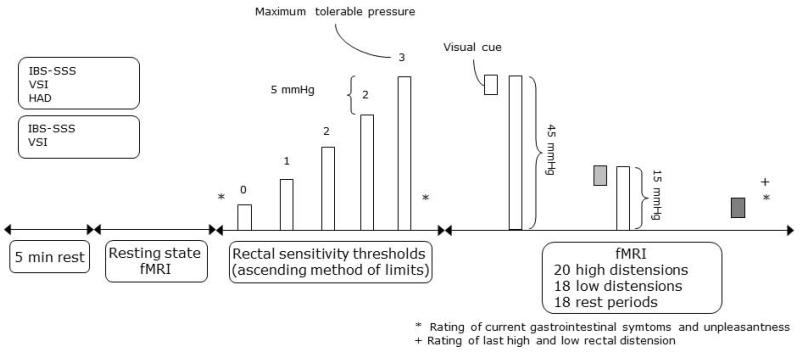
Forty-four women with moderate-to-severe IBS and 20 healthy controls (HCs) were included. Blood oxygen level dependent (BOLD) signals were measured by functional Magnetic Resonance Imaging (fMRI) during expectation and delivery of high- (45 mmHg) and low-intensity (15 mmHg) rectal distensions. Twenty-five patients were assigned to hypnotherapy (HYP) and 16 to educational intervention (EDU). Thirty-one patients completed treatments and posttreatment fMRI.
Similar symptom reduction was achieved in both groups. Clinically successful treatment (all responders) was associated with significant BOLD attenuation during high-intensity distension in the dorsal and ventral anterior insula (cluster size 142, P = 0.006, and cluster size 101, P = 0.005 respectively). Moreover HYP responders demonstrated a pre-post treatment BOLD attenuation in posterior insula (cluster sizes 59, P = 0.05) while EDU responders had a BOLD attenuation in prefrontal cortex (cluster size 60, P = 0.05). Pre-post differences for expectation conditions were almost exclusively seen in the HYP group. Following treatment, the brain response to distension was similar to that observed in HCs, suggesting that the treatment had a normalising effect on the central processing abnormality of visceral signals in IBS.
The abnormal processing and enhanced perception of visceral stimuli in IBS can be normalised by psychological interventions. Symptom improvement in the treatment groups may be mediated by different brain mechanisms.
NCT01815164.
肠道导向催眠疗法可以减轻 IBS 症状,但这种治疗效果的机制尚不清楚。
确定催眠疗法和教育干预对 IBS 患者对提示性直肠扩张的大脑反应的影响。
纳入 44 名中重度 IBS 女性患者和 20 名健康对照者(HCs)。通过功能磁共振成像(fMRI)测量静息态和高(45mmHg)、低强度(15mmHg)直肠扩张时血氧水平依赖(BOLD)信号。25 名患者被分配到催眠治疗组(HYP),16 名患者被分配到教育干预组(EDU)。31 名患者完成治疗和治疗后 fMRI。
两组患者的症状均有相似程度的减轻。临床治疗成功(所有应答者)与高强度直肠扩张时背侧和腹侧前岛叶的 BOLD 衰减相关(簇大小分别为 142,P=0.006 和 101,P=0.005)。此外,HYP 应答者在治疗后表现出后岛叶的 BOLD 衰减(簇大小为 59,P=0.05),而 EDU 应答者在额前皮质有 BOLD 衰减(簇大小为 60,P=0.05)。期待条件下的治疗前后差异几乎仅见于 HYP 组。治疗后,对扩张的大脑反应与 HCs 观察到的相似,表明治疗对 IBS 内脏信号的中枢处理异常有正常化作用。
IBS 患者内脏刺激的异常处理和增强感知可以通过心理干预来正常化。治疗组的症状改善可能通过不同的大脑机制介导。
NCT01815164。