Department of Anesthesia and Pain Medicine, Hospital for Sick Children, Toronto, ON, Canada.
BMC Med Educ. 2013 Apr 23;13:59. doi: 10.1186/1472-6920-13-59.
Podcasts are increasingly being used in medical education. In this study, we conducted a survey of Canadian anesthesia residents to better delineate the content needs, format preferences, and usage patterns among anesthesia residents.
10/16 Canadian anesthesia program directors, representing 443/659 Canadian anesthesia residents, allowed their residents to be included in the study. 169/659 (24%) residents responded to our survey. A 17-item survey tool developed by the investigators was distributed by email eliciting information on patterns of podcast use, preferred content, preferred format, and podcast adjuncts perceived to increase knowledge retention.
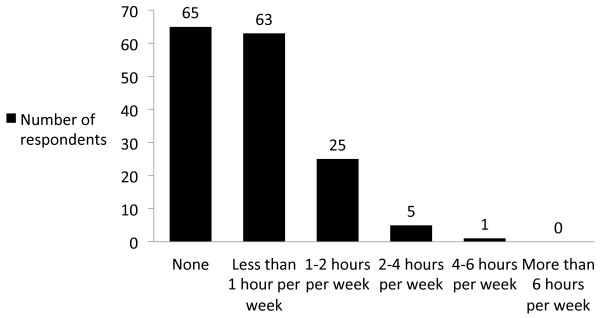
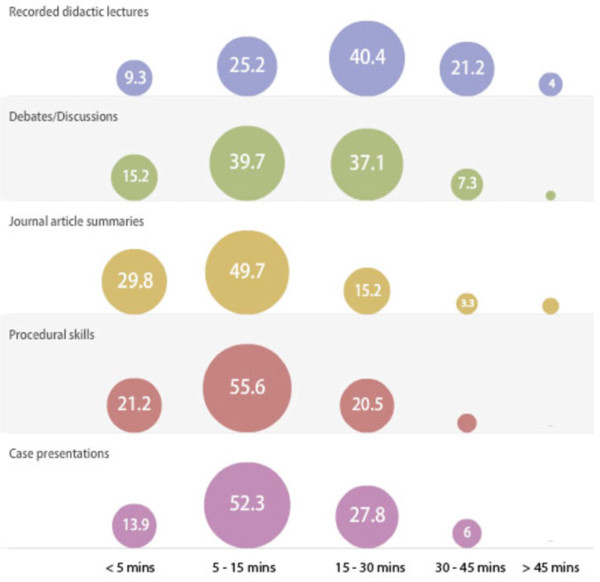
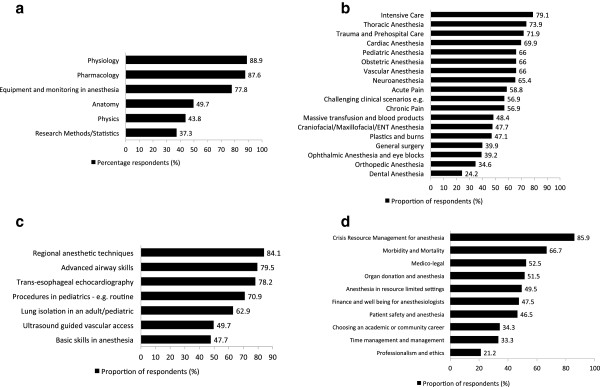
60% (91/151) had used medical podcasts with 67% of these users spending up to 1 hour per week on podcasts. 72.3% of respondents selected 'ability to review materials whenever I want' was selected by the majority of respondents (72%) as the reason they found podcasts to be valuable. No clear preference was shown for audio, video, or slidecast podcasts. Physiology (88%) and pharmacology (87%) were the most requested basic science topics while regional anesthesia (84%), intensive care (79%) and crisis resource management (86%) were the most requested for procedural, clinical and professional topics respectively. Respondents stated they would most likely view podcasts that contained procedural skills, journal article summaries and case presentations and that were between 5-15 minutes in duration A significantly greater proportion of senior residents (81%) requested podcasts on 'pediatric anesthesia' compared to junior residents 57% (P = 0.007).
The majority of respondents are using podcasts. Anesthesia residents have preferred podcast content, types, length and format that educators should be cognizant of when developing and providing podcasts.
播客在医学教育中越来越受欢迎。在这项研究中,我们对加拿大麻醉住院医师进行了调查,以更好地描绘麻醉住院医师的内容需求、格式偏好和使用模式。
10/16 名加拿大麻醉项目主任,代表 443/659 名加拿大麻醉住院医师,允许他们的住院医师参与研究。659 名住院医师中的 169 名(24%)对我们的调查做出了回应。研究人员开发的一个 17 项调查工具通过电子邮件分发,以获取有关播客使用模式、首选内容、首选格式以及被认为可以增加知识保留的播客辅助工具的信息。
60%(91/151)的人使用过医学播客,其中 67%的用户每周在播客上花费多达 1 小时。72.3%的受访者选择“随时复习材料的能力”作为他们认为播客有价值的主要原因(72%)。受访者对音频、视频或幻灯片播客没有明显偏好。生理学(88%)和药理学(87%)是最需要的基础科学主题,而区域麻醉(84%)、重症监护(79%)和危机资源管理(86%)是最需要的程序性、临床和专业主题。受访者表示,他们最有可能观看包含程序技能、期刊文章摘要和病例介绍的播客,并且时长在 5-15 分钟之间。比例显著更高的资深住院医师(81%)要求播放“儿科麻醉”的播客,而初级住院医师的比例为 57%(P=0.007)。
大多数受访者正在使用播客。麻醉住院医师对播客内容、类型、长度和格式有偏好,教育者在开发和提供播客时应注意这些偏好。