State Key Laboratory of Natural Medicines, Department of Pharmaceutics, China Pharmaceutical University, Nanjing, People's Republic of China.
Int J Nanomedicine. 2013;8:1489-98. doi: 10.2147/IJN.S42949. Epub 2013 Apr 16.
Chitosan and chitosan derivatives have been proposed as alternative and biocompatible cationic polymers for nonviral gene delivery. However, the low transfection efficiency and low specificity of chitosan is an aspect of this approach that must be addressed prior to any clinical application. In the present study, folated poly(ethylene glycol)-chitosan-graft-polyethylenimine (FPCP) was investigated as a potential folate receptor-overexpressed cancer cell targeting gene carrier.
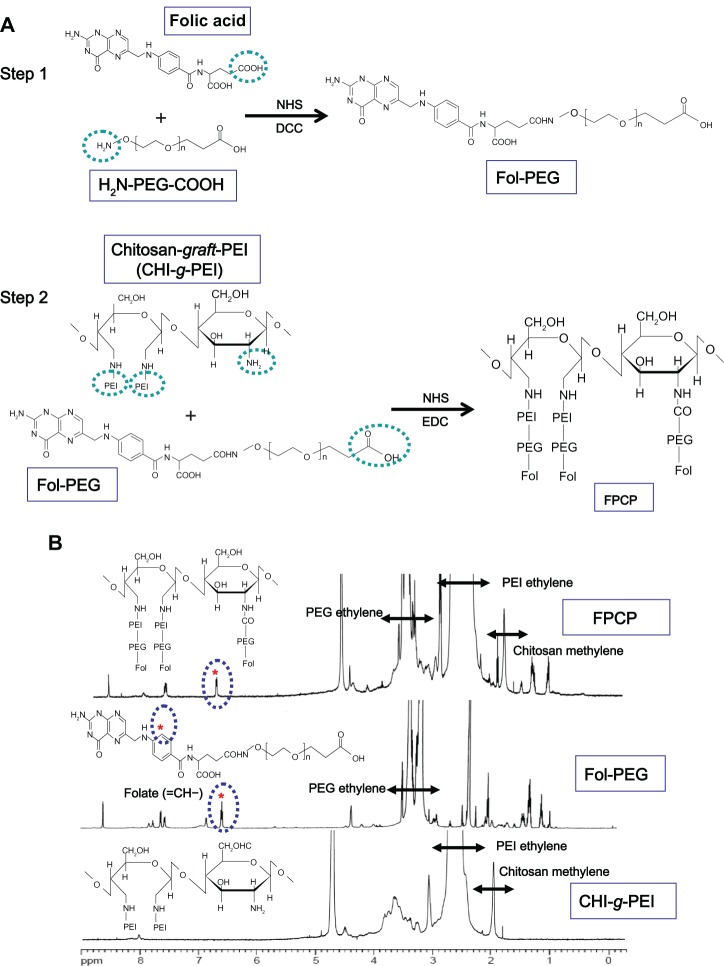
The FPCP copolymer was synthesized in two steps. In the first step, folate-PEG was synthesized by an amide formation reaction between the activated carboxyl groups of folic acid and the amine groups of bifunctional poly(ethylene glycol) (PEG). In the second step, FPCP was synthesized by an amide formation reaction between the activated carboxyl groups of folate-PEG and amine groups of CHI-g-polyethyleneimine (PEI). The composition of FPCP was characterized by ¹H nuclear magnetic resonance.
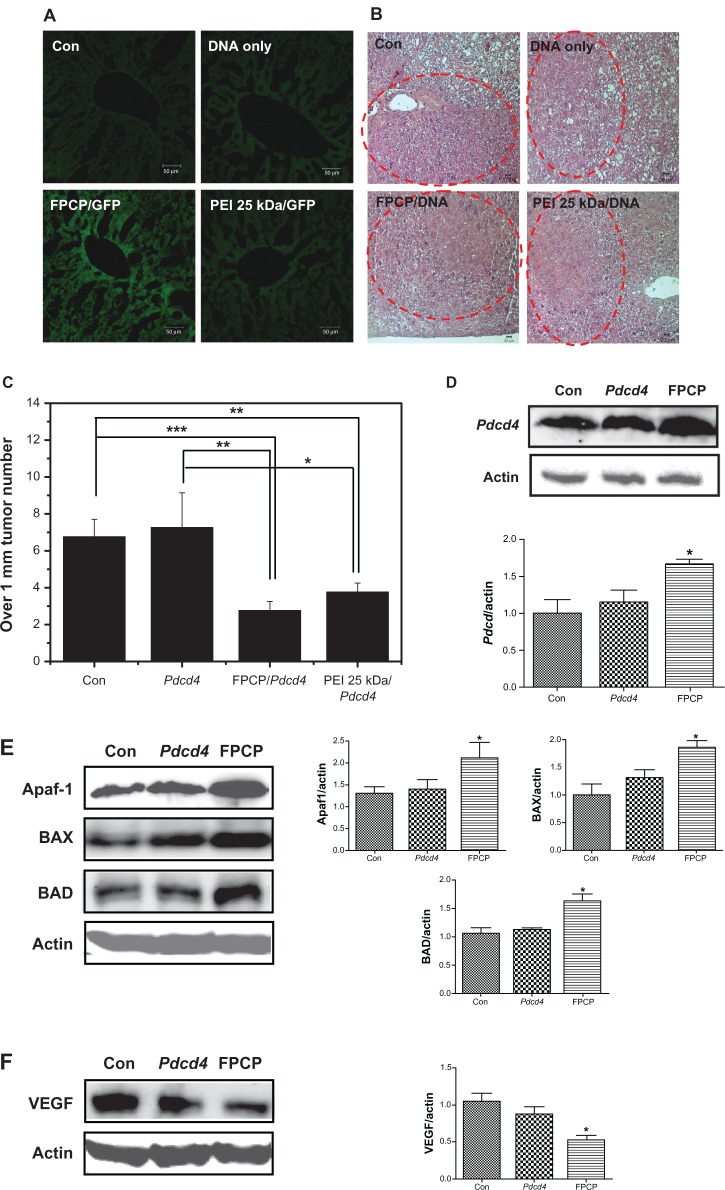
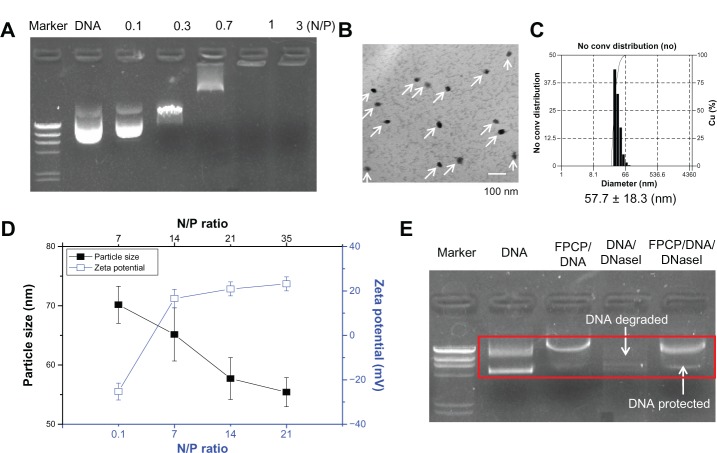
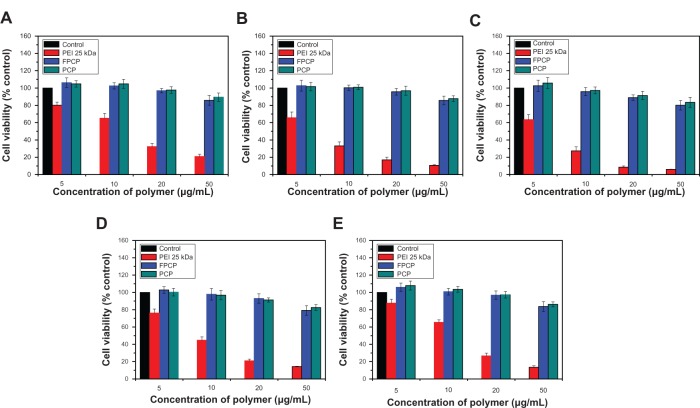
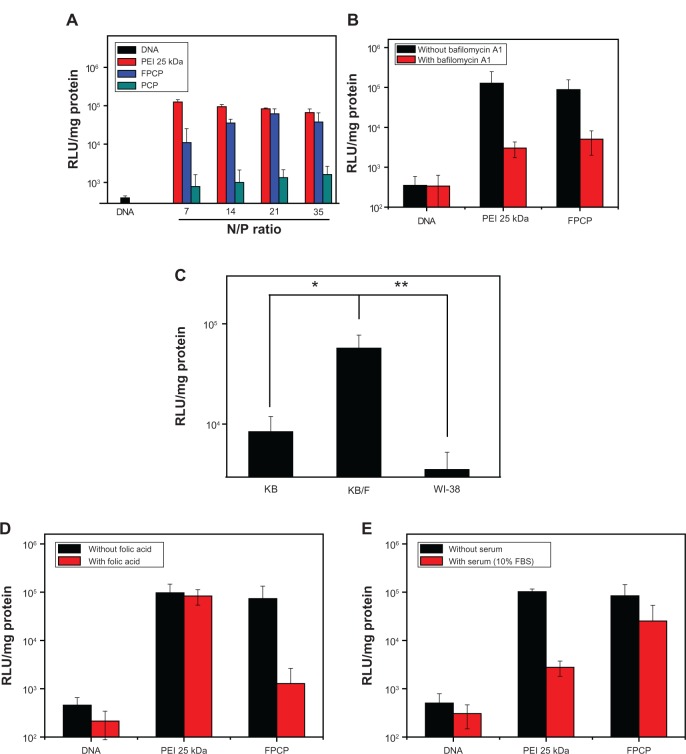
FPCP showed low cytotoxicity in various cell lines, and FPCP-DNA complexes showed good cancer cell specificity as well as good transfection efficiency in the presence of serum. Further, FPCP-Pdcd4 complexes reduced tumor numbers and progression more effectively than PEI 25 kDa in H-ras12V liver cancer mice after intravenous administration.
Our data suggest that FPCP, which has improved transfection efficiency and cancer cell specificity, may be useful in gene therapy for liver cancer.
壳聚糖及其衍生物已被提议作为非病毒基因传递的替代物和生物相容性阳离子聚合物。然而,壳聚糖的转染效率低和特异性低是该方法在任何临床应用之前必须解决的问题。在本研究中,叶酸聚乙二醇-壳聚糖接枝-聚乙烯亚胺(FPCP)被研究为一种潜在的叶酸受体过表达癌细胞靶向基因载体。
FPCP 共聚物通过两步法合成。第一步,通过叶酸的活化羧基与双官能聚乙二醇(PEG)的氨基之间的酰胺形成反应合成叶酸-PEG。第二步,通过叶酸-PEG 的活化羧基与 CHI-g-聚乙烯亚胺(PEI)的氨基之间的酰胺形成反应合成 FPCP。FPCP 的组成通过 ¹H 核磁共振进行了表征。
FPCP 在各种细胞系中表现出低细胞毒性,并且在存在血清的情况下,FPCP-DNA 复合物表现出良好的癌细胞特异性和良好的转染效率。此外,与 25 kDa 的 PEI 相比,FPCP-Pdcd4 复合物在经静脉给药的 H-ras12V 肝癌小鼠中更有效地减少了肿瘤数量和进展。
我们的数据表明,具有提高的转染效率和癌细胞特异性的 FPCP 可能在肝癌的基因治疗中有用。