
识别有效应对艾滋病的结构性障碍:利用国家综合政策指数数据评估人权、法律和政策环境。
Identifying structural barriers to an effective HIV response: using the National Composite Policy Index data to evaluate the human rights, legal and policy environment.
机构信息
Programme on Global Health and Human Rights, Institute for Global Health, University of Southern California, Los Angeles, CA, USA.
出版信息
J Int AIDS Soc. 2013 Apr 26;16(1):18000. doi: 10.7448/IAS.16.1.18000.
INTRODUCTION
Attention to the negative effects of structural barriers on HIV efforts is increasing. Reviewing national legal and policy environments with attention to the international human rights commitments of states is a means of assessing and providing focus for addressing these barriers to effective HIV responses.
METHODS
Law and policy data from the 171 countries reporting under the Declaration of Commitment from the 2001 United Nations General Assembly Special Session on HIV/AIDS were analyzed to assess attention to human rights in national legal and policy environments as relevant to the health and rights of key populations such as people who inject drugs, men who have sex with men and sex workers.
RESULTS
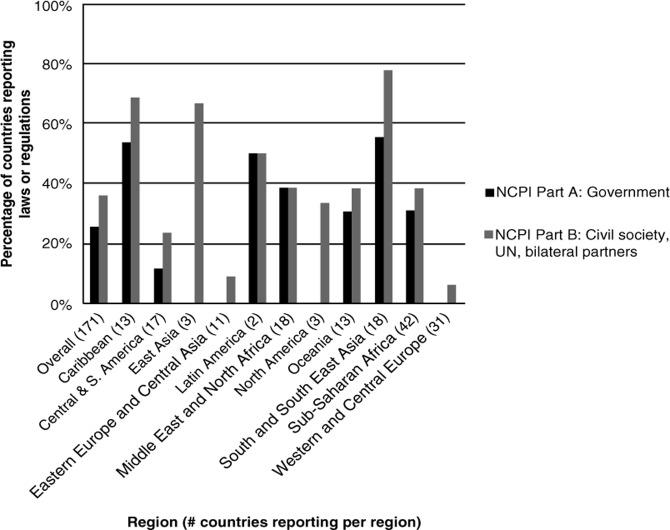
Seventy-eight governments and civil society in 106 countries report the existence of laws and policies which present obstacles to accessing HIV services for key populations. Laws and policies which positively affect access to HIV-related services, in and of themselves constituting structural interventions, were also reported. The dissonance between laws and how this impacts the availability and use of HIV-related services deserve greater attention.
CONCLUSIONS
Recognition of the harms inherent in laws that constitute structural barriers to effective HIV responses and the potential positive role that a supportive legal environment can play suggests the need for legal reform to ensure an enabling regulatory framework within which HIV services can be effectively delivered and used by the populations who need them. Moving beyond laws and policies, further efforts are required to determine how to capture information on the range of structural barriers. Teasing apart the impact of different barriers, as well as the structural interventions put in place to address them, remains complicated. Capturing the impact of policy and legal interventions can ultimately support governments and civil society to ensure the human rights of key populations are protected in national HIV responses.
引言
人们越来越关注结构性障碍对艾滋病毒防治工作的负面影响。审查各国的法律和政策环境并关注各国的国际人权承诺,是评估和为解决这些障碍以有效应对艾滋病毒提供重点的一种手段。
方法
分析了在联合国大会艾滋病毒/艾滋病问题 2001 年特别会议《承诺宣言》下报告的 171 个国家的法律和政策数据,以评估各国法律和政策环境中与重点人群(如注射毒品者、男男性行为者和性工作者)的健康和权利有关的人权问题。
结果
78 个国家的政府和 106 个国家的民间社会报告称,存在着妨碍重点人群获得艾滋病毒服务的法律和政策。还报告了一些对获得艾滋病毒相关服务产生积极影响的法律和政策,这些法律和政策本身构成了结构性干预措施。法律与实际情况之间的不和谐以及这对艾滋病毒相关服务的提供和使用的影响值得引起更多关注。
结论
认识到构成有效艾滋病毒应对措施结构性障碍的法律所固有的危害,以及支持性法律环境可能发挥的积极作用,表明需要进行法律改革,以确保建立一个有利的监管框架,使艾滋病毒服务能够由需要这些服务的人群有效提供和使用。除了法律和政策之外,还需要进一步努力确定如何获取有关一系列结构性障碍的信息。剖析不同障碍的影响,以及为解决这些障碍而采取的结构性干预措施,仍然很复杂。了解政策和法律干预措施的影响最终可以支持政府和民间社会,确保在国家艾滋病毒应对措施中保护重点人群的人权。


 Zotero 插件