Veterans Affairs Greater Los Angeles Healthcare System, California, USA.
Gastroenterology. 2013 Jun;144(6):1199-209.e4. doi: 10.1053/j.gastro.2013.02.007.
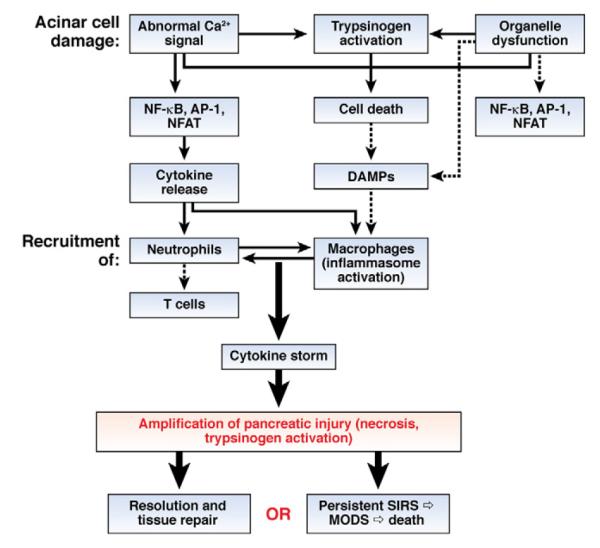
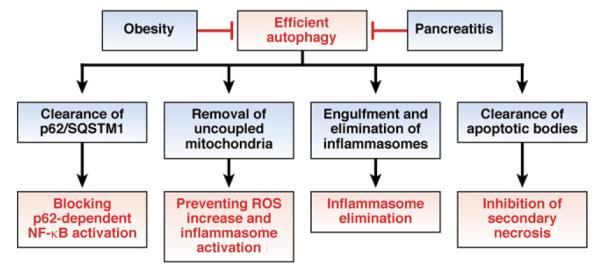
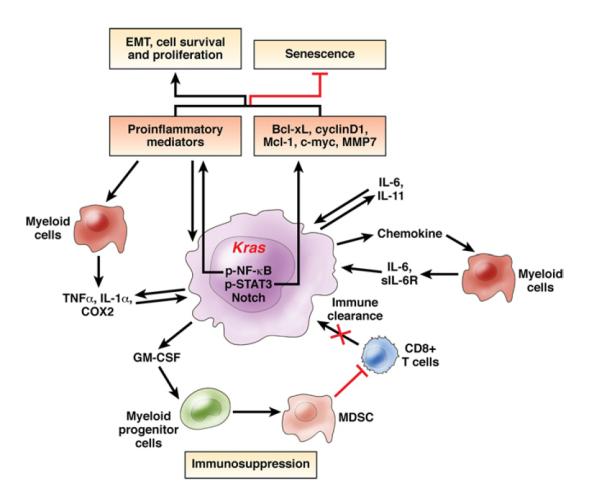
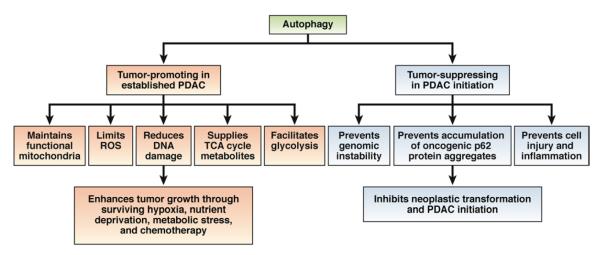
Inflammation and autophagy are cellular defense mechanisms. When these processes are deregulated (deficient or overactivated) they produce pathologic effects, such as oxidative stress, metabolic impairments, and cell death. Unresolved inflammation and disrupted regulation of autophagy are common features of pancreatitis and pancreatic cancer. Furthermore, obesity, a risk factor for pancreatitis and pancreatic cancer, promotes inflammation and inhibits or deregulates autophagy, creating an environment that facilitates the induction and progression of pancreatic diseases. However, little is known about how inflammation, autophagy, and obesity interact to promote exocrine pancreatic disorders. We review the roles of inflammation and autophagy, and their deregulation by obesity, in pancreatic diseases. We discuss the connections among disordered pathways and important areas for future research.
炎症和自噬是细胞防御机制。当这些过程失调(不足或过度激活)时,它们会产生病理效应,如氧化应激、代谢损伤和细胞死亡。未解决的炎症和自噬调节的破坏是胰腺炎和胰腺癌的共同特征。此外,肥胖是胰腺炎和胰腺癌的一个危险因素,它促进炎症并抑制或失调自噬,创造了一个有利于诱导和进展胰腺疾病的环境。然而,人们对炎症、自噬和肥胖如何相互作用以促进外分泌胰腺疾病知之甚少。我们综述了炎症和自噬的作用,以及肥胖对它们的失调在胰腺疾病中的作用。我们讨论了紊乱途径之间的联系以及未来研究的重要领域。