Caballero Otavia L, Cohen Tzeela, Gurung Sita, Chua Ramon, Lee Peishan, Chen Yao-Tseng, Jat Parmjit, Simpson Andrew J G
Ludwig Institute for Cancer Research, New York Branch at Memorial Sloan-Kettering Cancer Center, New York, USA.
Oncotarget. 2013 Apr;4(4):531-41. doi: 10.18632/oncotarget.921.
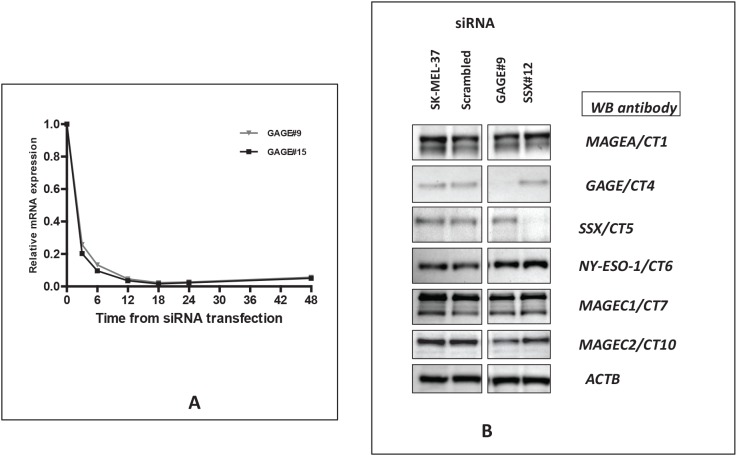
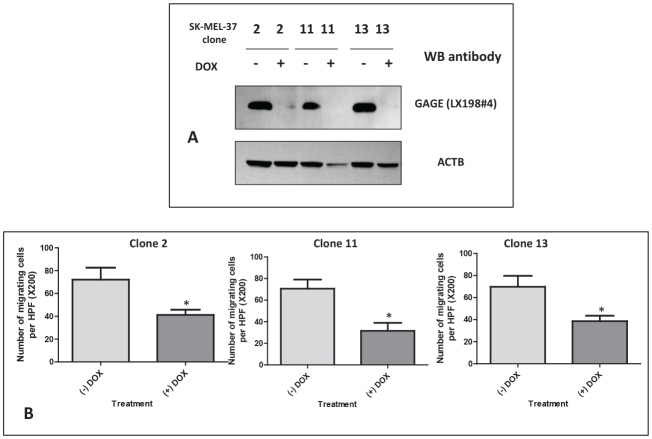
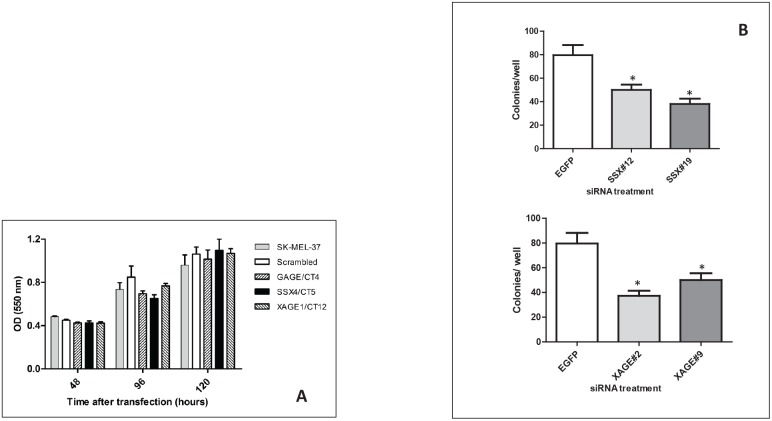
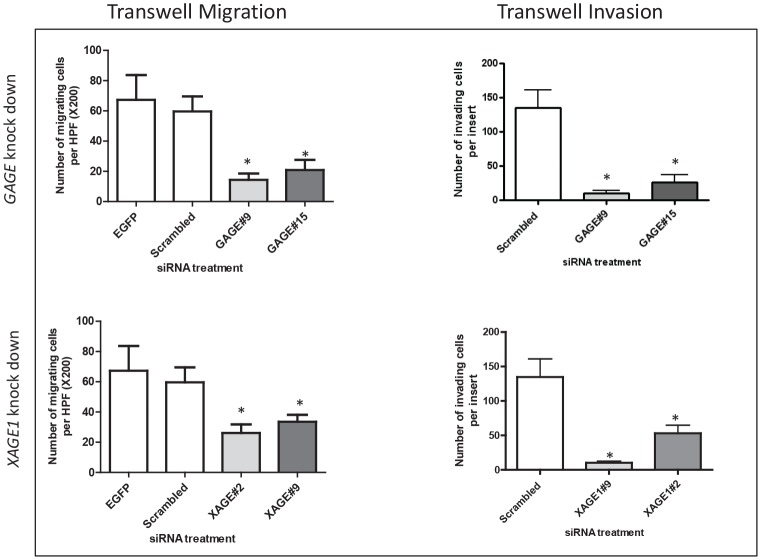
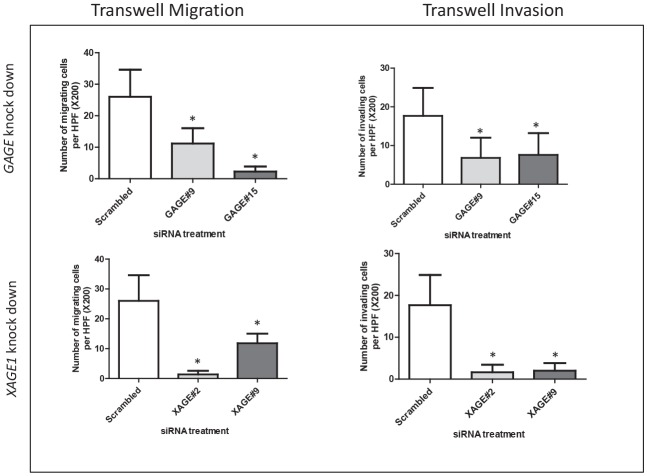
Cancer/testis (CT) genes are encoded by genes that are normally expressed only in the human germ line but which are activated in various malignancies. CT proteins are frequently immunogenic in cancer patients and their expression is highly restricted to tumors. They are thus important targets for anticancer immunotherapy. In several different tumor types, the expression of CT-X genes is associated with advanced disease and poor outcome, indicating that their expression might contribute to tumorigenesis. CT-X genes encoding members of the MAGE protein family on Xq28 have been shown to potentially influence the tumorigenic phenotype. We used small interfering RNA (siRNA) to investigate whether CT-X mapping to the short arm of the X-chromosome might also have tumorigenic properties and therefore be potentially targeted by functional inhibitors in a therapeutic setting. siRNAs specific to GAGE, SSX and XAGE1 were used in cell proliferation, migration and cell survival assays using cell lines derived from melanoma, a tumor type known to present high frequencies of expression of CT antigens. We found that of these, those specific to GAGE and XAGE1 most significantly impeded melanoma cell migration and invasion and those specific to SSX4 and XAGE1 decreased the clonogenic survival of melanoma cells. Our results suggest that GAGE, XAGE1 and SSX4 might each have a role in tumor progression and are possible therapeutic targets for the treatment of melanoma and other malignancies.
癌/睾丸(CT)基因由通常仅在人类生殖系中表达但在各种恶性肿瘤中被激活的基因编码。CT蛋白在癌症患者中通常具有免疫原性,并且其表达高度局限于肿瘤。因此,它们是抗癌免疫治疗的重要靶点。在几种不同的肿瘤类型中,CT-X基因的表达与疾病进展和不良预后相关,这表明它们的表达可能有助于肿瘤发生。已证明位于Xq28上编码MAGE蛋白家族成员的CT-X基因可能影响致瘤表型。我们使用小干扰RNA(siRNA)来研究定位于X染色体短臂的CT-X是否也具有致瘤特性,因此在治疗环境中可能成为功能抑制剂的潜在靶点。使用源自黑色素瘤的细胞系,将针对GAGE、SSX和XAGE1的siRNA用于细胞增殖、迁移和细胞存活测定,黑色素瘤是一种已知CT抗原高表达频率的肿瘤类型。我们发现,其中,那些针对GAGE和XAGE1的siRNA最显著地阻碍黑色素瘤细胞的迁移和侵袭,而那些针对SSX4和XAGE1的siRNA降低了黑色素瘤细胞的克隆形成存活率。我们的结果表明,GAGE、XAGE1和SSX4可能各自在肿瘤进展中起作用,并且是治疗黑色素瘤和其他恶性肿瘤的可能治疗靶点。