Marjorie B. Kovler Viral Oncology Laboratories, The University of Chicago, 910 East 58th Street, Chicago, IL 60637, USA.
Viruses. 2013 Apr 29;5(5):1208-18. doi: 10.3390/v5051208.
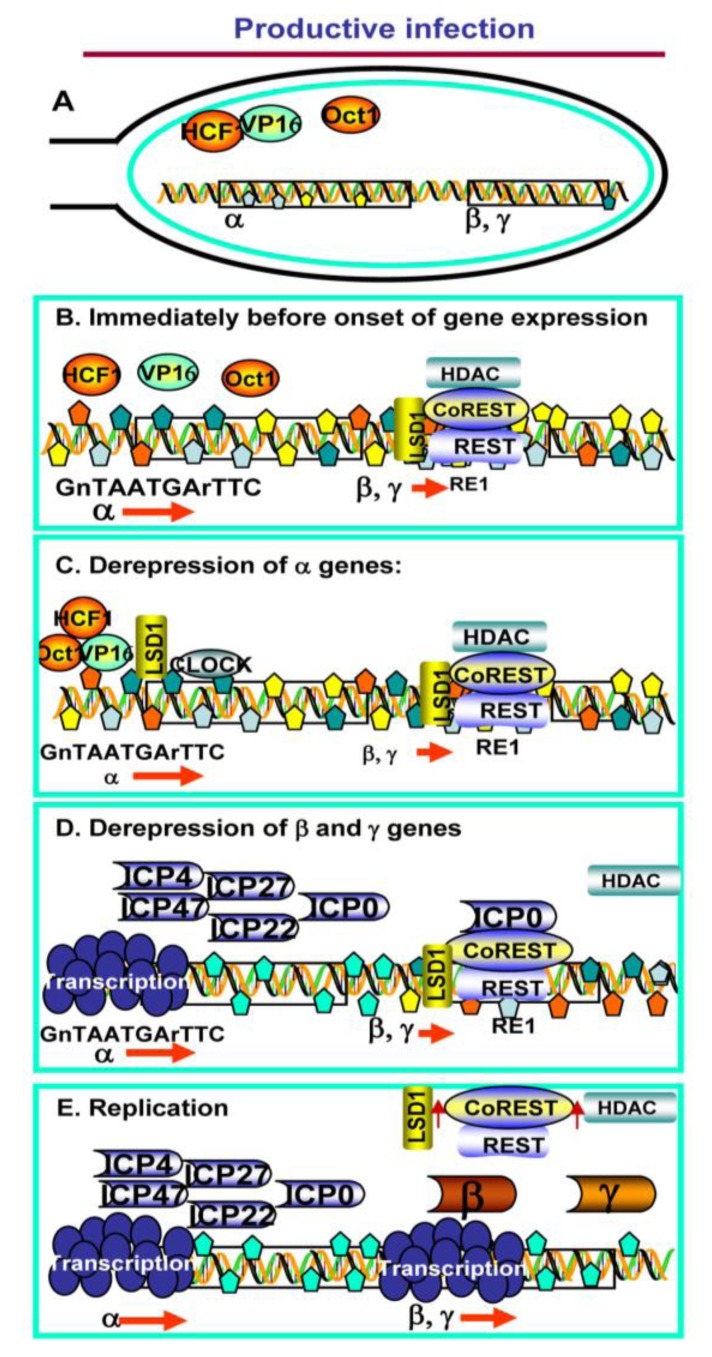
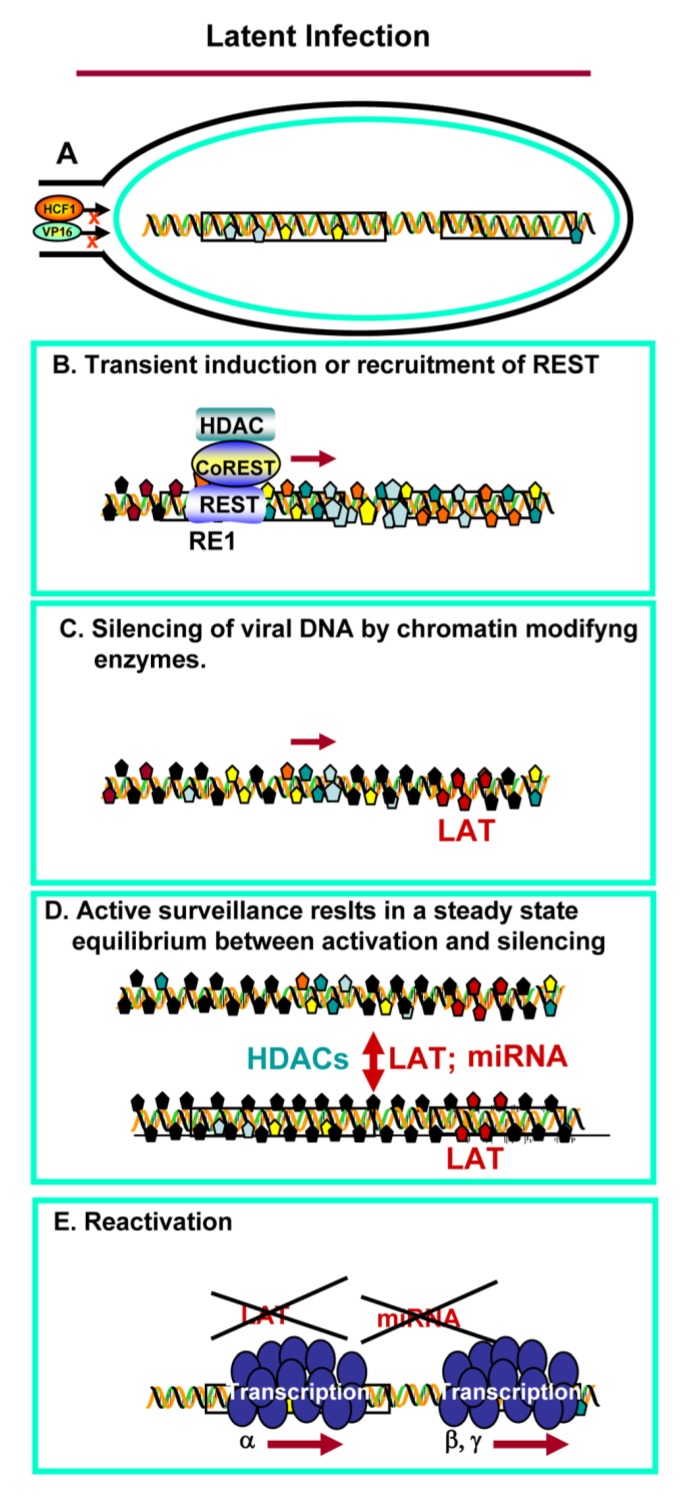
REST is a key component of the HDAC1 or 2, CoREST, LSD1, REST (HCLR) repressor complex. The primary function of the HCLR complex is to silence neuronal genes in non-neuronal cells. HCLR plays a role in regulating the expression of viral genes in productive infections as a donor of LDS1 for expression of α genes and as a repressor of genes expressed later in infection. In sensory neurons the HCLR complex is involved in the silencing of viral genome in the course of establishment of latency. The thesis of this article is that (a) sensory neurons evolved a mechanism to respond to the presence and suppress the transmission of infectious agents from the periphery to the CNS and (b) HSV evolved subservience to the HCLR with at least two objectives: to maintain a level of replication consistent with maximal person-to-person spread and to enable it to take advantage of neuronal innate immune responses to survive and be available for reactivation shielded from adaptive immune responses of the host.
REST 是 HDAC1 或 2、CoREST、LSD1、REST(HCLR)抑制剂复合物的关键组成部分。HCLR 复合物的主要功能是在非神经元细胞中沉默神经元基因。在产毒感染中,HCLR 作为 LSD1 的供体表达α基因,并作为感染后期表达基因的抑制剂,在调节病毒基因的表达中发挥作用。在感觉神经元中,HCLR 复合物参与潜伏过程中病毒基因组的沉默。本文的论点是:(a)感觉神经元进化出一种机制来应对病原体的存在并抑制其从外周向中枢神经系统的传播;(b)HSV 进化为服从 HCLR,至少有两个目的:维持与最大人际传播相一致的复制水平,并使其能够利用神经元固有免疫反应来存活,并可重新激活,免受宿主适应性免疫反应的影响。