Department of Psychotherapy and Systems Neuroscience, Justus Liebig University Giessen Giessen, Germany ; Bender Institute of Neuroimaging, Justus Liebig University Giessen Giessen, Germany ; Outpatient Clinic for Behavior Therapy, Justus Liebig University Giessen Giessen, Germany.
Front Hum Neurosci. 2013 Apr 22;7:143. doi: 10.3389/fnhum.2013.00143. eCollection 2013.
Patients with obsessive-compulsive disorder (OCD) have highly idiosyncratic triggers. To fully understand which role this idiosyncrasy plays in the neurobiological mechanisms behind OCD, it is necessary to elucidate the impact of individualization regarding the applied investigation methods. This functional magnetic resonance imaging (fMRI) study explores the neural correlates of contamination/washing-related OCD with a highly individualized symptom provocation paradigm. Additionally, it is the first study to directly compare individualized and standardized symptom provocation.
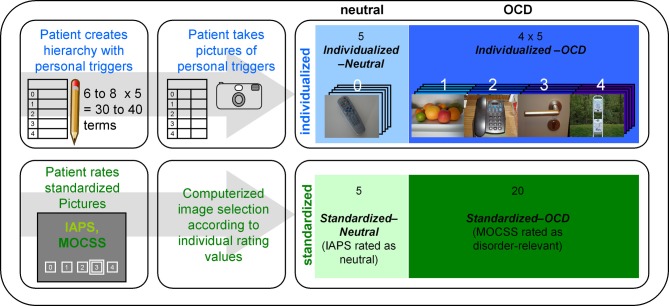
Nineteen patients with washing compulsions created individual OCD hierarchies, which later served as instructions to photograph their own individualized stimulus sets. The patients and 19 case-by-case matched healthy controls participated in a symptom provocation fMRI experiment with individualized and standardized stimulus sets created for each patient.
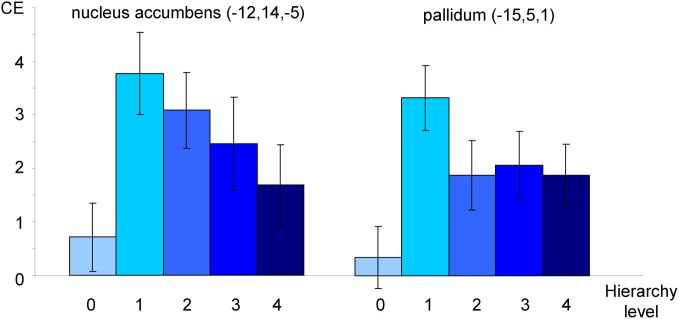
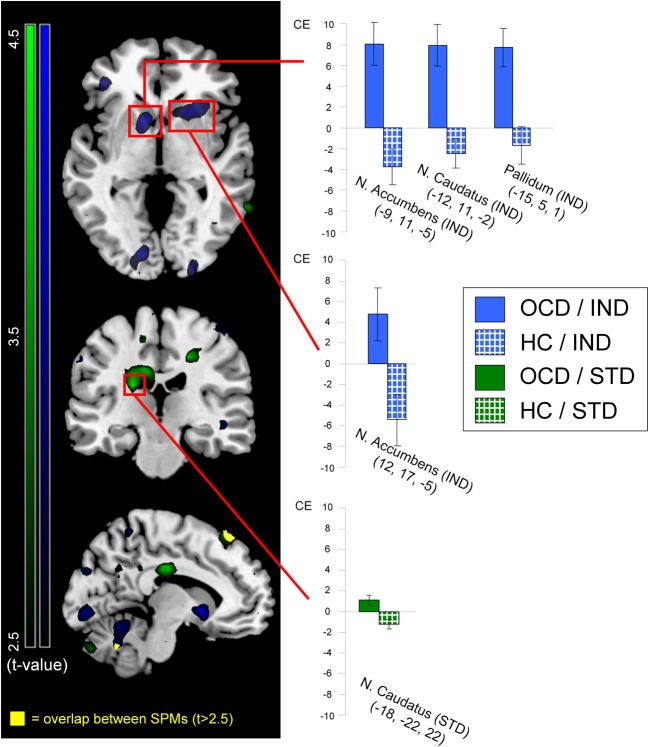
OCD patients compared to healthy controls displayed stronger activation in the basal ganglia (nucleus accumbens, nucleus caudatus, pallidum) for individualized symptom provocation. Using standardized symptom provocation, this group comparison led to stronger activation in the nucleus caudatus. The direct comparison of between-group effects for both symptom provocation approaches revealed stronger activation of the orbitofronto-striatal network for individualized symptom provocation.
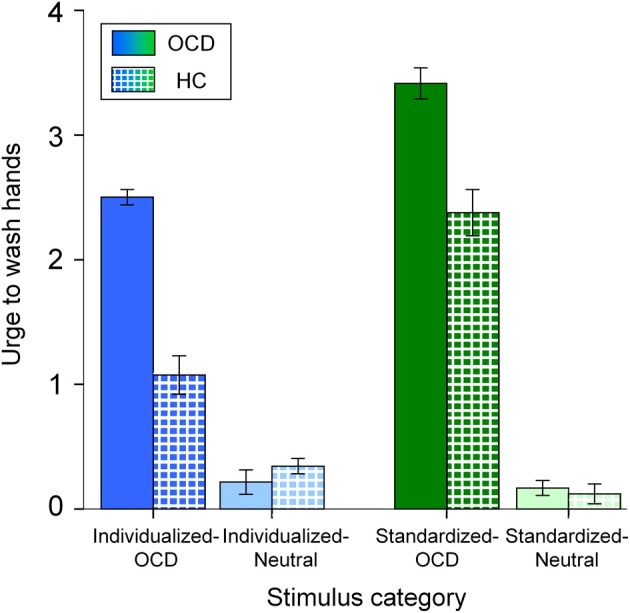
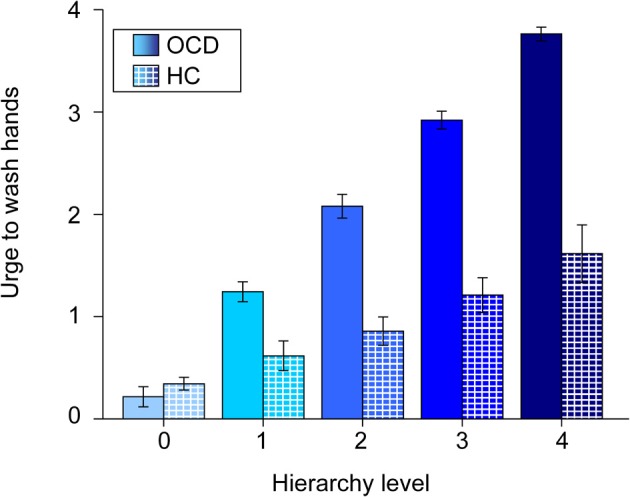
The present study provides insight into the differential impact of individualized and standardized symptom provocation on the orbitofronto-striatal network of OCD washers. Behavioral and neural responses imply a higher symptom-specificity of individualized symptom provocation.
强迫症(OCD)患者具有高度特异的触发因素。为了充分了解这种特质在 OCD 背后的神经生物学机制中所起的作用,有必要阐明个体化对应用研究方法的影响。这项功能性磁共振成像(fMRI)研究采用高度个体化的症状激发范式,探讨了与污染/洗涤相关的 OCD 的神经相关性。此外,这是第一项直接比较个体化和标准化症状激发的研究。
19 名有洗涤强迫的患者创建了自己的 OCD 层级,这些层级后来被用作拍摄自己个体化刺激集的指令。患者和 19 名按病例匹配的健康对照组参加了一个 fMRI 症状激发实验,为每位患者创建了个体化和标准化的刺激集。
与健康对照组相比,强迫症患者在个体化症状激发时基底节(伏隔核、尾状核、苍白球)的激活更强。使用标准化的症状激发,这组比较导致尾状核的激活更强。两种症状激发方法的组间效应的直接比较显示,个体化症状激发时眶额纹状体网络的激活更强。
本研究深入了解了个体化和标准化症状激发对 OCD 洗涤者眶额纹状体网络的不同影响。行为和神经反应暗示了个体化症状激发的更高症状特异性。