Pikor Larissa, Thu Kelsie, Vucic Emily, Lam Wan
Department of Integrative Oncology, BC Cancer Research Centre, 675 West 10th Ave, Vancouver, BC, Canada, V5Z 1L3,
Cancer Metastasis Rev. 2013 Dec;32(3-4):341-52. doi: 10.1007/s10555-013-9429-5.
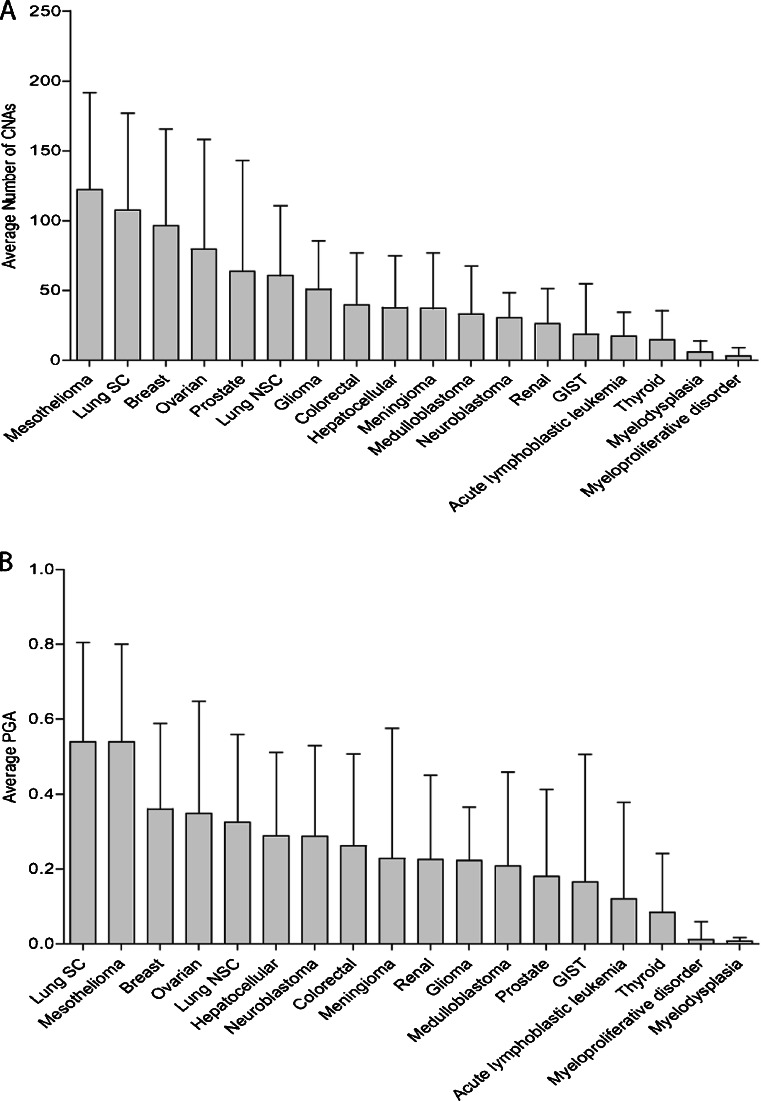
Genomic instability is a hallmark of cancer that leads to an increase in genetic alterations, thus enabling the acquisition of additional capabilities required for tumorigenesis and progression. Substantial heterogeneity in the amount and type of instability (nucleotide, microsatellite, or chromosomal) exists both within and between cancer types, with epithelial tumors typically displaying a greater degree of instability than hematological cancers. While high-throughput sequencing studies offer a comprehensive record of the genetic alterations within a tumor, detecting the rate of instability or cell-to-cell viability using this and most other available methods remains a challenge. Here, we discuss the different levels of genomic instability occurring in human cancers and touch on the current methods and limitations of detecting instability. We have applied one such approach to the surveying of public tumor data to provide a cursory view of genome instability across numerous tumor types.
基因组不稳定是癌症的一个标志,它会导致基因改变增加,从而使肿瘤发生和进展所需的其他能力得以获得。癌症类型内部和之间在不稳定的数量和类型(核苷酸、微卫星或染色体)方面存在很大的异质性,上皮性肿瘤通常比血液系统癌症表现出更高程度的不稳定性。虽然高通量测序研究提供了肿瘤内基因改变的全面记录,但使用这种方法和大多数其他现有方法检测不稳定率或细胞间活力仍然是一个挑战。在这里,我们讨论人类癌症中发生的不同水平的基因组不稳定,并涉及检测不稳定的当前方法和局限性。我们已经应用一种这样的方法来调查公共肿瘤数据,以提供对多种肿瘤类型基因组不稳定的粗略看法。