Jung Nayoung, Kim Dongwon
Department of Neurosurgery, Dongsan Medical Center, Keimyung University College of Medicine, Daegu, Korea.
J Korean Neurosurg Soc. 2013 Mar;53(3):150-4. doi: 10.3340/jkns.2013.53.3.150. Epub 2013 Mar 31.
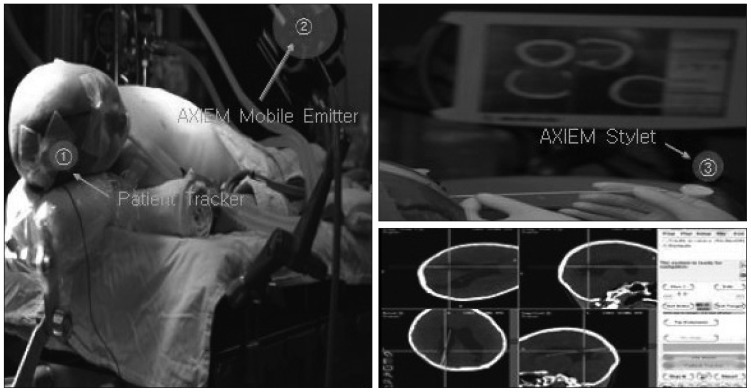
To evaluate the effect of electromagnetic (EM) navigation system on ventriculoperitoneal (VP) shunt failure rate through comparing the result of standard shunt placement.
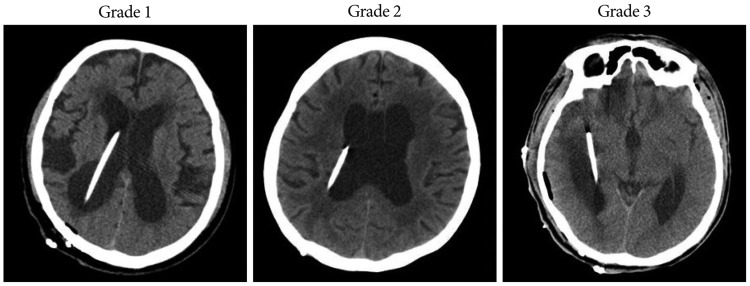
All patients undergoing VP shunt from October 2007 to September 2010 were included in this retrospective study. The first group received shunt surgery using EM navigation. The second group had catheters inserted using manual method with anatomical landmark. The relationship between proximal catheter position and shunt revision rate was evaluated using postoperative computed tomography by a 3-point scale. 1) Grade I; optimal position free-floating in cerebrospinal fluid, 2) Grade II; touching choroid or ventricular wall, 3) Grade III; tip within parenchyma.
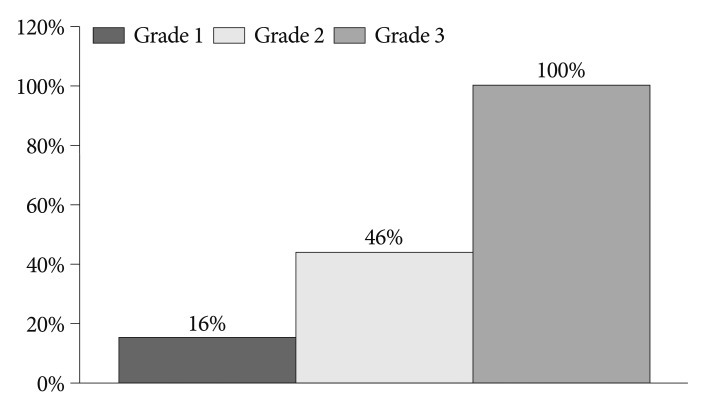
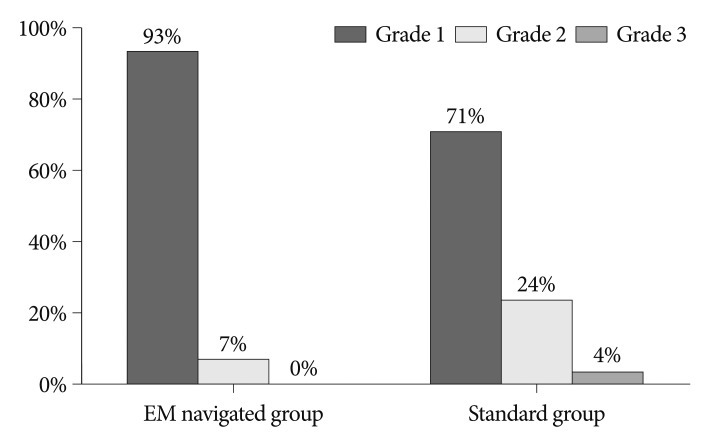
A total of 72 patients were participated, 27 with EM navigated shunts and 45 with standard shunts. Grade I was found in 25 patients from group 1 and 32 patients from group 2. Only 2 patients without use of navigation belonged to grade III. Proximal obstruction took place 7% in grade I, 15% in grade II and 100% in grade III. Shunt revision occurred in 11% of group 1 and 31% of group 2. Compared in terms of proximal catheter position, there was growing trend of revision rate according to increase of grade on each group. Although infection rate was similar between both groups, the result had no statistical meaning (p=0.905, chi-square test).
The use of EM navigation in routine shunt surgery can eliminate poor shunt placement resulting in a dramatic reduction in failure rates.
通过比较标准分流管置入结果,评估电磁导航系统对脑室腹腔分流术(VP分流术)失败率的影响。
本回顾性研究纳入了2007年10月至2010年9月期间接受VP分流术的所有患者。第一组使用电磁导航进行分流手术。第二组通过基于解剖标志的手工方法插入导管。术后通过计算机断层扫描,采用三点量表评估近端导管位置与分流管翻修率之间的关系。1)I级;最佳位置,在脑脊液中自由漂浮;2)II级;接触脉络丛或脑室壁;3)III级;尖端位于脑实质内。
共有72例患者参与,其中27例采用电磁导航分流,45例采用标准分流。第一组25例患者和第二组32例患者为I级。未使用导航的患者中只有2例属于III级。I级近端梗阻发生率为7%,II级为15%,III级为100%。第一组分流管翻修率为11%,第二组为31%。就近端导管位置而言,每组中随着分级增加,翻修率呈上升趋势。尽管两组感染率相似,但结果无统计学意义(p = 0.905,卡方检验)。
在常规分流手术中使用电磁导航可避免分流管置入不佳,从而显著降低失败率。