Institute of Virology, Hannover Medical School, Hannover, Germany.
Retrovirology. 2013 May 1;10:48. doi: 10.1186/1742-4690-10-48.
Platelets, anucleate cell fragments abundant in human blood, can capture HIV-1 and platelet counts have been associated with viral load and disease progression. However, the impact of platelets on HIV-1 infection of T cells is unclear.
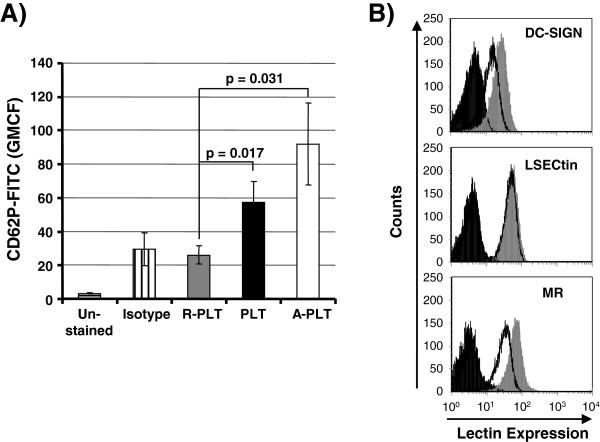
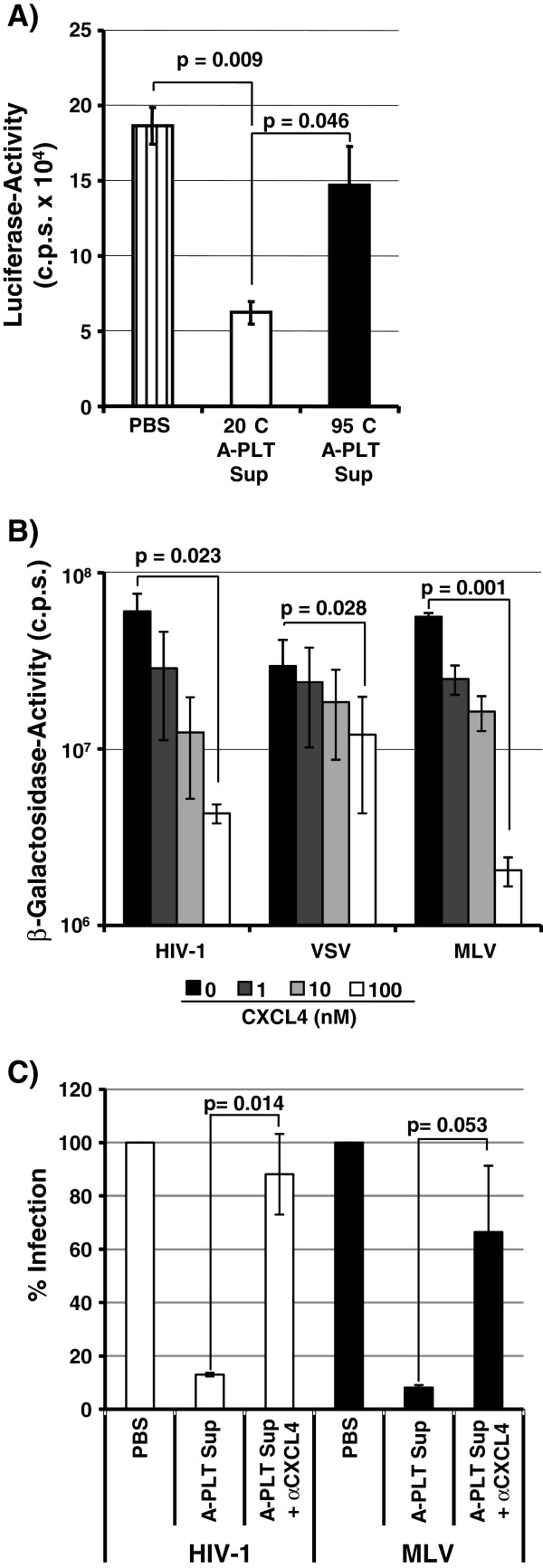
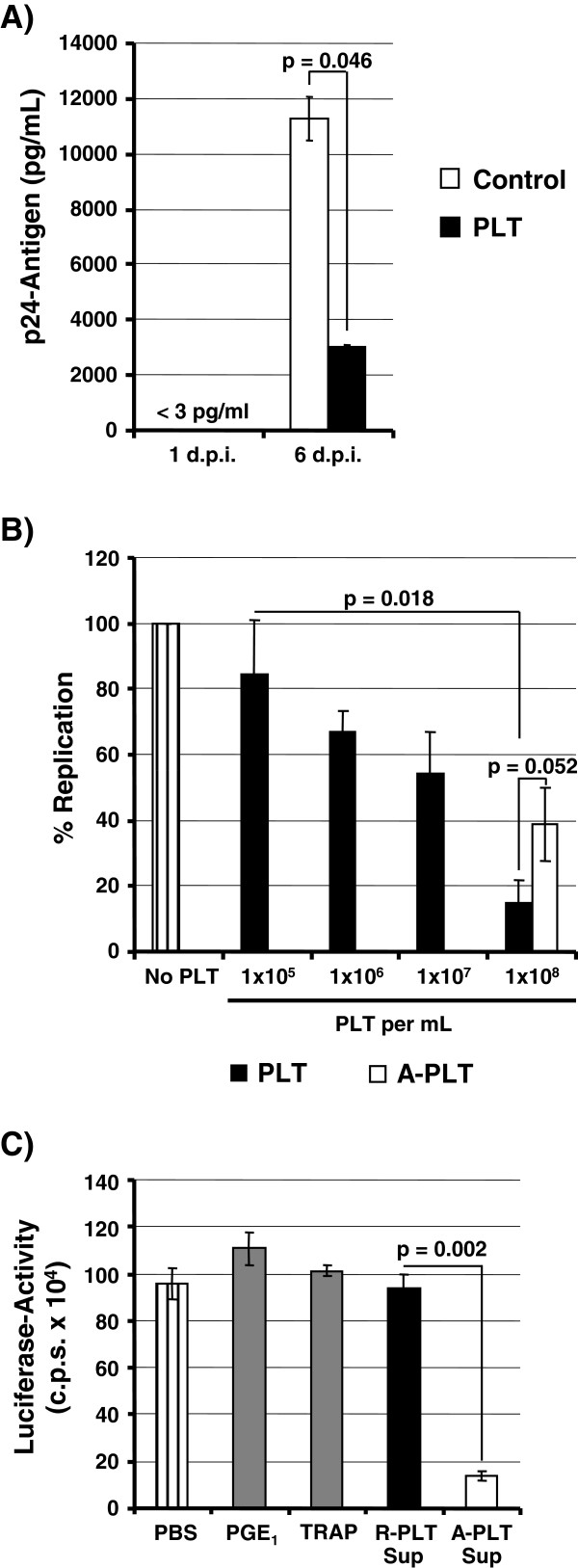
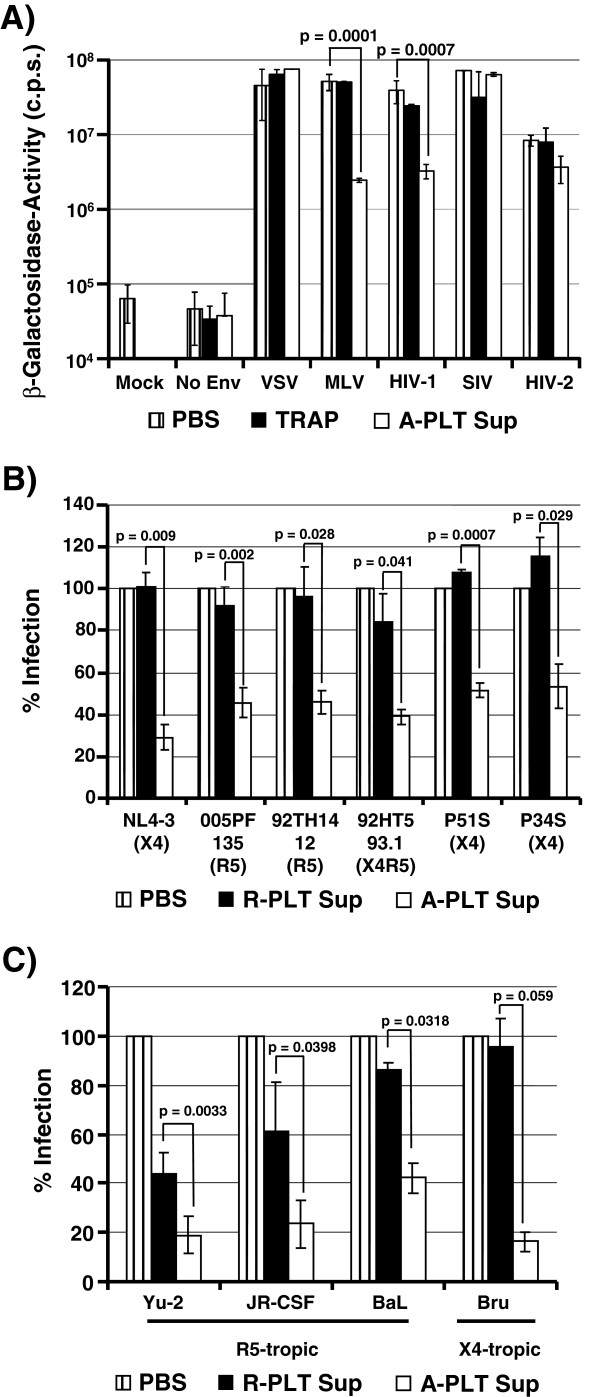
We found that platelets suppress HIV-1 spread in co-cultured T cells in a concentration-dependent manner. Platelets containing granules inhibited HIV-1 spread in T cells more efficiently than degranulated platelets, indicating that the granule content might exert antiviral activity. Indeed, supernatants from activated and thus degranulated platelets suppressed HIV-1 infection. Infection was inhibited at the stage of host cell entry and inhibition was independent of the viral strain or coreceptor tropism. In contrast, blockade of HIV-2 and SIV entry was less efficient. The chemokine CXCL4, a major component of platelet granules, blocked HIV-1 entry and neutralization of CXCL4 in platelet supernatants largely abrogated their anti-HIV-1 activity.
Release of CXCL4 by activated platelets inhibits HIV-1 infection of adjacent T cells at the stage of virus entry. The inhibitory activity of platelet-derived CXCL4 suggests a role of platelets in the defense against infection by HIV-1 and potentially other pathogens.
血小板是富含于人类血液中的无核细胞碎片,能够捕获 HIV-1,血小板计数与病毒载量和疾病进展相关。然而,血小板对 HIV-1 感染 T 细胞的影响尚不清楚。
我们发现血小板以浓度依赖的方式抑制共培养的 T 细胞中的 HIV-1 传播。含颗粒的血小板比脱颗粒血小板更有效地抑制 T 细胞中的 HIV-1 传播,表明颗粒内容物可能发挥抗病毒活性。事实上,激活和因此脱颗粒的血小板上清液抑制 HIV-1 感染。感染在宿主细胞进入阶段被抑制,抑制与病毒株或核心受体嗜性无关。相比之下,HIV-2 和 SIV 进入的阻断效率较低。趋化因子 CXCL4 是血小板颗粒的主要成分,可阻断 HIV-1 进入,血小板上清液中 CXCL4 的中和作用在很大程度上削弱了其抗 HIV-1 活性。
活化血小板释放的 CXCL4 在病毒进入阶段抑制邻近 T 细胞中的 HIV-1 感染。血小板衍生的 CXCL4 的抑制活性表明血小板在防御 HIV-1 感染和潜在的其他病原体感染方面发挥作用。