Unit of Molecular Neurogenetics, Istituto di Ricovero e Cura a Carattere Scientifico (IRCCS), Milan, Italy.
Orphanet J Rare Dis. 2013 May 1;8:66. doi: 10.1186/1750-1172-8-66.
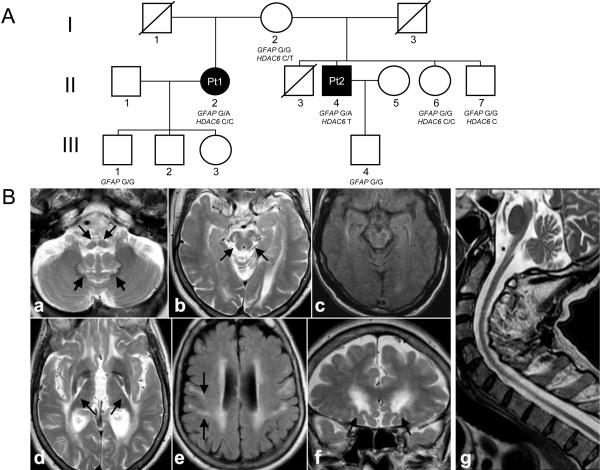
We studied a family including two half-siblings, sharing the same mother, affected by slowly progressive, adult-onset neurological syndromes. In spite of the diversity of the clinical features, characterized by a mild movement disorder with cognitive impairment in the elder patient, and severe motor-neuron disease (MND) in her half-brother, the brain Magnetic Resonance Imaging (MRI) features were compatible with adult-onset Alexander's disease (AOAD), suggesting different expression of the same, genetically determined, condition.
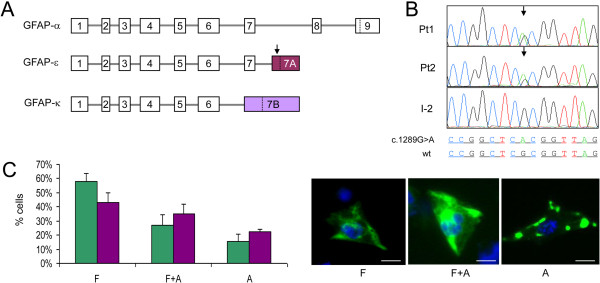
Since mutations in the alpha isoform of glial fibrillary acidic protein, GFAP-α, the only cause so far known of AOAD, were excluded, we applied exome Next Generation Sequencing (NGS) to identify gene variants, which were then functionally validated by molecular characterization of recombinant and patient-derived cells.
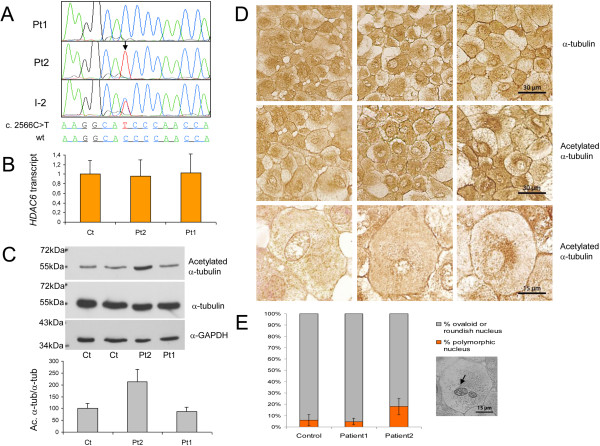
Exome-NGS revealed a mutation in a previously neglected GFAP isoform, GFAP-ϵ, which disrupts the GFAP-associated filamentous cytoskeletal meshwork of astrocytoma cells. To shed light on the different clinical features in the two patients, we sought for variants in other genes. The male patient had a mutation, absent in his half-sister, in X-linked histone deacetylase 6, a candidate MND susceptibility gene.
Exome-NGS is an unbiased approach that not only helps identify new disease genes, but may also contribute to elucidate phenotypic expression.
我们研究了一个家族,其中包括两个同父异母的兄弟姐妹,他们的母亲相同,患有进展缓慢的成年起病的神经综合征。尽管临床表现多种多样,年长的患者表现为轻度运动障碍伴认知障碍,而她的同父异母兄弟则表现为严重的运动神经元病(MND),但脑部磁共振成像(MRI)特征与成年起病的亚历山大病(AOAD)相符,提示同一基因决定的疾病存在不同的表现。
由于排除了已知的 AOAD 的唯一原因——神经胶质纤维酸性蛋白的α同种型(GFAP-α)突变,我们应用外显子组下一代测序(NGS)来识别基因变异,然后通过对重组和患者来源细胞的分子特征进行功能验证来验证这些变异。
外显子组 NGS 揭示了一种先前被忽视的 GFAP 同种型(GFAP-ϵ)的突变,该突变破坏了星形细胞瘤细胞中与 GFAP 相关的丝状细胞骨架网格。为了阐明两个患者的不同临床特征,我们寻找了其他基因的变异。男性患者存在一个突变,而他的同父异母妹妹没有这个突变,这个突变位于 X 连锁组蛋白去乙酰化酶 6 中,该基因是运动神经元病的候选易感基因。
外显子组 NGS 是一种无偏的方法,不仅有助于识别新的疾病基因,还可能有助于阐明表型表达。