Department of Molecular Ecology, Max Planck Institute for Chemical Ecology, Hans Knöll Straße 8, D-07745 Jena, Germany.
BMC Plant Biol. 2013 May 1;13:73. doi: 10.1186/1471-2229-13-73.
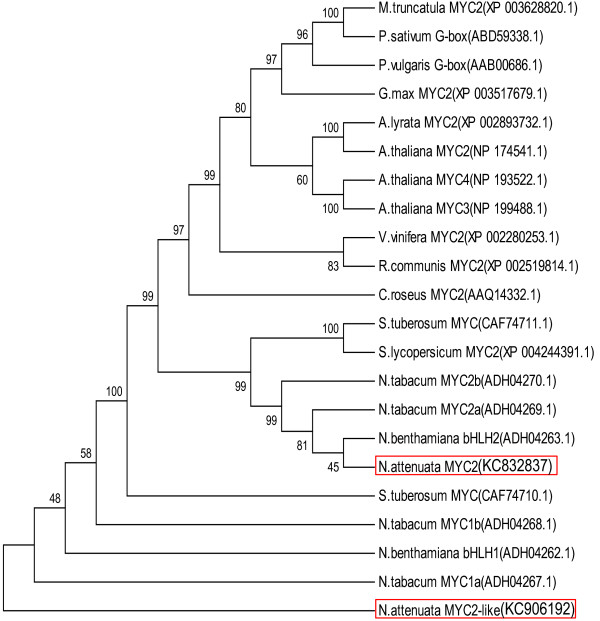
To survive herbivore attack, plants have evolved potent mechanisms of mechanical or chemical defense that are either constitutively present or inducible after herbivore attack. Due to the costs of defense deployment, plants often regulate their biosynthesis using various transcription factors (TFs). MYC2 regulators belong to the bHLH family of transcription factors that are involved in many aspects of plant defense and development. In this study, we identified a novel MYC2 TF from N. attenuata and characterized its regulatory function using a combination of molecular, analytic and ecological methods.
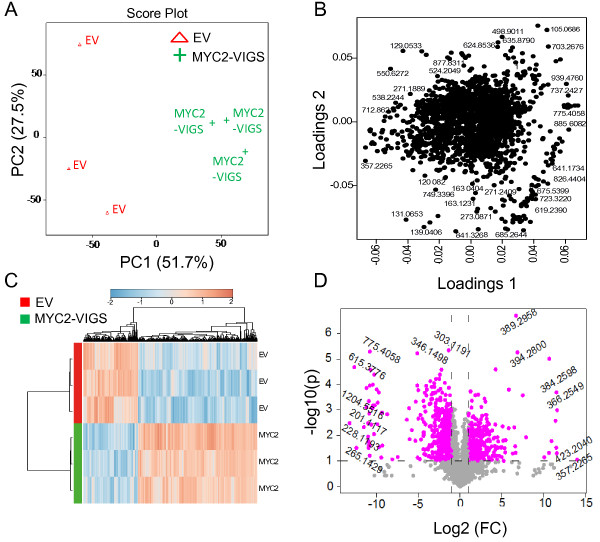
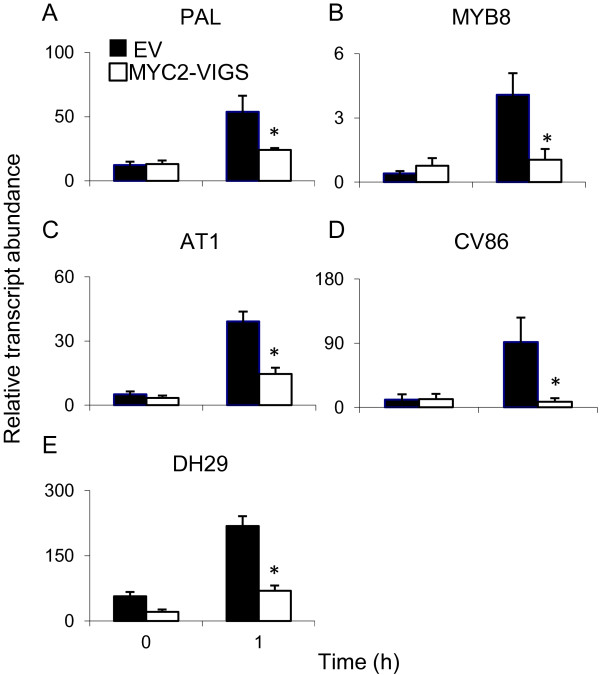
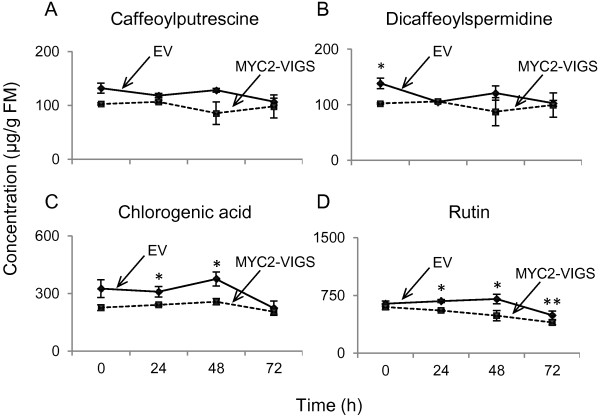
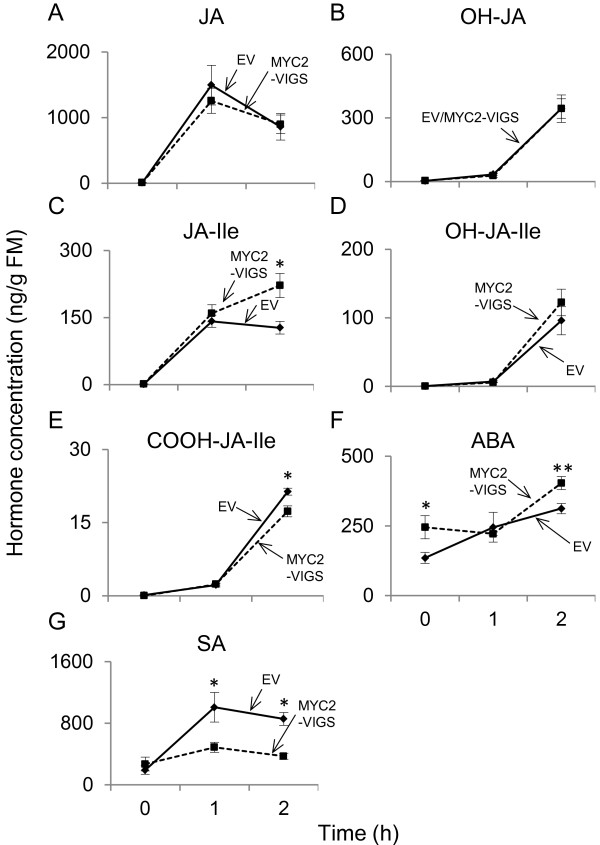
The transcript and targeted metabolite analyses demonstrated that NaMYC2 is mainly involved in the regulation of the biosynthesis of nicotine and phenolamides in N. attenuata. In addition, using broadly-targeted metabolite analysis, we identified a number of other metabolite features that were regulated by NaMYC2, which, after full annotation, are expected to broaden our understanding of plant defense regulation. Unlike previous reports, the biosynthesis of jasmonates and some JA-/NaCOI1-dependent metabolites (e.g. HGL-DTGs) were not strongly regulated by NaMYC2, suggesting the involvement of other independent regulators. No significant differences were observed in the performance of M. sexta on MYC2-silenced plants, consistent with the well-known ability of this specialist insect to tolerate nicotine.
By regulating the biosynthesis of nicotine, NaMYC2 is likely to enhance plant resistance against non-adapted herbivores and contribute to plant fitness; however, multiple JA/NaCOI1-dependent mechanisms (perhaps involving other MYCs) that regulate separate defense responses are likely to exist in N. attenuata. The considerable variation observed amongst different plant families in the responses regulated by jasmonate signaling highlights the sophistication with which plants craft highly specific and fine-tuned responses against the herbivores that attack them.
为了抵御草食动物的攻击,植物进化出了强大的机械或化学防御机制,这些机制要么是组成型存在的,要么是在受到草食动物攻击后诱导产生的。由于防御部署的成本,植物通常使用各种转录因子(TFs)来调节其生物合成。MYC2 调节剂属于 bHLH 转录因子家族,参与植物防御和发育的许多方面。在这项研究中,我们从 N. attenuata 中鉴定出一种新的 MYC2 TF,并使用分子、分析和生态方法相结合的方法来表征其调节功能。
转录和靶向代谢物分析表明,NaMYC2 主要参与 N. attenuata 中尼古丁和酚酰胺生物合成的调节。此外,通过广泛靶向代谢物分析,我们鉴定出许多其他受 NaMYC2 调节的代谢物特征,这些特征在完全注释后,有望拓宽我们对植物防御调节的理解。与之前的报道不同,茉莉酸和一些 JA/NaCOI1 依赖的代谢物(如 HGL-DTGs)的生物合成并没有被 NaMYC2 强烈调节,这表明可能涉及其他独立的调节剂。在 MYC2 沉默植物上,M. sexta 的表现没有明显差异,这与这种专食性昆虫能够耐受尼古丁的众所周知的能力一致。
通过调节尼古丁的生物合成,NaMYC2 可能增强植物对非适应草食动物的抗性,并有助于植物的适应性;然而,在 N. attenuata 中可能存在多个依赖 JA/NaCOI1 的机制(可能涉及其他 MYCs)来调节不同的防御反应。在不同植物科中观察到的对茉莉酸信号调节的反应存在很大差异,这突出了植物针对攻击它们的草食动物而精心设计的高度特异性和精细的反应方式的复杂性。