Singh Ajeet Pratap, Das Rudra Nayan, Rao Gururaj, Aggarwal Aman, Diegelmann Soeren, Evers Jan Felix, Karandikar Hrishikesh, Landgraf Matthias, Rodrigues Veronica, Vijayraghavan K
National Centre for Biological Sciences, Tata Institute of Fundamental Research, GKVK Campus, Bangalore, India.
PLoS Genet. 2013 Apr;9(4):e1003452. doi: 10.1371/journal.pgen.1003452. Epub 2013 Apr 18.
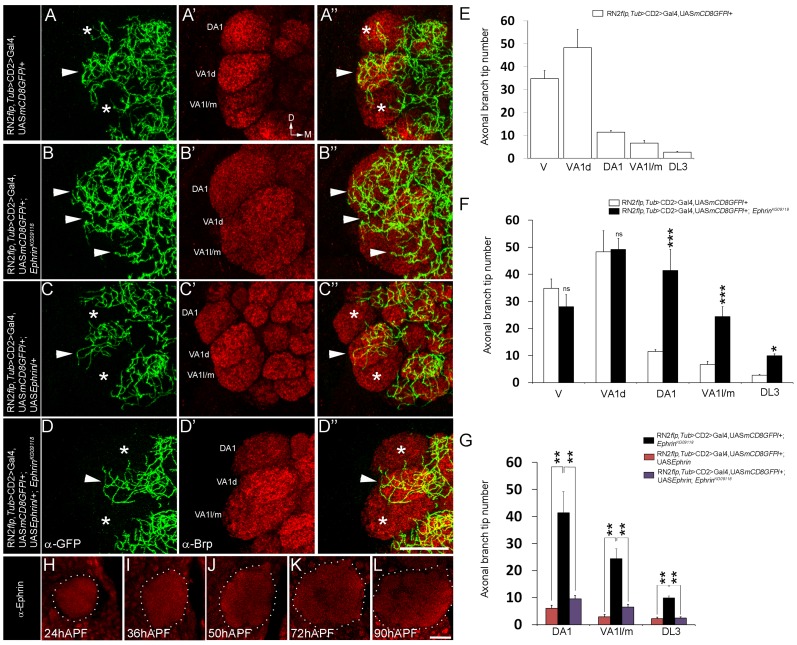
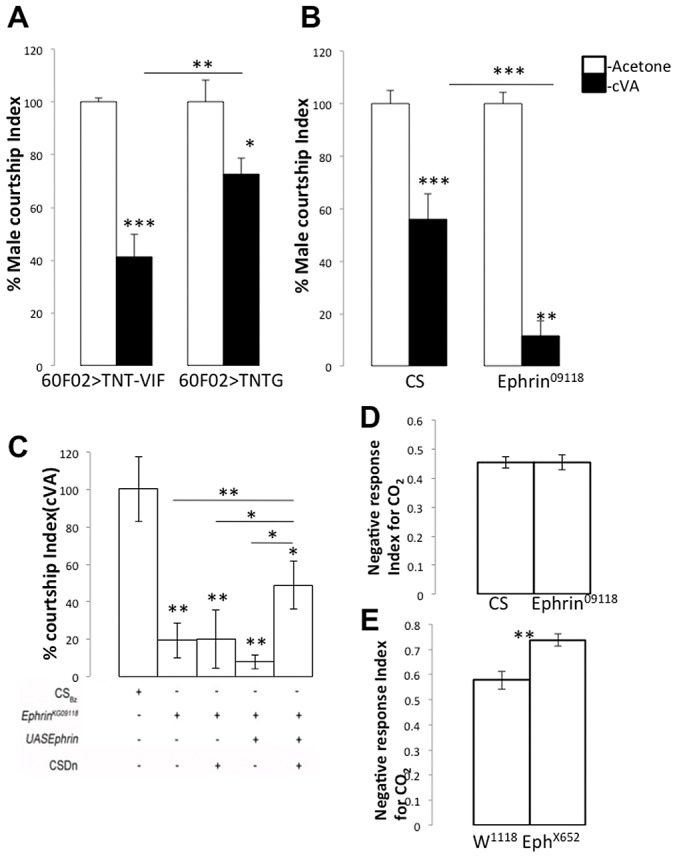
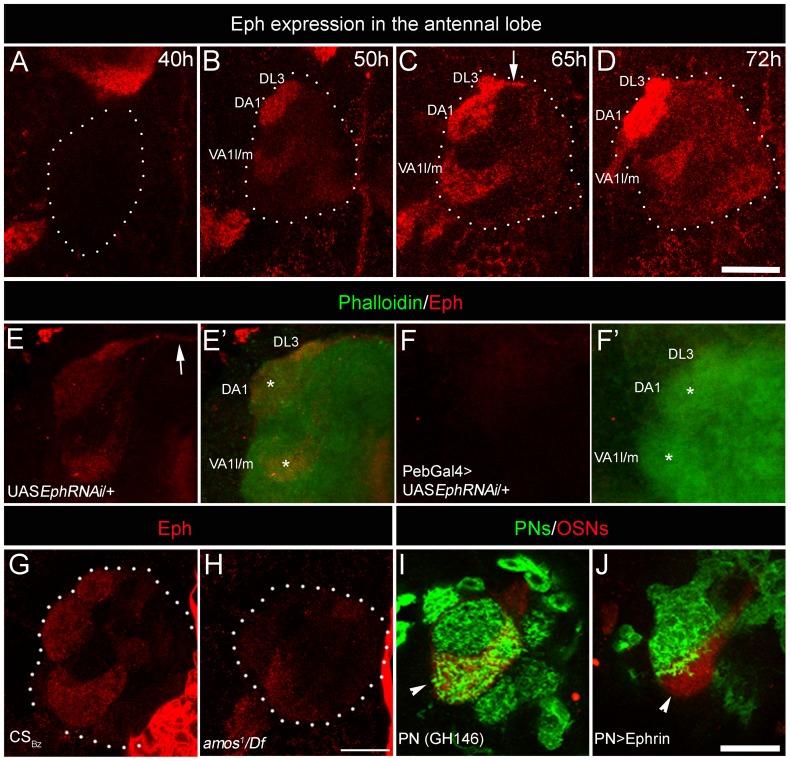
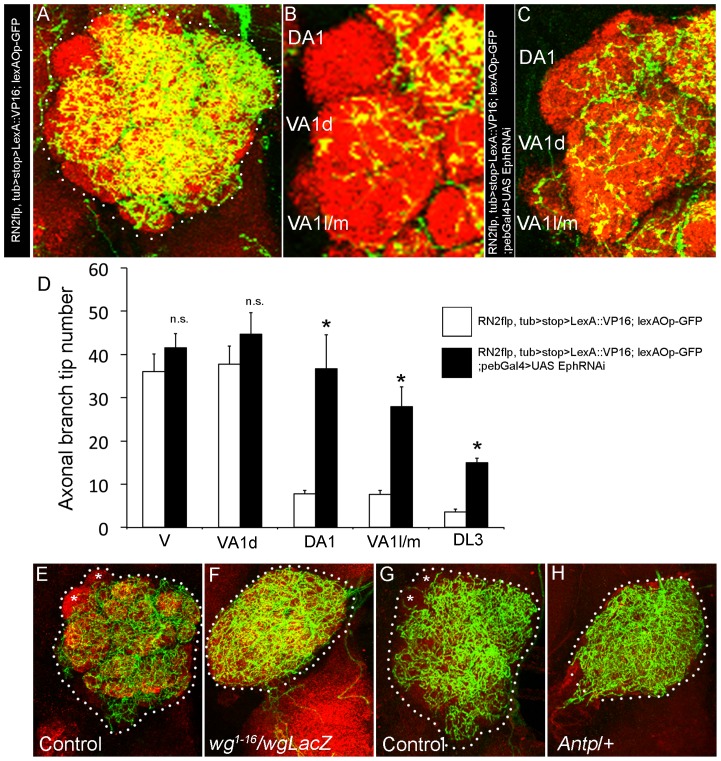
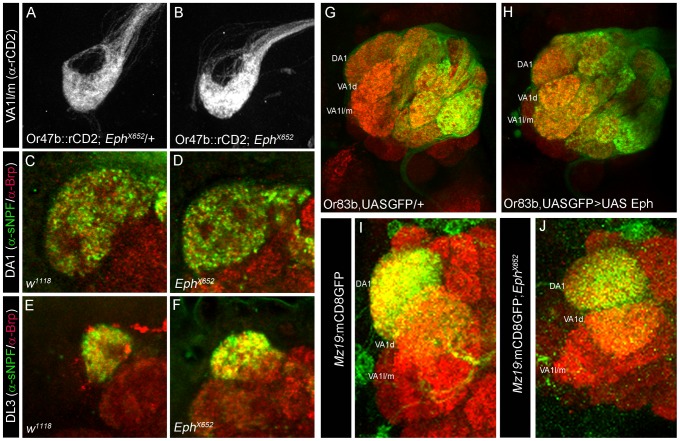
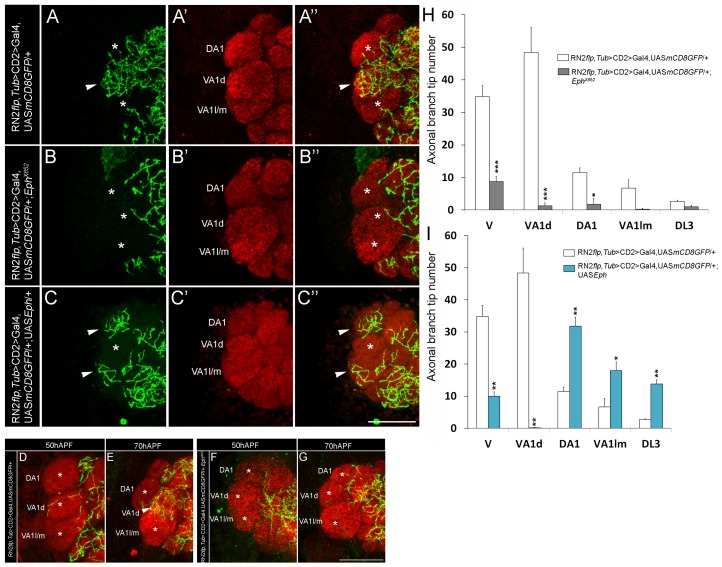
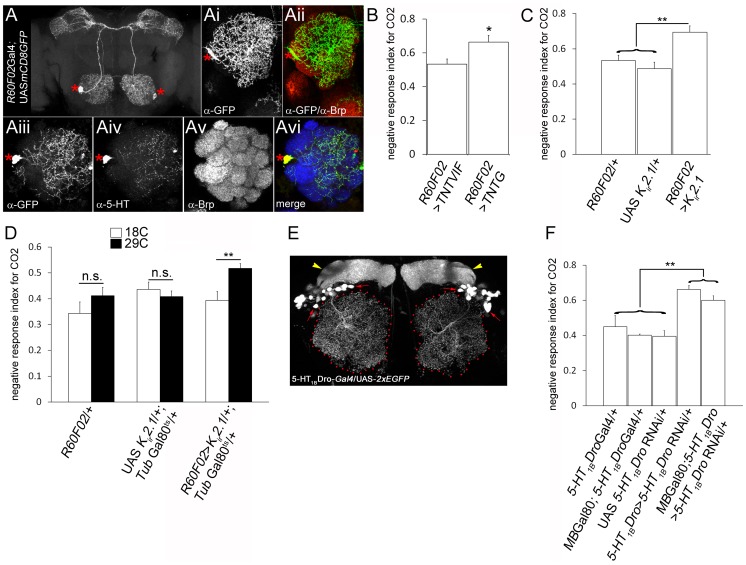
Olfactory sensory neurons connect to the antennal lobe of the fly to create the primary units for processing odor cues, the glomeruli. Unique amongst antennal-lobe neurons is an identified wide-field serotonergic neuron, the contralaterally-projecting, serotonin-immunoreactive deutocerebral neuron (CSDn). The CSDn spreads its termini all over the contralateral antennal lobe, suggesting a diffuse neuromodulatory role. A closer examination, however, reveals a restricted pattern of the CSDn arborization in some glomeruli. We show that sensory neuron-derived Eph interacts with Ephrin in the CSDn, to regulate these arborizations. Behavioural analysis of animals with altered Eph-ephrin signaling and with consequent arborization defects suggests that neuromodulation requires local glomerular-specific patterning of the CSDn termini. Our results show the importance of developmental regulation of terminal arborization of even the diffuse modulatory neurons to allow them to route sensory-inputs according to the behavioural contexts.
嗅觉感觉神经元与果蝇的触角叶相连,形成处理气味线索的初级单元——嗅小球。在触角叶神经元中独一无二的是一种已被识别的广域5-羟色胺能神经元,即对侧投射的、5-羟色胺免疫反应性中脑神经元(CSDn)。CSDn的末端遍布对侧触角叶,提示其具有弥散性神经调节作用。然而,进一步研究发现,CSDn在某些嗅小球中的分支模式是受限的。我们发现,感觉神经元衍生的Eph与CSDn中的Ephrin相互作用,以调节这些分支。对Eph-Ephrin信号改变且随之出现分支缺陷的动物进行行为分析表明,神经调节需要CSDn末端进行局部嗅小球特异性模式化。我们的结果表明,即使是弥散性调节神经元,其末端分支的发育调控也很重要,以便它们能根据行为背景对感觉输入进行路由。