Key Laboratory of Animal Ecology and Conservation Biology, Institute of Zoology, Chinese Academy of Sciences, Beijing, China ; Graduate School of the Chinese Academy of Sciences, Beijing, China.
PLoS One. 2013 Apr 24;8(4):e60712. doi: 10.1371/journal.pone.0060712. Print 2013.
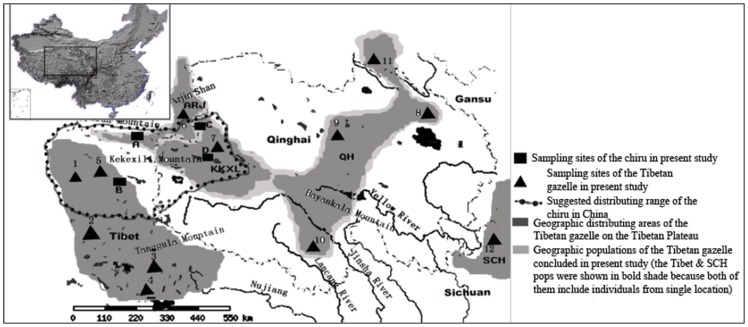
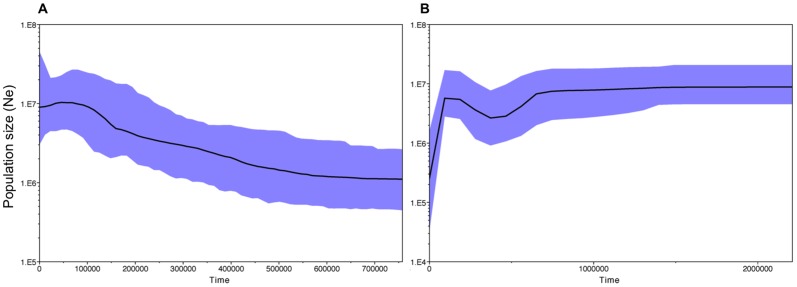
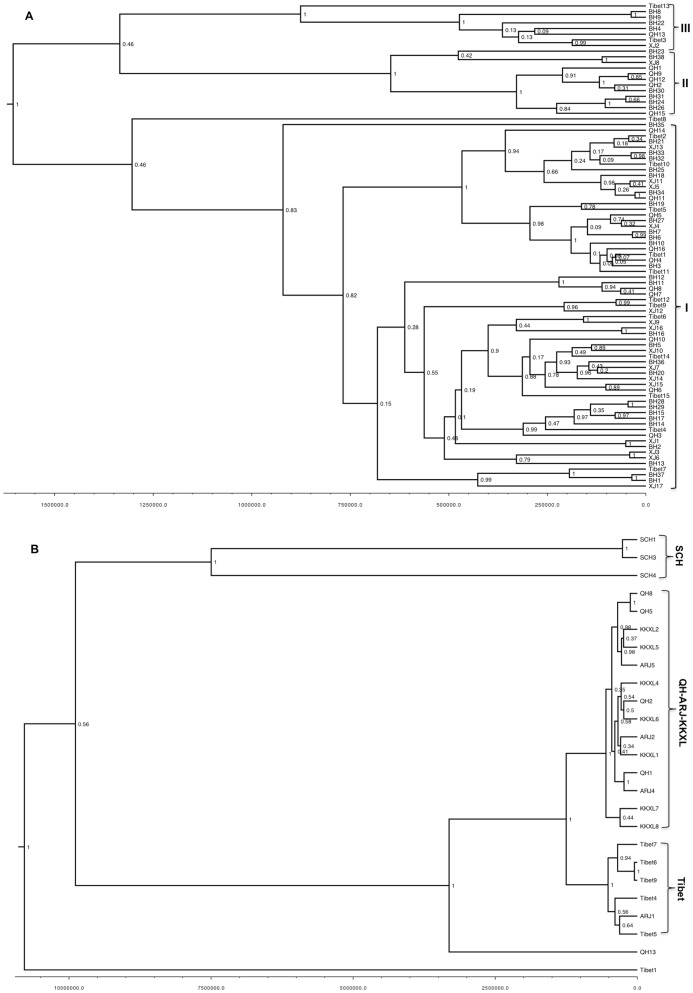
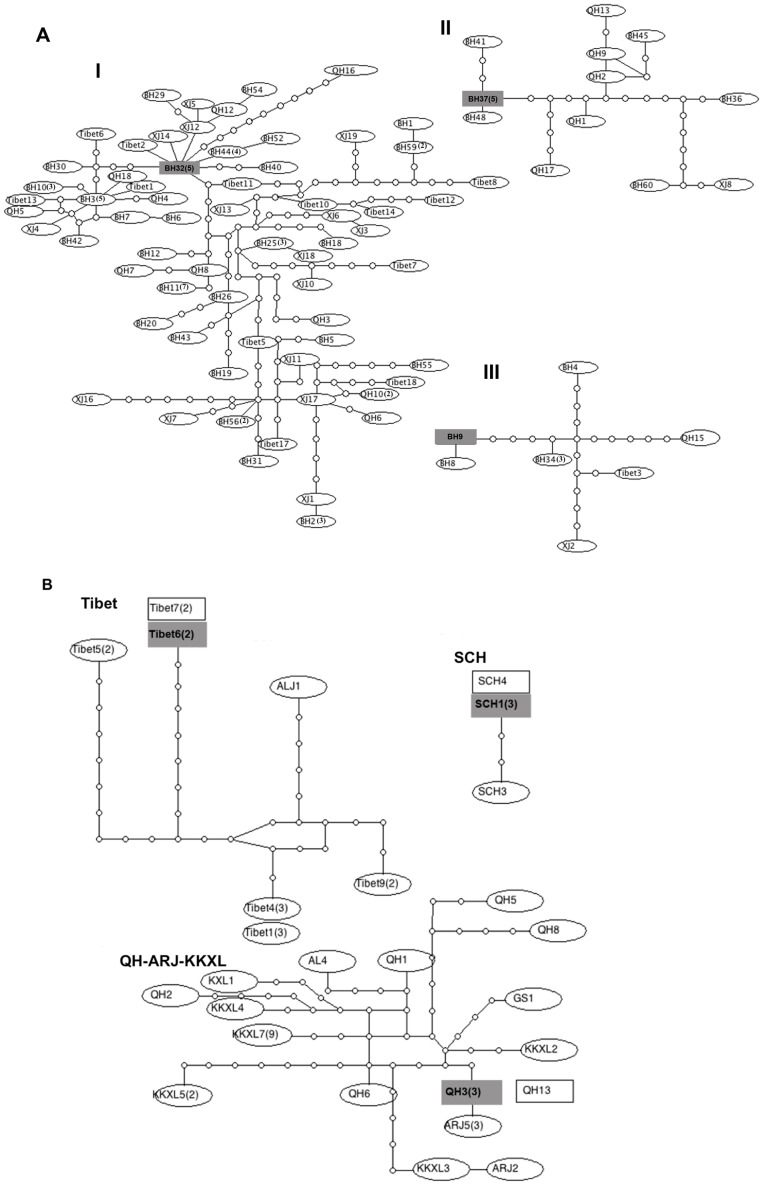
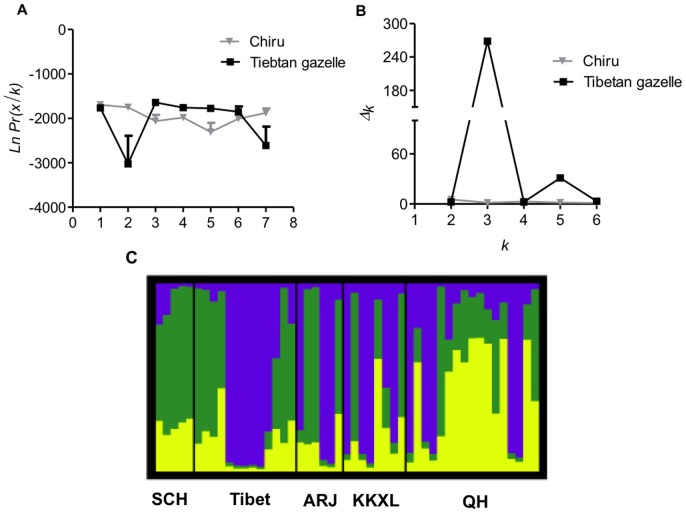
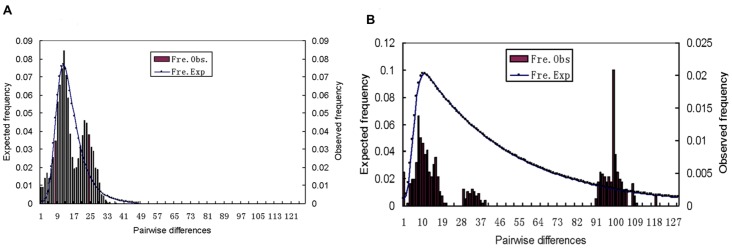
The extent to which a species responds to environmental changes is mediated not only by extrinsic processes such as time and space, but also by species-specific ecology. The Qinghai-Tibetan Plateau uplifted approximately 3000 m and experienced at least four major glaciations during the Pleistocene epoch in the Quaternary Period. Consequently, the area experienced concurrent changes in geomorphological structure and climate. Two species, the Tibetan antelope (Pantholops hodgsonii, chiru) and Tibetan gazelle (Procapra picticaudata), both are endemic on the Qinghai-Tibetan Plateau, where their habitats overlap, but have different migratory behaviors: the chiru is inclined to have female-biased dispersal with a breeding migration during the calving season; in contrast, Tibetan gazelles are year-round residents and never migrate distantly. By using coalescence methods we compared mitochondrial control region DNA sequences and variation at nine microsatellite loci in these two species. Coalescent simulations indicate that the chiru and Tibetan gazelle do not share concordant patterns in their genealogies. The non-migratory Tibetan gazelle, that is more vulnerable to the impact of drastic geographic changes such as the elevation of the plateau, glaciations and so on, appears to have a strong population genetic structure with complicated demographic history. Specifically, the Tibetan gazelle population appears to have experienced isolation and divergence with population fluctuations since the Middle Pleistocene (0.781 Ma). However, it showed continued decline since the Upper Pleistocene (0.126 Ma), which may be attributed to the irreversible impact of increased human activities on the plateau. In contrast, the migratory chiru appears to have simply experienced population expansion. With substantial gene flow among regional populations, this species shows no historical population isolation and divergence. Thus, this study adds to many empirical studies that show historical and contemporary extrinsic and intrinsic processes shape the recent evolutionary history and population genetic structure of species.
物种对环境变化的响应程度不仅受到时间和空间等外在过程的调节,还受到物种特有的生态因素的调节。青藏高原在第四纪更新世期间大约上升了 3000 米,并经历了至少四次主要的冰川作用。因此,该地区同时经历了地貌结构和气候的变化。两种物种,藏羚羊(Pantholops hodgsonii,藏羚)和西藏野驴(Procapra picticaudata),都特生于青藏高原,它们的栖息地重叠,但迁徙行为不同:藏羚倾向于雌性偏向的扩散,在产犊季节进行繁殖迁徙;相比之下,西藏野驴是全年居民,从不远距离迁徙。通过使用合并方法,我们比较了这两个物种的线粒体控制区 DNA 序列和九个微卫星位点的变异。合并模拟表明,藏羚和西藏野驴的谱系没有一致的模式。非迁徙的西藏野驴,更容易受到高原隆起、冰川等剧烈地理变化的影响,似乎具有强大的种群遗传结构和复杂的种群历史。具体来说,自中更新世(0.781 Ma)以来,西藏野驴种群似乎经历了隔离和分化,伴随着种群波动。然而,自更新世晚期(0.126 Ma)以来,种群数量持续下降,这可能归因于人类活动对高原的影响不可逆转。相比之下,迁徙的藏羚似乎只是经历了种群扩张。由于区域种群之间有大量的基因流动,该物种没有表现出历史上的种群隔离和分化。因此,本研究增加了许多实证研究,表明历史和当代的外在和内在过程塑造了物种的近期进化历史和种群遗传结构。