Université Lille Nord de France, Lille, France.
PLoS One. 2013 Apr 25;8(4):e62208. doi: 10.1371/journal.pone.0062208. Print 2013.
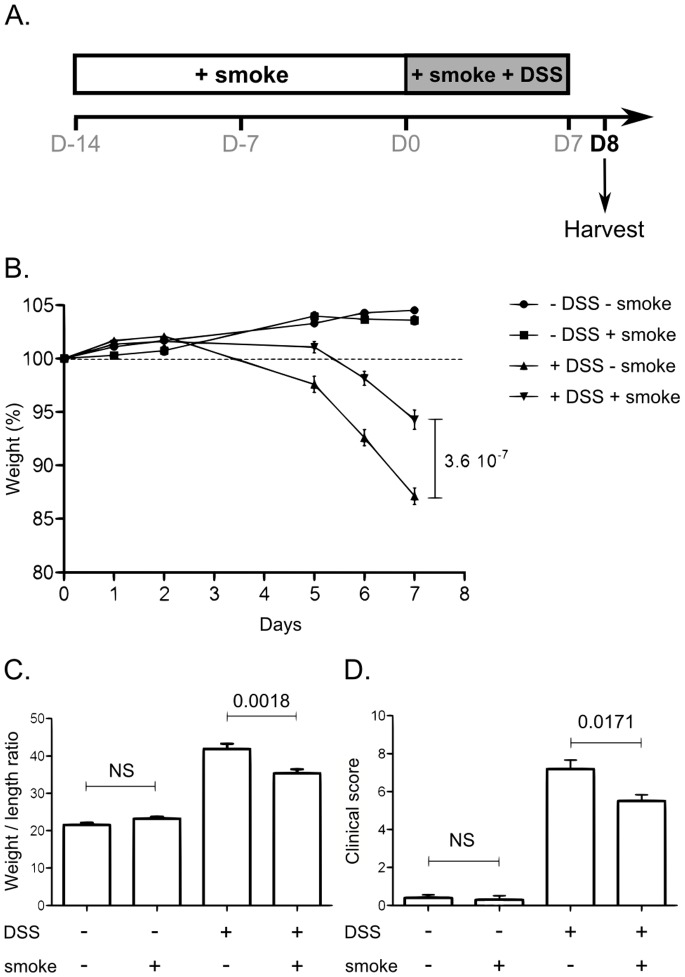
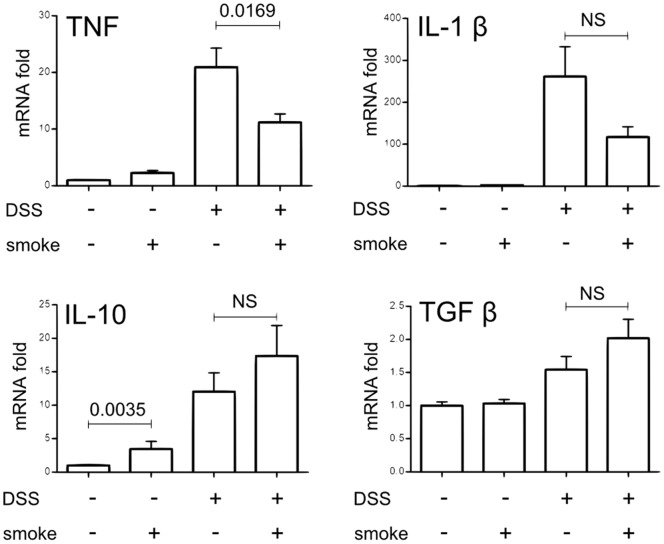
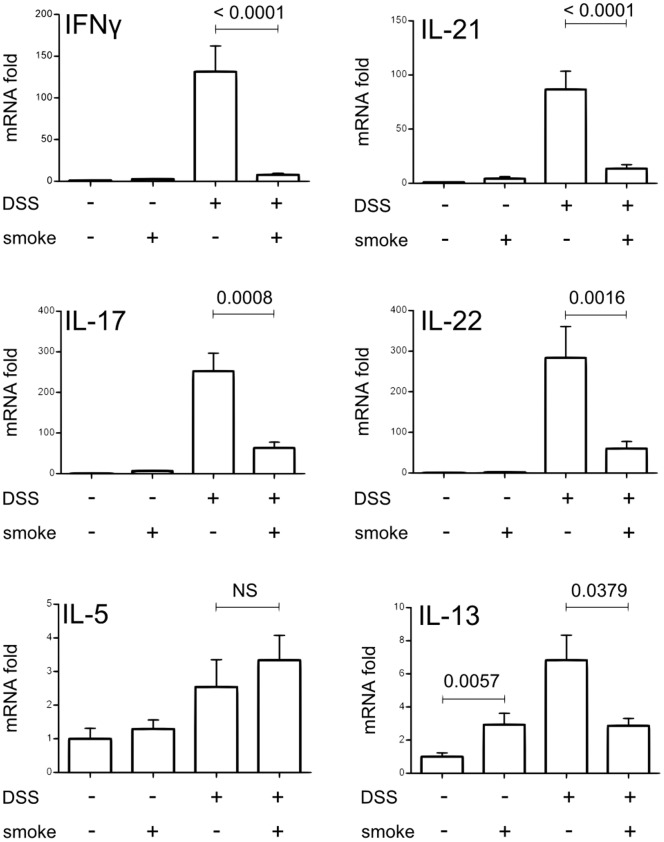
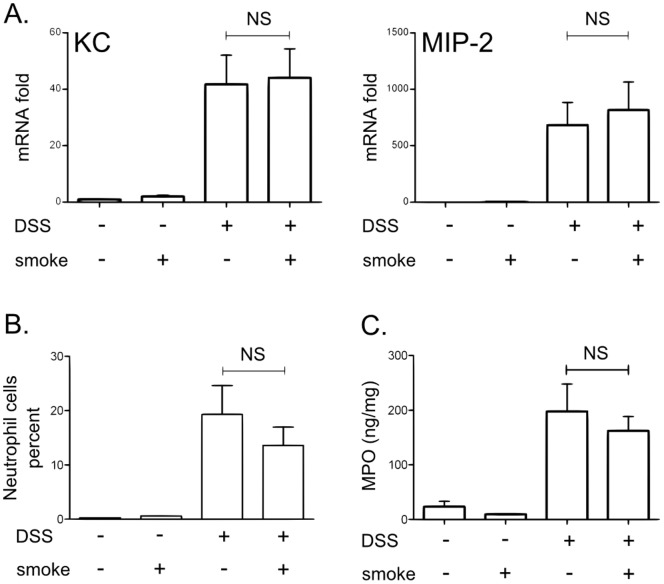
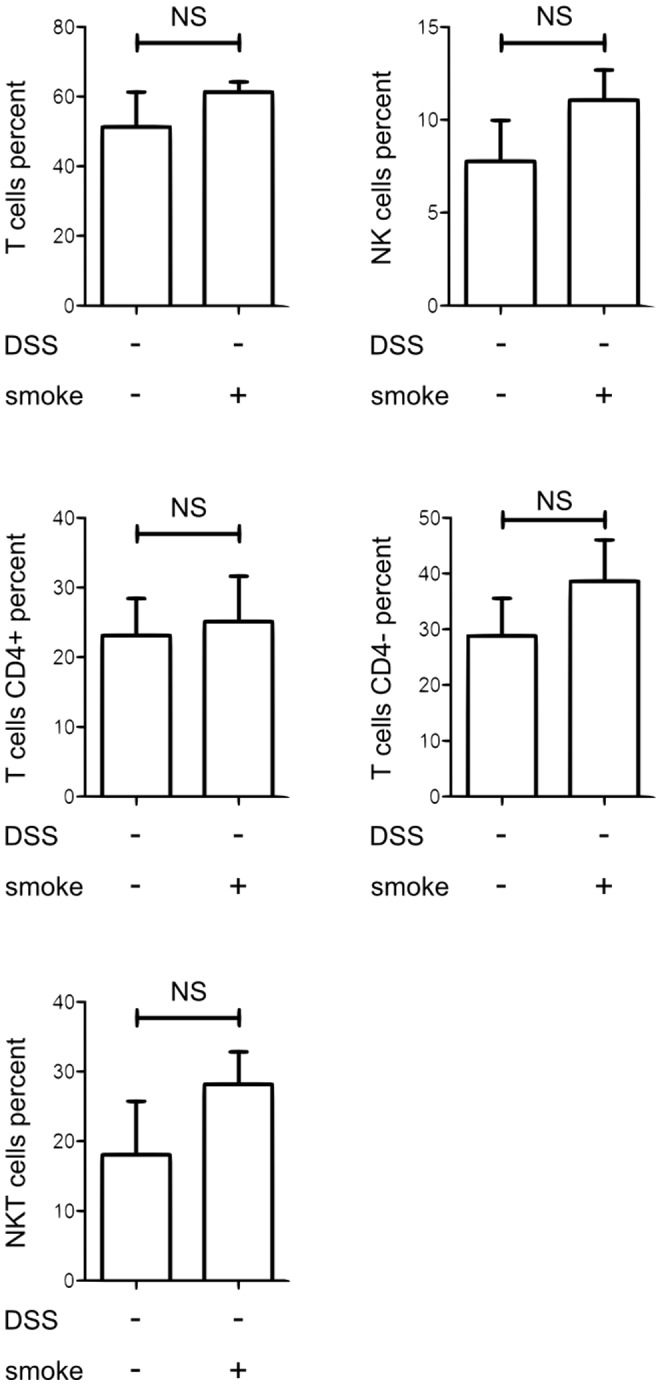
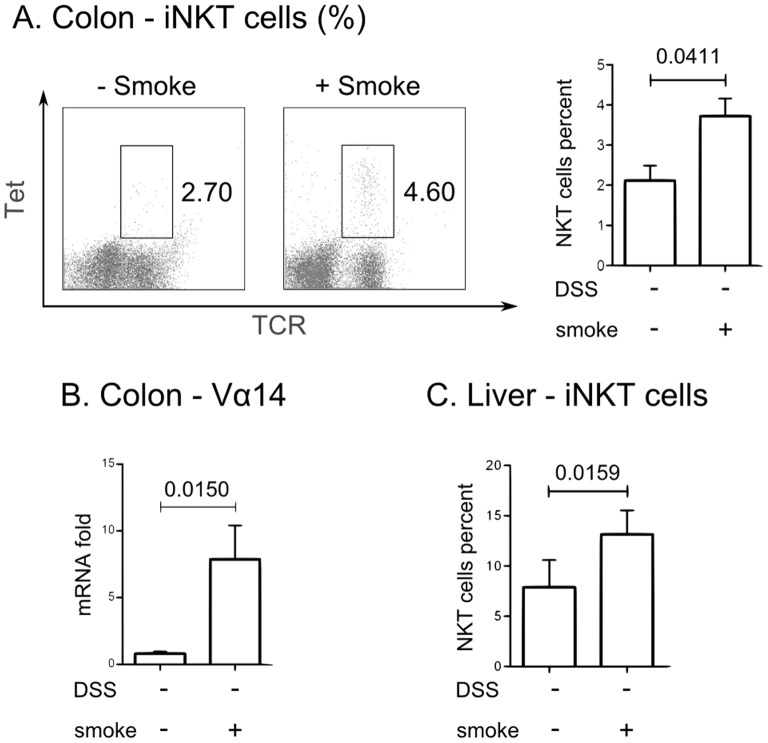
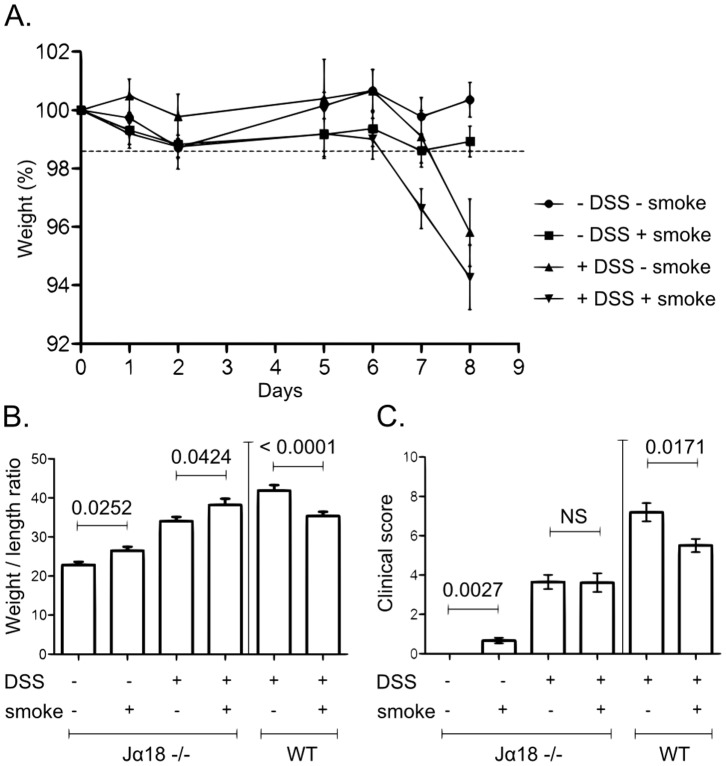
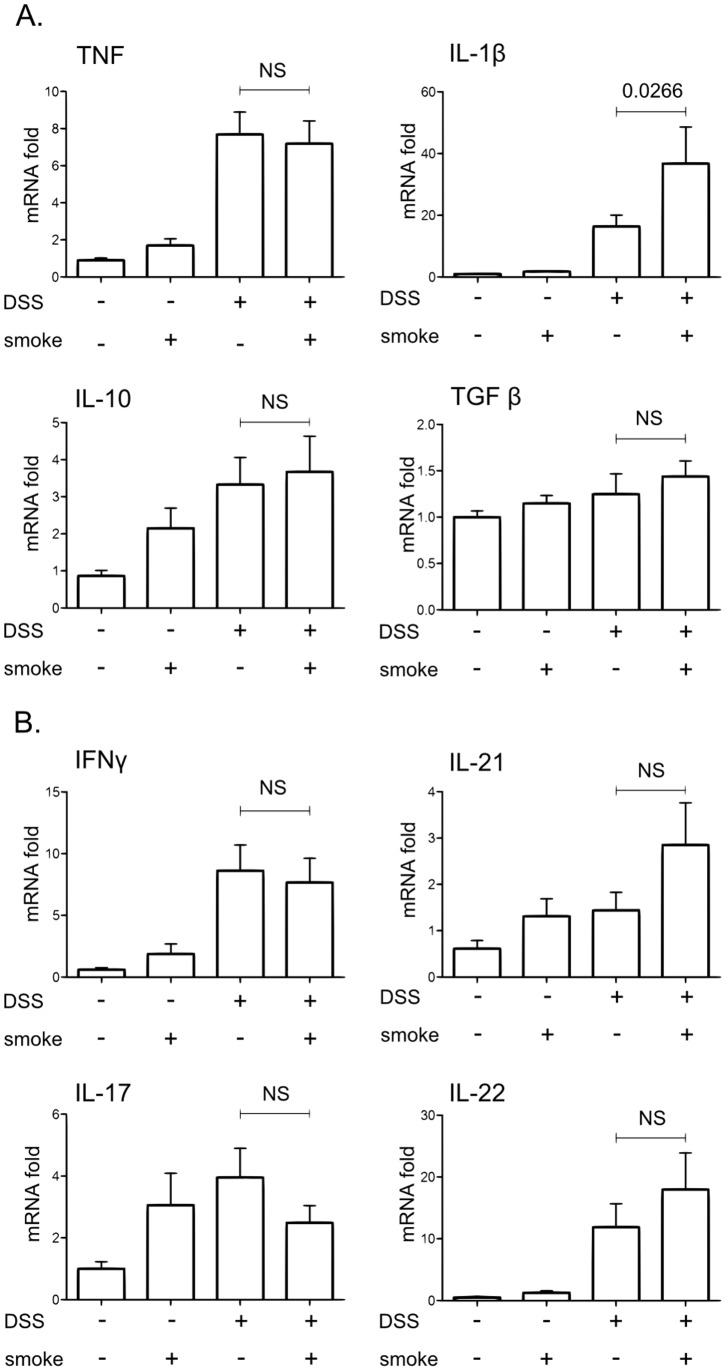
Cigarette smoke (CS) protects against intestinal inflammation during ulcerative colitis. Immunoregulatory mechanisms sustaining this effect remain unknown. The aim of this study was to assess the effects of CS on experimental colitis and to characterize the intestinal inflammatory response at the cellular and molecular levels. Using the InExpose® System, a smoking device accurately reproducing human smoking habit, we pre-exposed C57BL/6 mice for 2 weeks to CS, and then we induced colitis by administration of dextran sodium sulfate (DSS). This system allowed us to demonstrate that CS exposure improved colonic inflammation (significant decrease in clinical score, body weight loss and weight/length colonic ratio). This improvement was associated with a significant decrease in colonic proinflammatory Th1/Th17 cytokine expression, as compared to unexposed mice (TNF (p=0.0169), IFNγ (p<0.0001), and IL-17 (p=0.0008)). Smoke exposure also induced an increased expression of IL-10 mRNA (p=0.0035) and a marked recruitment of iNKT (invariant Natural Killer T; CD45+ TCRβ+ CD1d tetramer+) cells in the colon of DSS-untreated mice. Demonstration of the role of iNKT cells in CS-dependent colitis improvement was performed using two different strains of NKT cells deficient mice. Indeed, in Jα18KO and CD1dKO animals, CS exposure failed to induce significant regulation of DSS-induced colitis both at the clinical and molecular levels. Thus, our study demonstrates that iNKT cells are pivotal actors in the CS-dependent protection of the colon. These results highlight the role of intestinal iNKT lymphocytes and their responsiveness to environmental stimuli. Targeting iNKT cells would represent a new therapeutic way for inflammatory bowel diseases.
香烟烟雾(CS)可在溃疡性结肠炎期间保护肠道免受炎症。维持这种作用的免疫调节机制尚不清楚。本研究的目的是评估 CS 对实验性结肠炎的影响,并在细胞和分子水平上描述肠道炎症反应。我们使用 InExpose®系统,这是一种准确再现人类吸烟习惯的吸烟装置,对 C57BL/6 小鼠进行了 2 周的 CS 预暴露,然后用葡聚糖硫酸钠(DSS)诱导结肠炎。该系统使我们能够证明 CS 暴露可改善结肠炎症(临床评分、体重减轻和体重/长度结肠比显著降低)。与未暴露的小鼠相比,这种改善与结肠促炎性 Th1/Th17 细胞因子表达的显著降低相关(TNF(p=0.0169)、IFNγ(p<0.0001)和 IL-17(p=0.0008))。烟雾暴露还诱导了未用 DSS 处理的小鼠结肠中 IL-10 mRNA 表达的增加(p=0.0035)和 iNKT(不变自然杀伤 T 细胞;CD45+ TCRβ+ CD1d 四聚体+)细胞的明显募集。使用两种不同的 NKT 细胞缺陷小鼠品系来证明 iNKT 细胞在 CS 依赖性结肠炎改善中的作用。事实上,在 Jα18KO 和 CD1dKO 动物中,CS 暴露未能在临床和分子水平上诱导 DSS 诱导的结肠炎的显著调节。因此,我们的研究表明,iNKT 细胞是 CS 依赖性结肠保护的关键因素。这些结果强调了肠道 iNKT 淋巴细胞及其对环境刺激的反应性的作用。针对 iNKT 细胞可能代表炎症性肠病的一种新的治疗方法。