Department of Pediatric Hematology and Oncology Research, National Research Institute for Child Health and Development, Setagaya-ku, Tokyo, Japan.
PLoS One. 2013 Apr 26;8(4):e62233. doi: 10.1371/journal.pone.0062233. Print 2013.
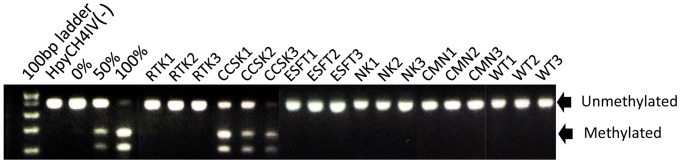
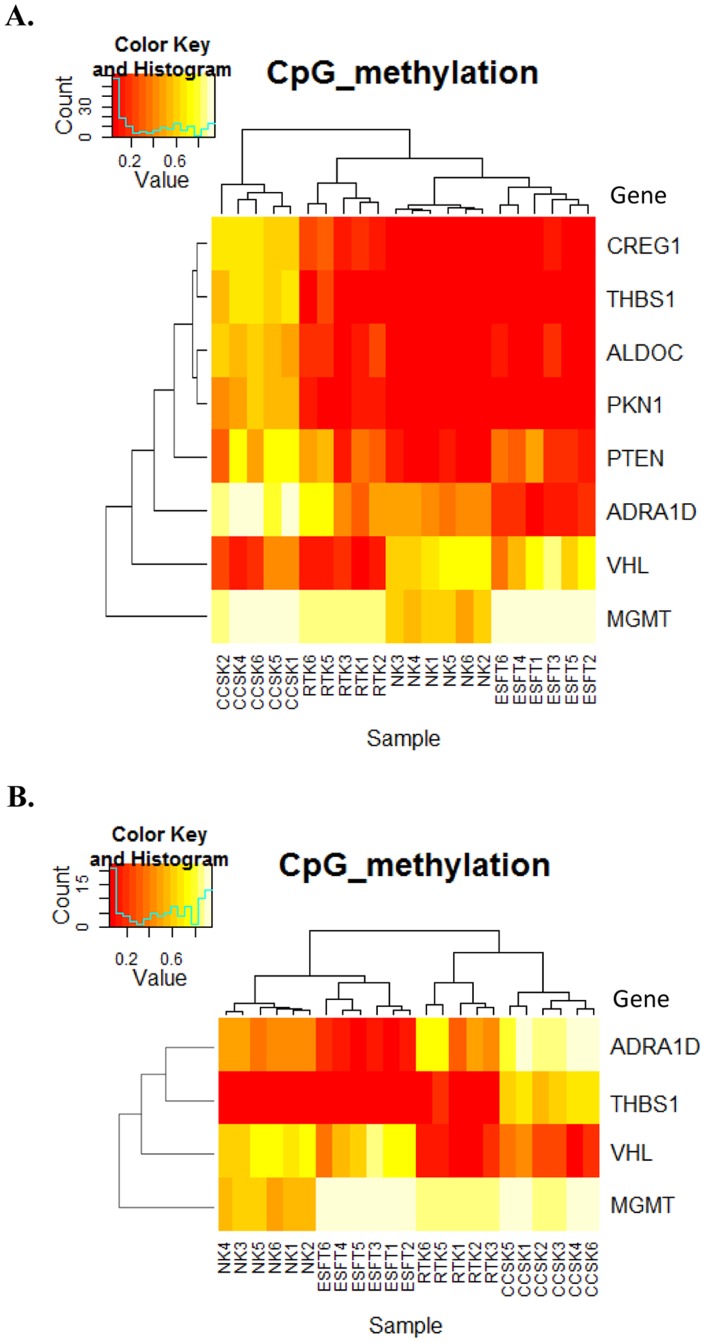
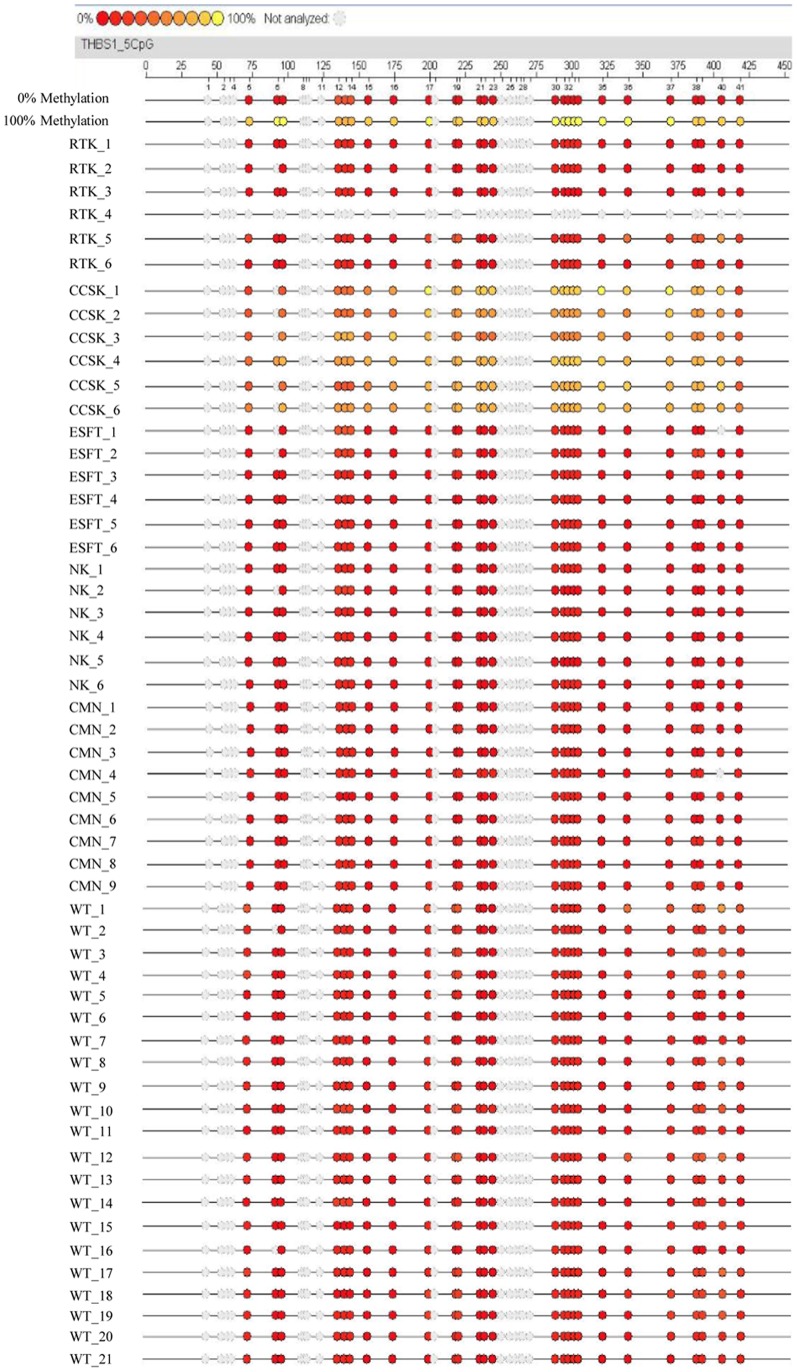
A number of specific, distinct neoplastic entities occur in the pediatric kidney, including Wilms' tumor, clear cell sarcoma of the kidney (CCSK), congenital mesoblastic nephroma (CMN), rhabdoid tumor of the kidney (RTK), and the Ewing's sarcoma family of tumors (ESFT). By employing DNA methylation profiling using Illumina Infinium HumanMethylation27, we analyzed the epigenetic characteristics of the sarcomas including CCSK, RTK, and ESFT in comparison with those of the non-neoplastic kidney (NK), and these tumors exhibited distinct DNA methylation profiles in a tumor-type-specific manner. CCSK is the most frequently hypermethylated, but least frequently hypomethylated, at CpG sites among these sarcomas, and exhibited 490 hypermethylated and 46 hypomethylated CpG sites in compared with NK. We further validated the results by MassARRAY, and revealed that a combination of four genes was sufficient for the DNA methylation profile-based differentiation of these tumors by clustering analysis. Furthermore, THBS1 CpG sites were found to be specifically hypermethylated in CCSK and, thus, the DNA methylation status of these THBS1 sites alone was sufficient for the distinction of CCSK from other pediatric renal tumors, including Wilms' tumor and CMN. Moreover, combined bisulfite restriction analysis could be applied for the detection of hypermethylation of a THBS1 CpG site. Besides the biological significance in the pathogenesis, the DNA methylation profile should be useful for the differential diagnosis of pediatric renal tumors.
许多特定的、不同的肿瘤实体发生在儿科肾脏中,包括肾母细胞瘤、肾透明细胞肉瘤 (CCSK)、先天性中胚层肾瘤 (CMN)、肾横纹肌样瘤 (RTK) 和尤文氏肉瘤家族肿瘤 (ESFT)。通过使用 Illumina Infinium HumanMethylation27 进行 DNA 甲基化分析,我们分析了肉瘤的表观遗传特征,包括 CCSK、RTK 和 ESFT,并与非肿瘤性肾脏 (NK) 进行了比较,这些肿瘤以肿瘤类型特异性的方式表现出独特的 DNA 甲基化谱。CCSK 在这些肉瘤中是最常发生 CpG 位点高甲基化但很少发生低甲基化的,与 NK 相比,CCSK 有 490 个高甲基化和 46 个低甲基化 CpG 位点。我们进一步通过 MassARRAY 进行了验证,并揭示了四个基因的组合足以通过聚类分析基于 DNA 甲基化谱区分这些肿瘤。此外,发现 THBS1 CpG 位点在 CCSK 中特异性高甲基化,因此,这些 THBS1 位点的 DNA 甲基化状态足以将 CCSK 与其他儿科肾肿瘤(包括肾母细胞瘤和 CMN)区分开来。此外,联合亚硫酸氢盐限制分析可用于检测 THBS1 CpG 位点的高甲基化。除了在发病机制中的生物学意义外,DNA 甲基化谱应该有助于儿科肾肿瘤的鉴别诊断。