Miyata Tomoko, Sonoda Kenzo, Tomikawa Junko, Tayama Chiharu, Okamura Kohji, Maehara Kayoko, Kobayashi Hiroaki, Wake Norio, Kato Kiyoko, Hata Kenichiro, Nakabayashi Kazuhiko
Department of Maternal-Fetal Biology, National Research Institute for Child Health and Development, 2-10-1 Okura, Setagaya, Tokyo 157-8535, Japan; Department of Obstetrics and Gynecology, Graduate School of Medical Sciences, Kyushu University, 3-1-1 Maidashi, Higashi-ku, Fukuoka 812-8582, Japan.
Department of Obstetrics and Gynecology, Graduate School of Medical Sciences, Kyushu University, 3-1-1 Maidashi, Higashi-ku, Fukuoka 812-8582, Japan.
Sarcoma. 2015;2015:412068. doi: 10.1155/2015/412068. Epub 2015 Dec 28.
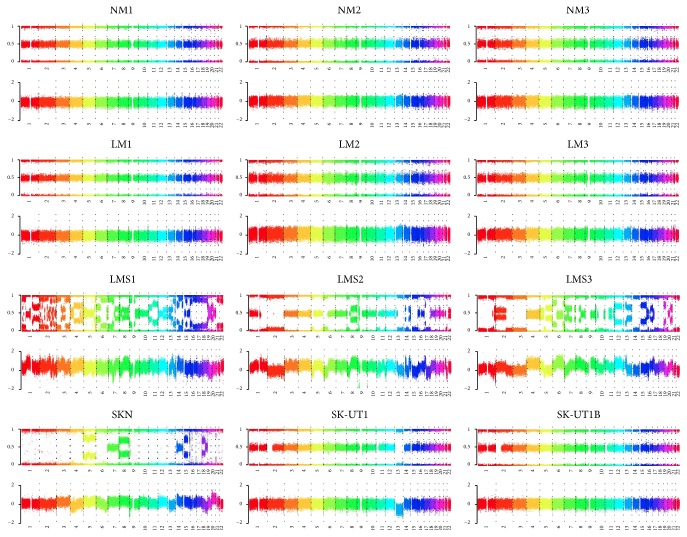
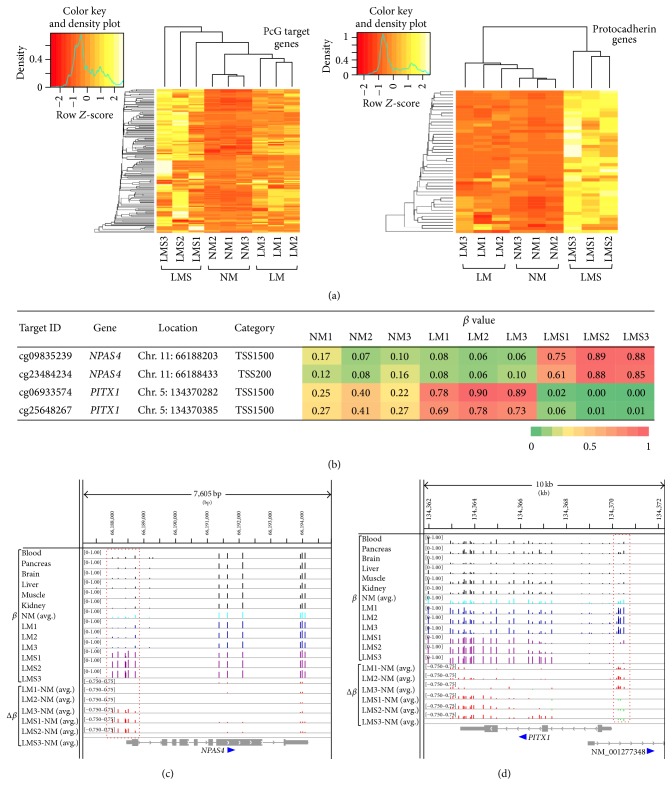
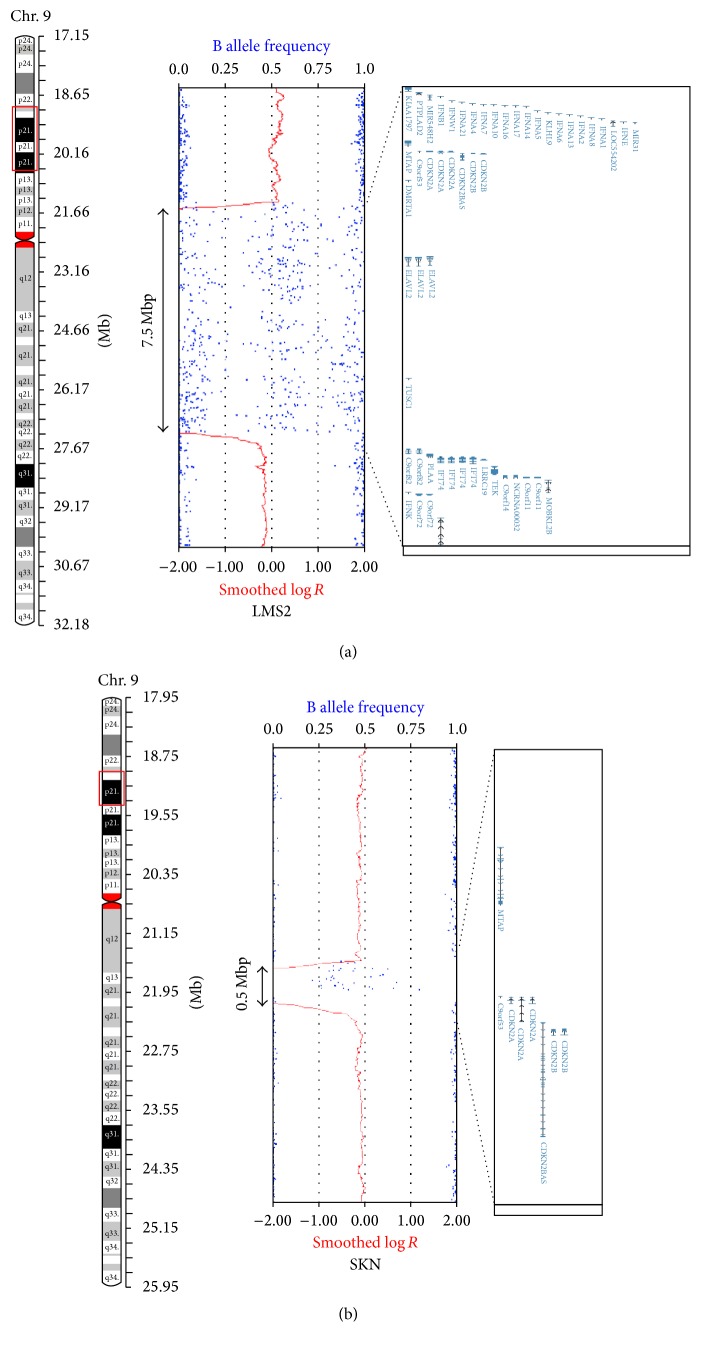
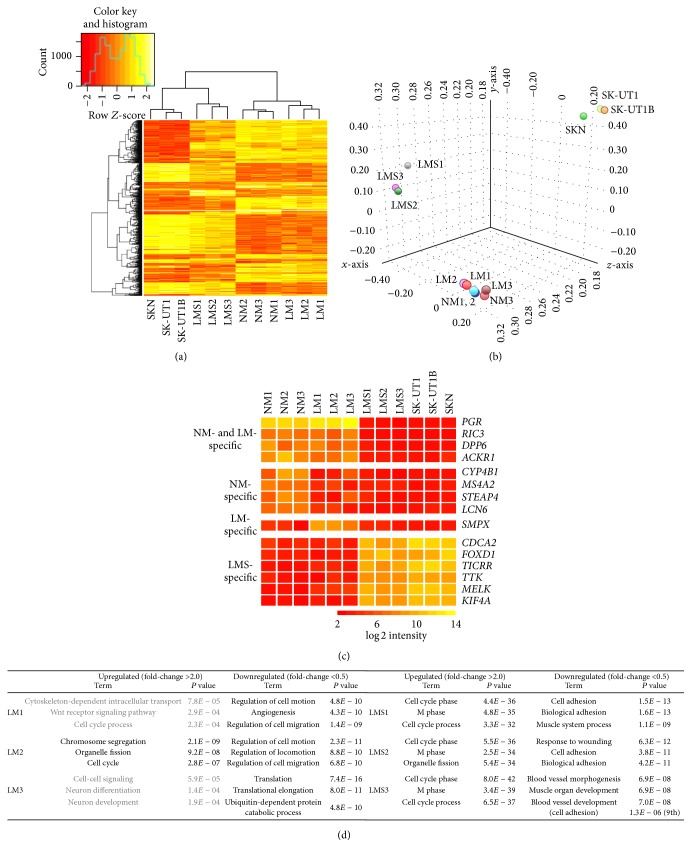
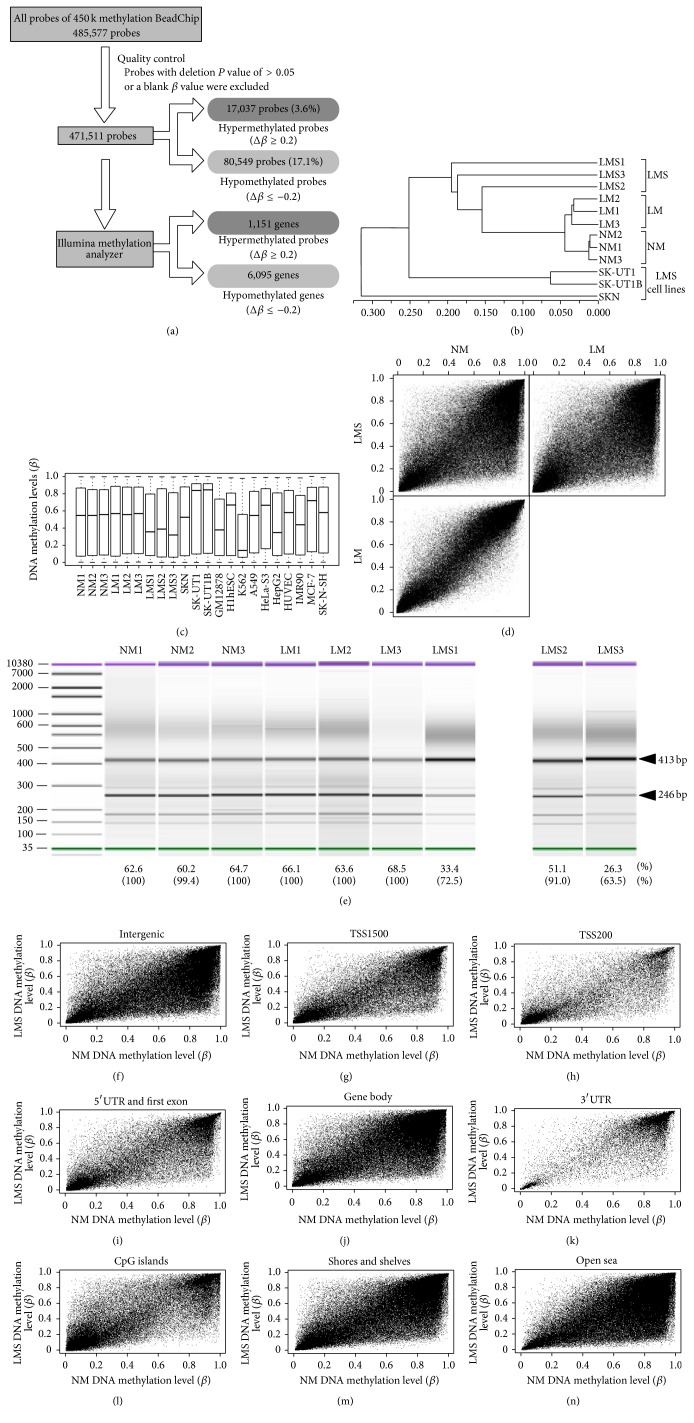
Uterine leiomyosarcoma (LMS) is the worst malignancy among the gynecologic cancers. Uterine leiomyoma (LM), a benign tumor of myometrial origin, is the most common among women of childbearing age. Because of their similar symptoms, it is difficult to preoperatively distinguish the two conditions only by ultrasound and pelvic MRI. While histopathological diagnosis is currently the main approach used to distinguish them postoperatively, unusual histologic variants of LM tend to be misdiagnosed as LMS. Therefore, development of molecular diagnosis as an alternative or confirmatory means will help to diagnose LMS more accurately. We adopted omics-based technologies to identify genome-wide features to distinguish LMS from LM and revealed that copy number, gene expression, and DNA methylation profiles successfully distinguished these tumors. LMS was found to possess features typically observed in malignant solid tumors, such as extensive chromosomal abnormalities, overexpression of cell cycle-related genes, hypomethylation spreading through large genomic regions, and frequent hypermethylation at the polycomb group target genes and protocadherin genes. We also identified candidate expression and DNA methylation markers, which will facilitate establishing postoperative molecular diagnostic tests based on conventional quantitative assays. Our results demonstrate the feasibility of establishing such tests and the possibility of developing preoperative and noninvasive methods.
子宫平滑肌肉瘤(LMS)是妇科癌症中恶性程度最高的肿瘤。子宫平滑肌瘤(LM)是一种起源于子宫肌层的良性肿瘤,在育龄女性中最为常见。由于它们症状相似,仅通过超声和盆腔磁共振成像(MRI)在术前很难区分这两种情况。虽然组织病理学诊断目前是术后区分它们的主要方法,但LM的不寻常组织学变异往往会被误诊为LMS。因此,开发分子诊断作为一种替代或辅助诊断手段将有助于更准确地诊断LMS。我们采用基于组学的技术来识别全基因组特征以区分LMS和LM,并发现拷贝数、基因表达和DNA甲基化谱成功地区分了这些肿瘤。发现LMS具有恶性实体瘤中常见的特征,如广泛的染色体异常、细胞周期相关基因的过表达、通过大片基因组区域的低甲基化扩散以及多梳蛋白组靶基因和原钙黏蛋白基因频繁的高甲基化。我们还鉴定了候选表达和DNA甲基化标志物,这将有助于基于传统定量分析建立术后分子诊断测试。我们的结果证明了建立此类测试的可行性以及开发术前和非侵入性方法的可能性。