Research Institute for Children, Children's Hospital, New Orleans, Louisiana, United States of America.
PLoS One. 2013 Apr 24;8(4):e62417. doi: 10.1371/journal.pone.0062417. Print 2013.
Mechanisms of antibody-mediated neutralization are of much interest. For plant and bacterial A-B toxins, A chain mediates toxicity and B chain binds target cells. It is generally accepted and taught that antibody (Ab) neutralizes by preventing toxin binding to cells. Yet for some toxins, ricin included, anti-A chain Abs afford greater protection than anti-B. The mechanism(s) whereby Abs to the A chain neutralize toxins are not understood.
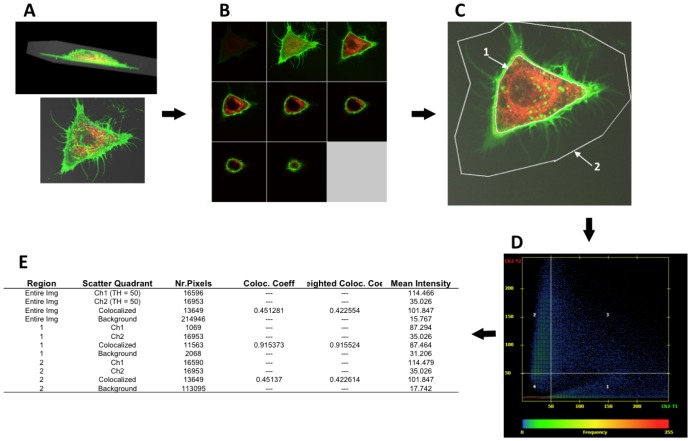
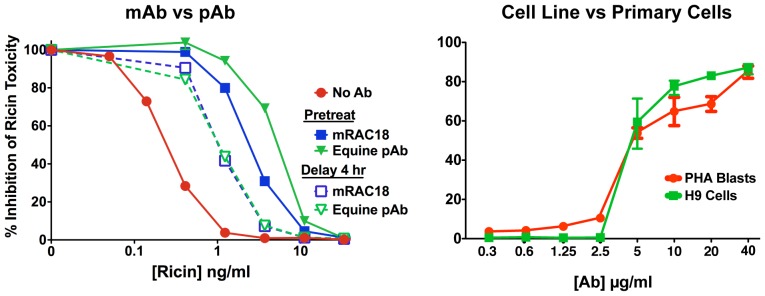
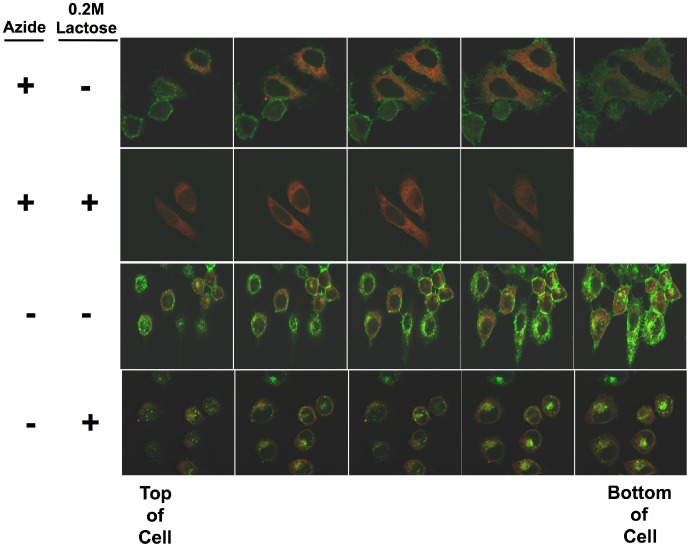
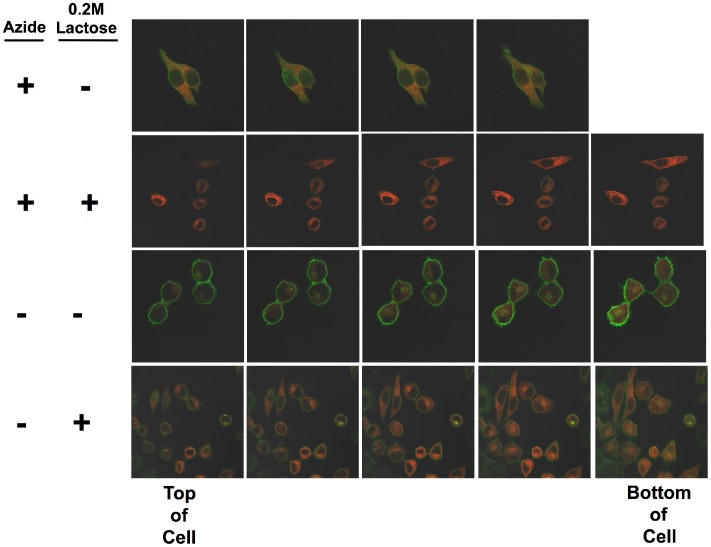
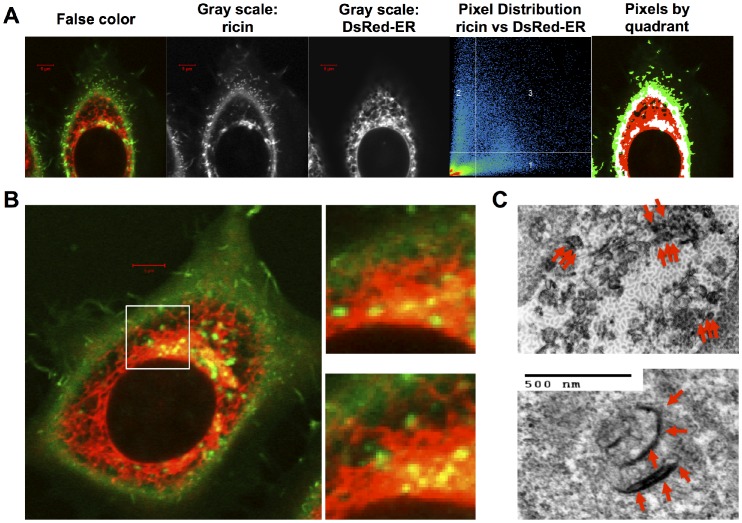
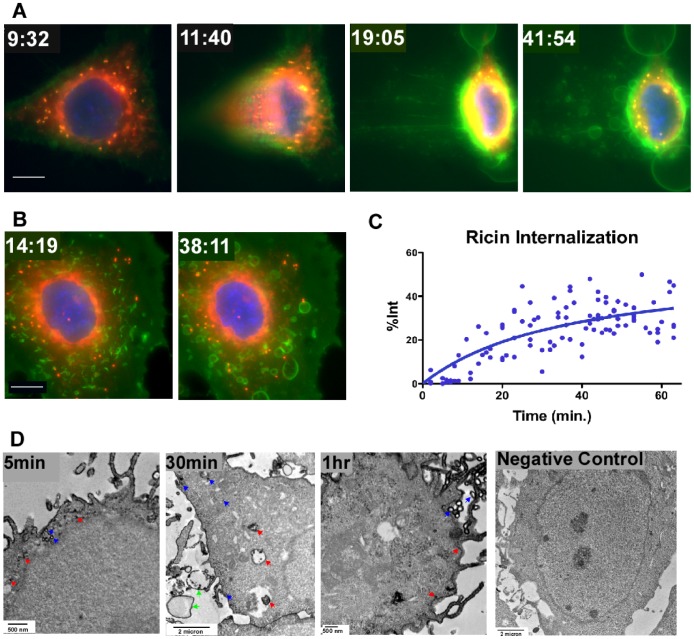
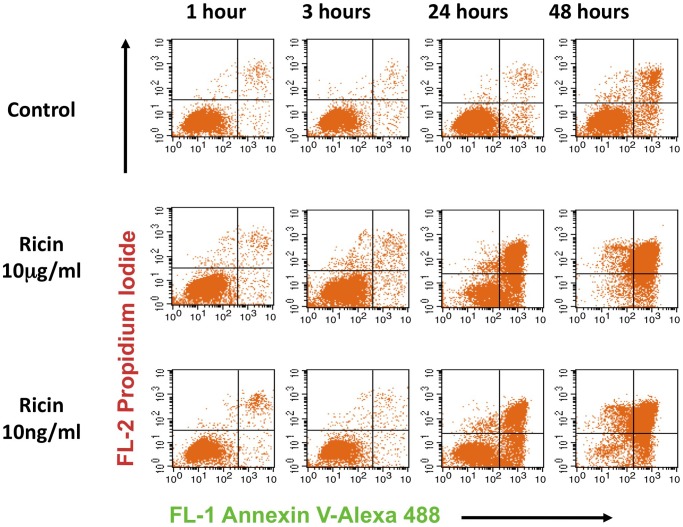
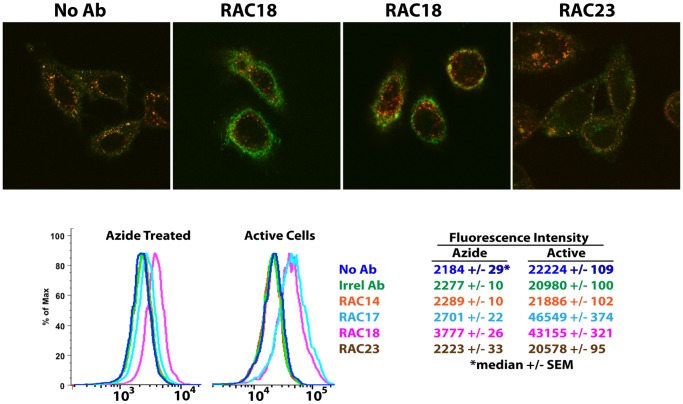
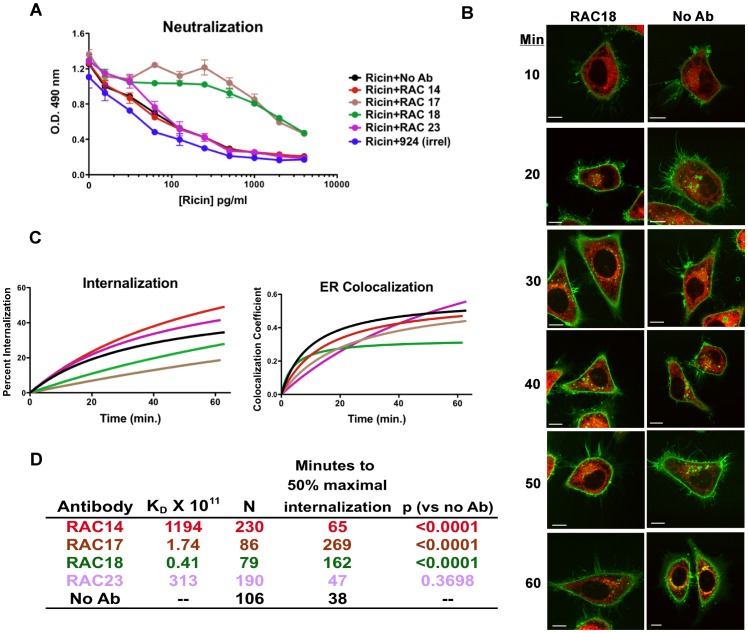
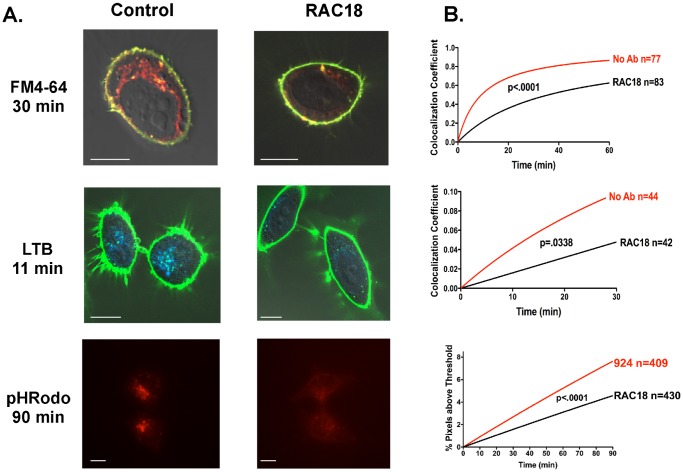
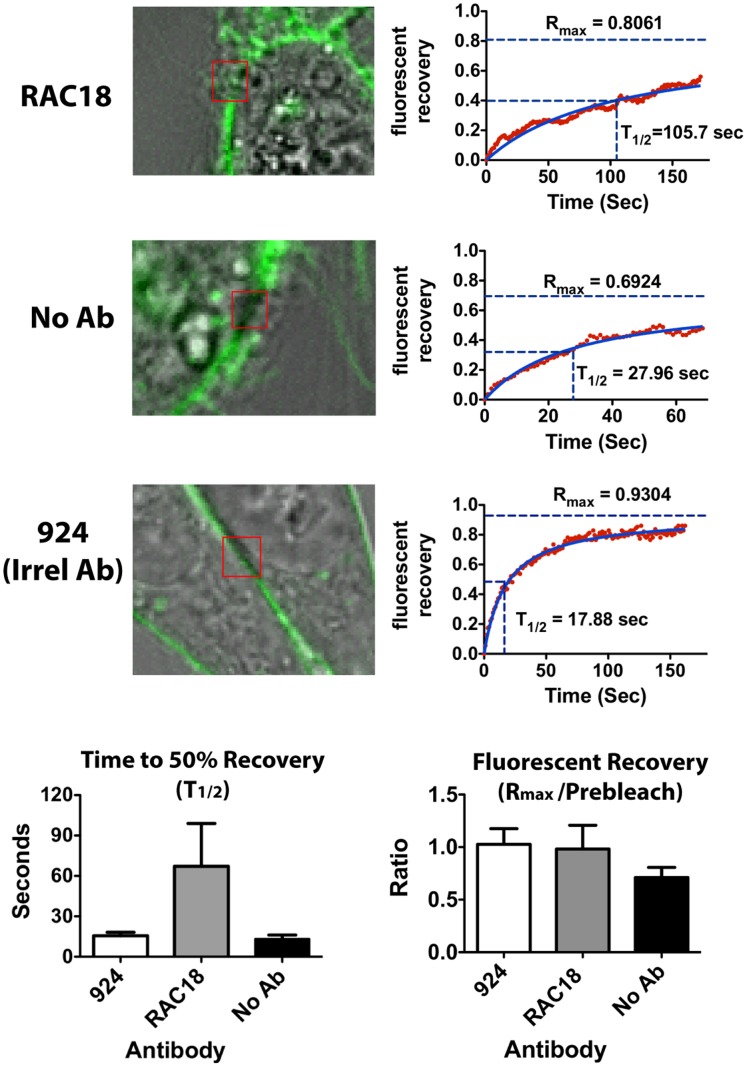
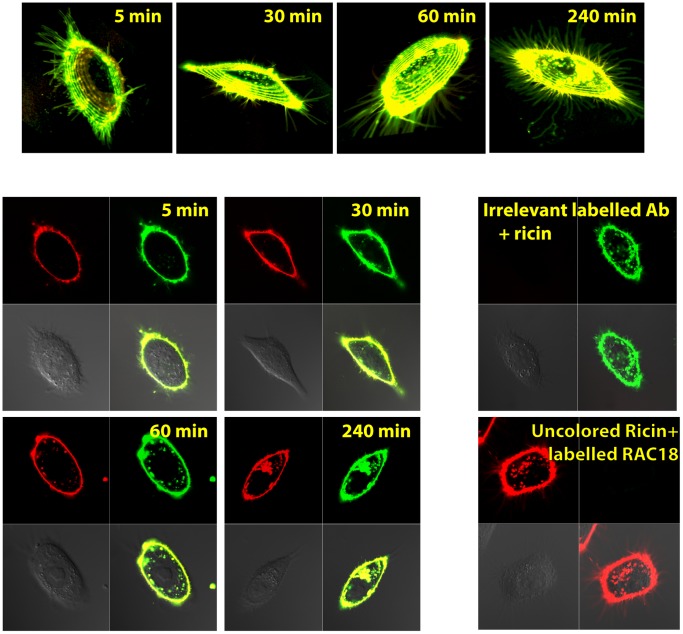
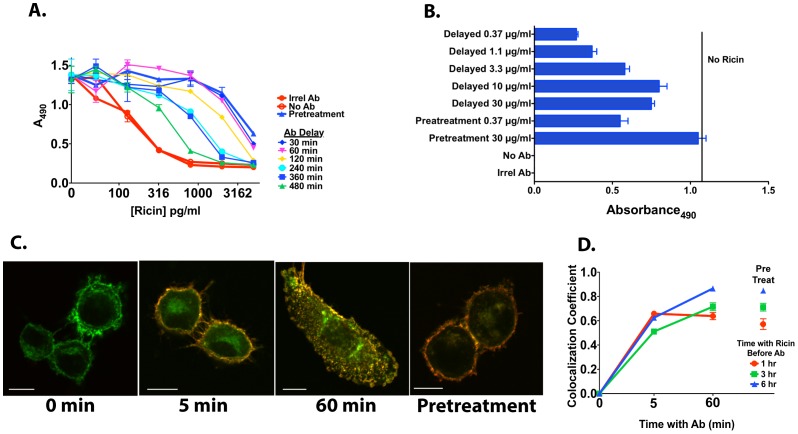
METHODOLOGY/PRINCIPAL FINDINGS: We use quantitative confocal imaging, neutralization assays, and other techniques to study how anti-A chain Abs function to protect cells. Without Ab, ricin enters cells and penetrates to the endoplasmic reticulum within 15 min. Within 45-60 min, ricin entering and being expelled from cells reaches equilibrium. These results are consistent with previous observations, and support the validity of our novel methodology. The addition of neutralizing Ab causes ricin accumulation at the cell surface, delays internalization, and postpones retrograde transport of ricin. Ab binds ricin for >6hr as they traffic together through the cell. Ab protects cells even when administered hours after exposure. CONCLUSIONS/KEY FINDINGS: We demonstrate the dynamic nature of the interaction between the host cell and toxin, and how Ab can alter the balance in favor of the cell. Ab blocks ricin's entry into cells, hinders its intracellular routing, and can protect even after ricin is present in the target organelle, providing evidence that the major site of neutralization is intracellular. These data add toxins to the list of pathogenic agents that can be neutralized intracellularly and explain the in vivo efficacy of delayed administration of anti-toxin Abs. The results encourage the use of post-exposure passive Ab therapy, and show the importance of the A chain as a target of Abs.
抗体介导的中和机制备受关注。对于植物和细菌 A-B 毒素,A 链介导毒性,B 链结合靶细胞。人们普遍认为并教授说,抗体 (Ab) 通过阻止毒素与细胞结合来中和。然而,对于某些毒素,包括蓖麻毒素在内,抗 A 链 Ab 提供的保护作用大于抗 B 链。尚不清楚 Ab 中和毒素的机制。
方法/主要发现:我们使用定量共聚焦成像、中和测定和其他技术来研究抗 A 链 Ab 如何发挥作用来保护细胞。没有 Ab,蓖麻毒素在 15 分钟内进入细胞并渗透到内质网内。在 45-60 分钟内,进入和从细胞中排出的蓖麻毒素达到平衡。这些结果与以前的观察结果一致,支持了我们新方法的有效性。添加中和 Ab 会导致细胞表面蓖麻毒素积聚,延迟内化,并推迟蓖麻毒素的逆行运输。Ab 在与毒素一起通过细胞运输时结合蓖麻毒素>6 小时。Ab 甚至在接触后数小时给药时也能保护细胞。
结论/关键发现:我们证明了宿主细胞与毒素之间相互作用的动态性质,以及 Ab 如何改变平衡以有利于细胞。Ab 阻止蓖麻毒素进入细胞,阻碍其细胞内路由,甚至在靶细胞器中存在蓖麻毒素时也能提供保护,这表明中和的主要部位是细胞内。这些数据将毒素添加到可以在细胞内中和的致病剂列表中,并解释了延迟给予抗毒素 Ab 的体内疗效。结果鼓励使用接触后被动 Ab 治疗,并显示 A 链作为 Ab 靶标的重要性。