Division of Infectious Diseases, Wadsworth Center, New York State Department of Health, Albany, New York, USA.
J Leukoc Biol. 2019 Nov;106(5):1161-1176. doi: 10.1002/JLB.4A0419-123R. Epub 2019 Jul 16.
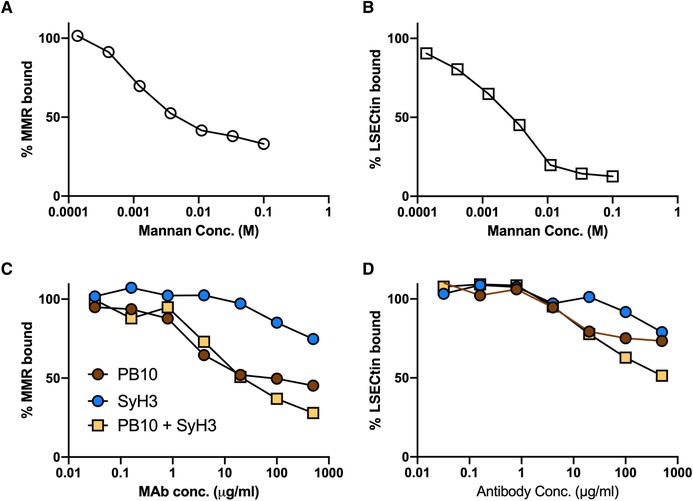
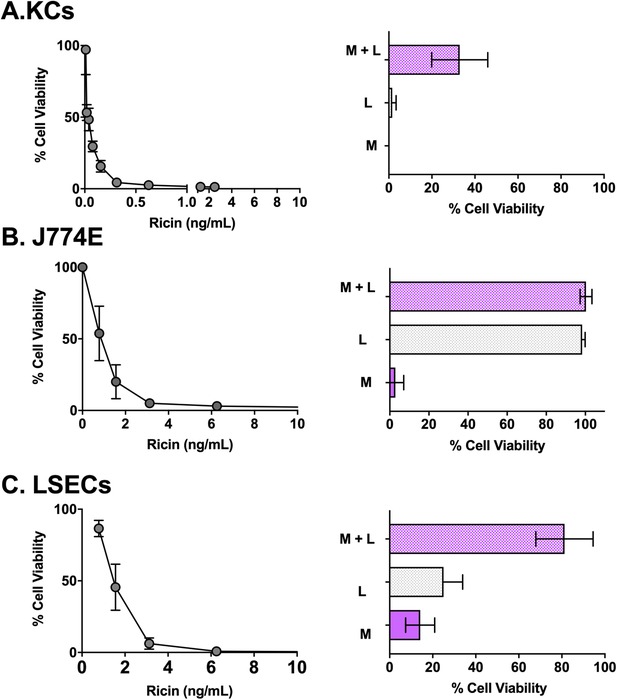
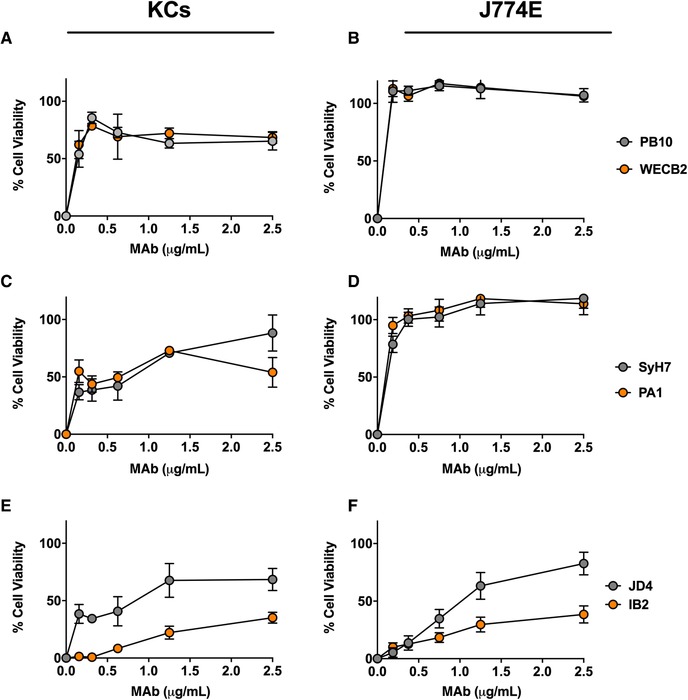
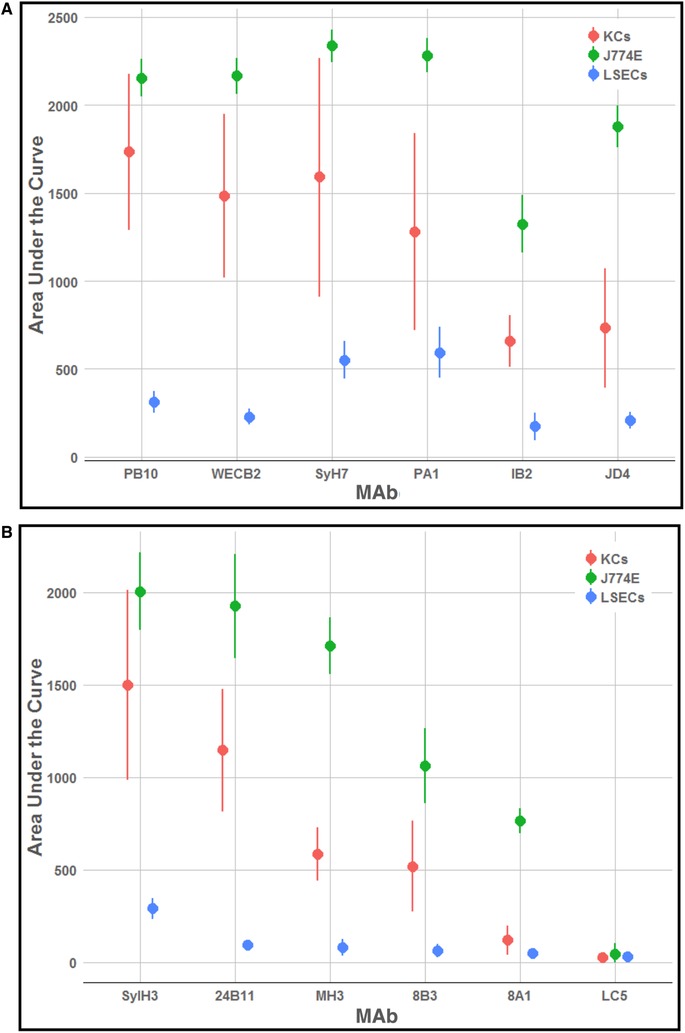
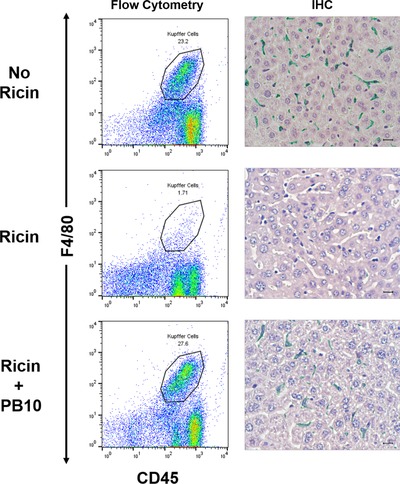
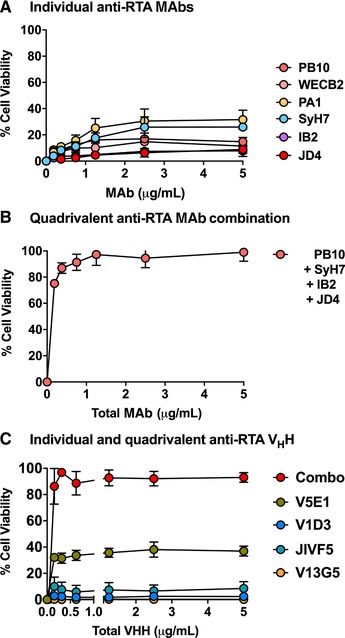
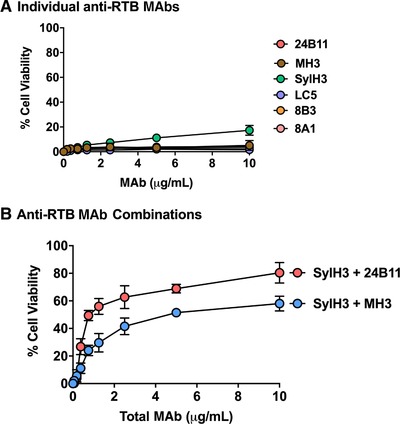
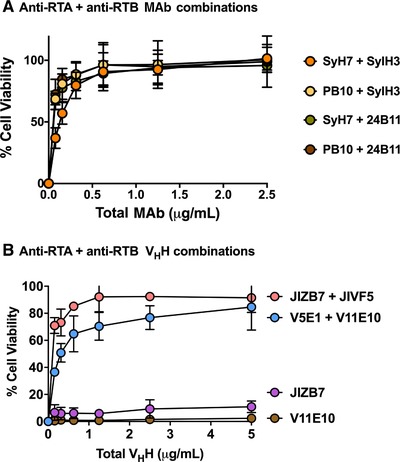
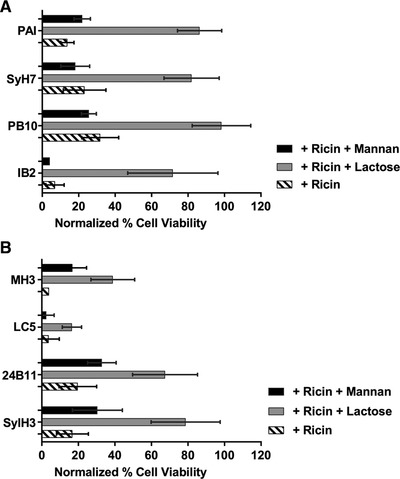
Ricin toxin is a plant-derived, ribosome-inactivating protein that is rapidly cleared from circulation by Kupffer cells (KCs) and liver sinusoidal endothelial cells (LSECs)-with fatal consequences. Rather than being inactivated, ricin evades normal degradative pathways and kills both KCs and LSECs with remarkable efficiency. Uptake of ricin by these 2 specialized cell types in the liver occurs by 2 parallel routes: a "lactose-sensitive" pathway mediated by ricin's galactose/N-acetylgalactosamine-specific lectin subunit (RTB), and a "mannose-sensitive" pathway mediated by the mannose receptor (MR; CD206) or other C-type lectins capable of recognizing the mannose-side chains displayed on ricin's A (RTA) and B subunits. In this report, we investigated the capacity of a collection of ricin-specific mouse MAb and camelid single-domain (V H) antibodies to protect KCs and LSECs from ricin-induced killing. In the case of KCs, individual MAbs against RTA or RTB afforded near complete protection against ricin in ex vivo and in vivo challenge studies. In contrast, individual MAbs or V Hs afforded little (<40%) or even no protection to LSECs against ricin-induced death. Complete protection of LSECs was only achieved with MAb or V H cocktails, with the most effective mixtures targeting RTA and RTB simultaneously. Although the exact mechanisms of protection of LSECs remain unknown, evidence indicates that the Ab cocktails exert their effects on the mannose-sensitive uptake pathway without the need for Fcγ receptor involvement. In addition to advancing our understanding of how toxins and small immune complexes are processed by KCs and LSECs, our study has important implications for the development of Ab-based therapies designed to prevent or treat ricin exposure should the toxin be weaponized.
蓖麻毒素是一种植物来源的核糖体失活蛋白,它很快被库普弗细胞 (KCs) 和肝窦内皮细胞 (LSECs) 清除出循环,从而产生致命的后果。蓖麻毒素并没有被失活,而是逃避了正常的降解途径,以极高的效率杀死 KCs 和 LSECs。肝脏中这两种特殊细胞类型摄取蓖麻毒素有两种平行途径:一种是由蓖麻毒素的半乳糖/N-乙酰半乳糖胺特异性凝集素亚基 (RTB) 介导的“乳糖敏感”途径,另一种是由甘露糖受体 (MR; CD206) 或其他能够识别蓖麻毒素 A (RTA) 和 B 亚基上展示的甘露糖侧链的 C 型凝集素介导的“甘露糖敏感”途径。在本报告中,我们研究了一组蓖麻毒素特异性小鼠单抗和骆驼单域 (V H ) 抗体保护 KCs 和 LSECs 免受蓖麻毒素诱导杀伤的能力。在 KCs 的情况下,针对 RTA 或 RTB 的单个单抗在离体和体内挑战研究中几乎完全提供了对蓖麻毒素的保护。相比之下,单个单抗或 V H 对 LSECs 对抗蓖麻毒素诱导的死亡几乎没有提供(<40%)甚至没有保护作用。只有使用单抗或 V H 鸡尾酒才能完全保护 LSECs,最有效的混合物同时针对 RTA 和 RTB。尽管 LSECs 保护的确切机制尚不清楚,但有证据表明,Ab 鸡尾酒通过不依赖 Fcγ 受体参与来发挥其对甘露糖敏感摄取途径的作用。除了增进我们对毒素和小免疫复合物如何被 KCs 和 LSECs 处理的理解外,我们的研究对于开发基于 Ab 的治疗方法具有重要意义,如果毒素被武器化,这些方法旨在预防或治疗蓖麻毒素暴露。