Center for Memory and Brain, Boston University, Boston, MA, 02215, USA,
Cogn Affect Behav Neurosci. 2013 Dec;13(4):900-15. doi: 10.3758/s13415-013-0170-x.
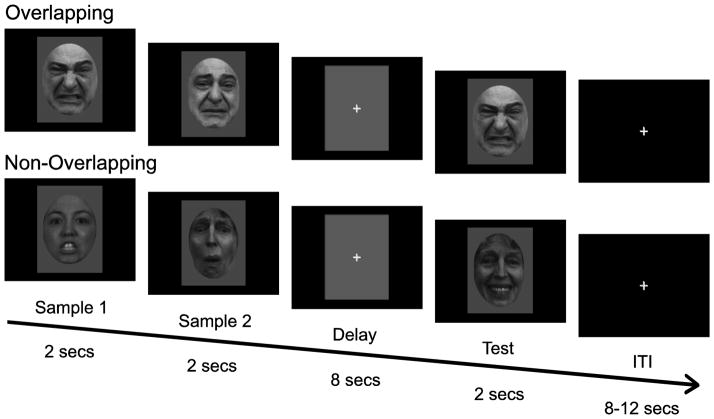
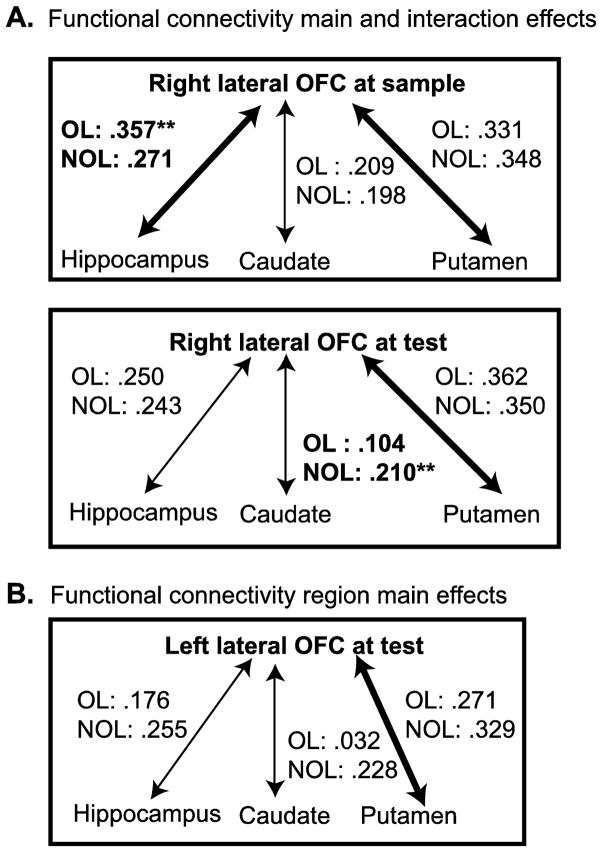
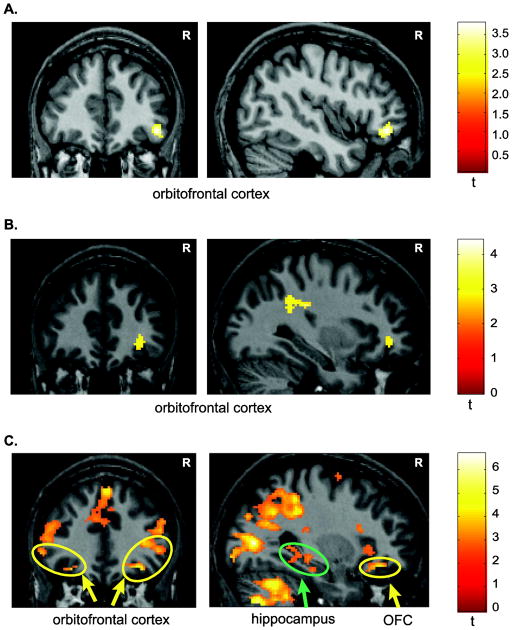
Human social interactions are complex behaviors requiring the concerted effort of multiple neural systems to track and monitor the individuals around us. Cognitively, adjusting our behavior on the basis of changing social cues such as facial expressions relies on working memory and the ability to disambiguate, or separate, the representations of overlapping stimuli resulting from viewing the same individual with different facial expressions. We conducted an fMRI experiment examining the brain regions contributing to the encoding, maintenance, and retrieval of overlapping identity information during working memory using a delayed match-to-sample task. In the overlapping condition, two faces from the same individual with different facial expressions were presented at sample. In the nonoverlapping condition, the two sample faces were from two different individuals with different expressions. fMRI activity was assessed by contrasting the overlapping and nonoverlapping conditions at sample, delay, and test. The lateral orbitofrontal cortex showed increased fMRI signal in the overlapping condition in all three phases of the delayed match-to-sample task and increased functional connectivity with the hippocampus when encoding overlapping stimuli. The hippocampus showed increased fMRI signal at test. These data suggest that lateral orbitofrontal cortex helps encode and maintain representations of overlapping stimuli in working memory, whereas the orbitofrontal cortex and hippocampus contribute to the successful retrieval of overlapping stimuli. We suggest that the lateral orbitofrontal cortex and hippocampus play a role in encoding, maintaining, and retrieving social cues, especially when multiple interactions with an individual need to be disambiguated in a rapidly changing social context in order to make appropriate social responses.
人类的社交互动是复杂的行为,需要多个神经系统协同工作,以跟踪和监测我们周围的个体。从认知的角度来看,根据面部表情等不断变化的社交线索调整我们的行为依赖于工作记忆和区分能力,即区分观看同一个人不同面部表情时产生的重叠刺激的表示。我们进行了一项 fMRI 实验,使用延迟匹配样本任务,研究了在工作记忆过程中对重叠身份信息进行编码、保持和检索的大脑区域。在重叠条件下,同一个人有不同面部表情的两张脸在样本中呈现。在非重叠条件下,两个样本脸来自两个不同的人,有不同的表情。通过在样本、延迟和测试时对比重叠和非重叠条件来评估 fMRI 活动。在延迟匹配样本任务的所有三个阶段,外侧眶额皮层在重叠条件下显示出更高的 fMRI 信号,并且在编码重叠刺激时与海马体的功能连接增加。海马体在测试时显示出更高的 fMRI 信号。这些数据表明,外侧眶额皮层有助于在工作记忆中编码和保持重叠刺激的表示,而眶额皮层和海马体有助于成功检索重叠刺激。我们认为,外侧眶额皮层和海马体在编码、保持和检索社交线索方面发挥作用,特别是在快速变化的社交环境中,需要区分与个体的多次交互,以便做出适当的社交反应时。