Cardiology and Cardiovascular Research, University of Zürich, Switzerland.
Eur Heart J. 2013 Aug;34(31):2436-43. doi: 10.1093/eurheartj/eht149. Epub 2013 May 2.
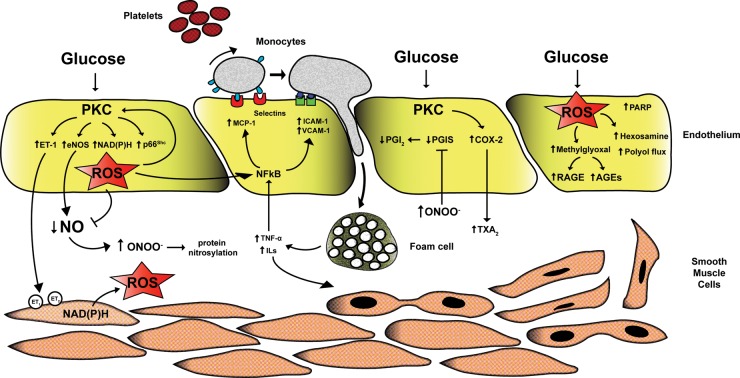
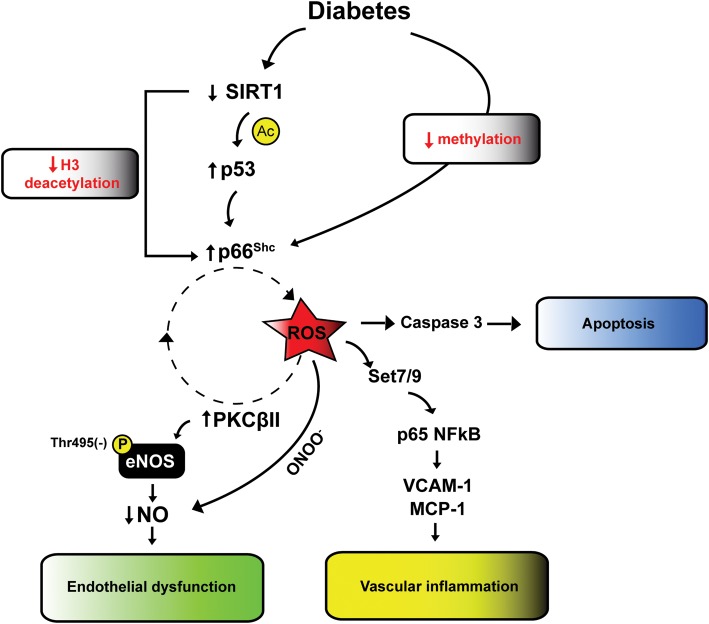
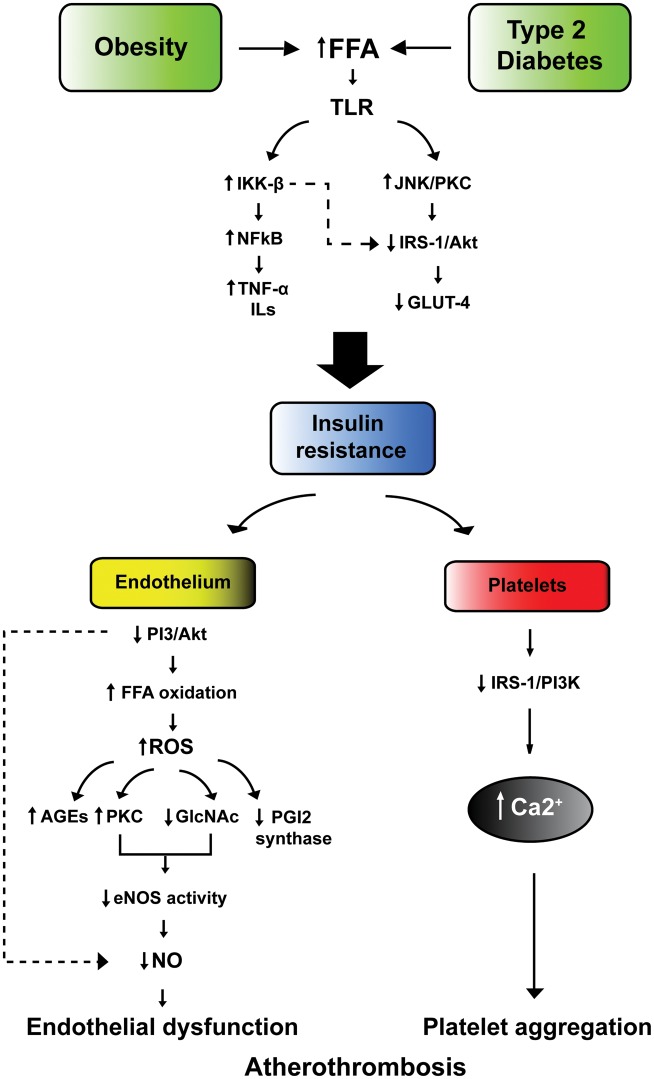
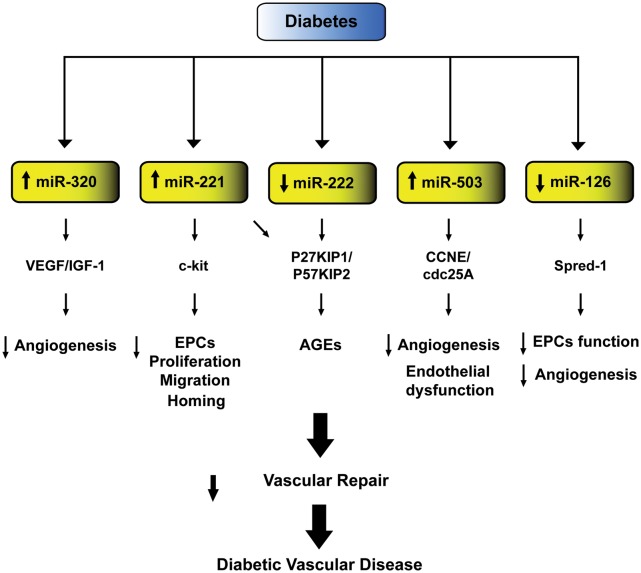
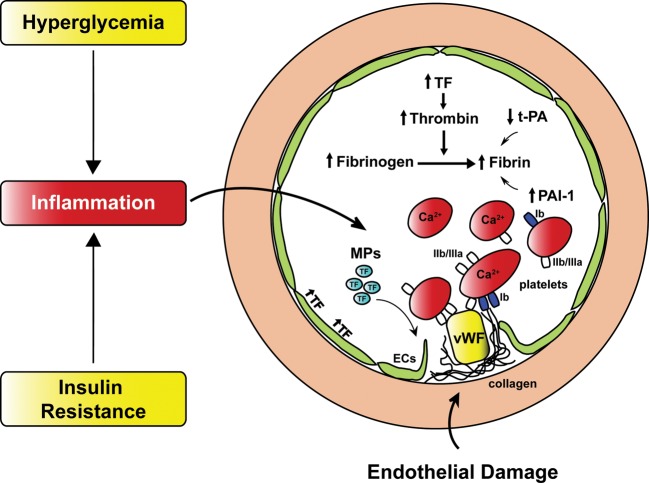
Hyperglycemia and insulin resistance are key players in the development of atherosclerosis and its complications. A large body of evidence suggest that metabolic abnormalities cause overproduction of reactive oxygen species (ROS). In turn, ROS, via endothelial dysfunction and inflammation, play a major role in precipitating diabetic vascular disease. A better understanding of ROS-generating pathways may provide the basis to develop novel therapeutic strategies against vascular complications in this setting. Part I of this review will focus on the most current advances in the pathophysiological mechanisms of vascular disease: (i) emerging role of endothelium in obesity-induced insulin resistance; (ii) hyperglycemia-dependent microRNAs deregulation and impairment of vascular repair capacities; (iii) alterations of coagulation, platelet reactivity, and microparticle release; (iv) epigenetic-driven transcription of ROS-generating and proinflammatory genes. Taken together these novel insights point to the development of mechanism-based therapeutic strategies as a promising option to prevent cardiovascular complications in diabetes.
高血糖和胰岛素抵抗是动脉粥样硬化及其并发症发展的关键因素。大量证据表明,代谢异常导致活性氧(ROS)的过度产生。反过来,ROS 通过内皮功能障碍和炎症,在引发糖尿病血管疾病方面发挥着主要作用。更好地了解 ROS 生成途径可能为开发针对这种情况下血管并发症的新治疗策略提供基础。这篇综述的第一部分将重点介绍血管疾病病理生理机制的最新进展:(i)内皮在肥胖引起的胰岛素抵抗中的新作用;(ii)高血糖依赖性 microRNAs 失调和血管修复能力受损;(iii)凝血、血小板反应性和微粒体释放的改变;(iv)ROS 生成和促炎基因的表观遗传驱动转录。综上所述,这些新的见解表明,开发基于机制的治疗策略是预防糖尿病心血管并发症的一种有前途的选择。