Escola Nacional de Saúde Pública Sergio Arouca, Fiocruz, Rio de Janeiro, RJ, Brazil.
Clinics (Sao Paulo). 2013;68(3):329-37. doi: 10.6061/clinics/2013(03)oa08.
This study aimed to characterize and estimate the frequency of adverse reactions to antituberculosis drugs in the population treated at the Centro de Saúde Escola Germano Sinval Faria, a primary health care clinic in Manguinhos, Rio de Janeiro City, and to explore the relationship between adverse drug reactions and some of the patients' demographic and health characteristics.
This descriptive study was conducted via patient record review of incident cases between 2004 and 2008.
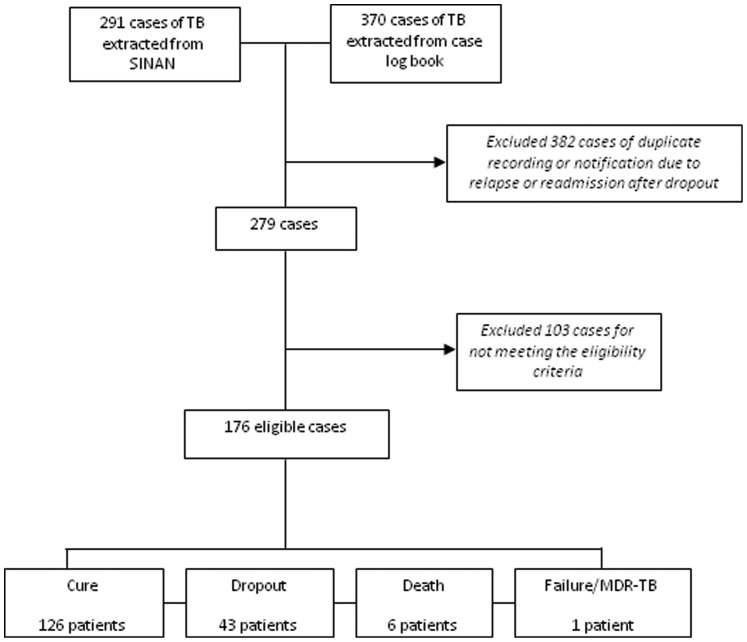
Of the 176 patients studied, 41.5% developed one or more adverse reactions to antituberculosis drugs, totaling 126 occurrences. The rate of adverse reactions to antituberculosis drugs was higher among women, patients aged 50 years or older, those with four or more comorbidities, and those who used five or more drugs. Of the total reactions, 71.4% were mild. The organ systems most affected were as follows: the gastrointestinal tract (29.4%), the skin and appendages (21.4%), and the central and peripheral nervous systems (14.3%). Of the patients who experienced adverse reactions to antituberculosis drugs, 65.8% received no drug treatment for their adverse reactions, and 4.1% had one of the antituberculosis drugs suspended because of adverse reactions. "Probable reactions" (75%) predominated over "possible reactions" (24%). In the study sample, 64.3% of the reactions occurred during the first two months of treatment, and most (92.6%) of the reactions were ascribed to the combination of rifampicin + isoniazid + pyrazinamide (Regimen I). A high dropout rate from tuberculosis treatment (24.4%) was also observed.
This study suggests a high rate of adverse reactions to antituberculosis drugs.
本研究旨在描述和估计在里约热内卢市曼久inhos 的 Germano Sinval Faria 保健中心接受治疗的人群中抗结核药物不良反应的特征和频率,并探讨不良反应与一些患者的人口统计学和健康特征之间的关系。
这是一项描述性研究,通过对 2004 年至 2008 年期间的偶发病例进行病历回顾。
在研究的 176 名患者中,41.5%发生了一种或多种抗结核药物不良反应,共发生 126 例。女性、50 岁及以上患者、合并症 4 种及以上患者以及使用 5 种及以上药物的患者发生抗结核药物不良反应的比率较高。总反应中,71.4%为轻度。受影响的器官系统如下:胃肠道(29.4%)、皮肤和附属器(21.4%)以及中枢和外周神经系统(14.3%)。在发生抗结核药物不良反应的患者中,65.8%未接受药物治疗,4.1%因不良反应而停用一种抗结核药物。“可能反应”(75%)占主导地位,“可能反应”(24%)占少数。在研究样本中,64.3%的反应发生在治疗的前两个月,大多数(92.6%)反应归因于利福平+异烟肼+吡嗪酰胺(方案 I)的联合用药。还观察到结核病治疗的高辍学率(24.4%)。
本研究表明抗结核药物不良反应发生率较高。