Institute of Biophysics, Johannes Kepler University Linz, A-4020 Linz, Austria.
J Biol Chem. 2013 Jun 21;288(25):17941-6. doi: 10.1074/jbc.M113.477893. Epub 2013 May 3.
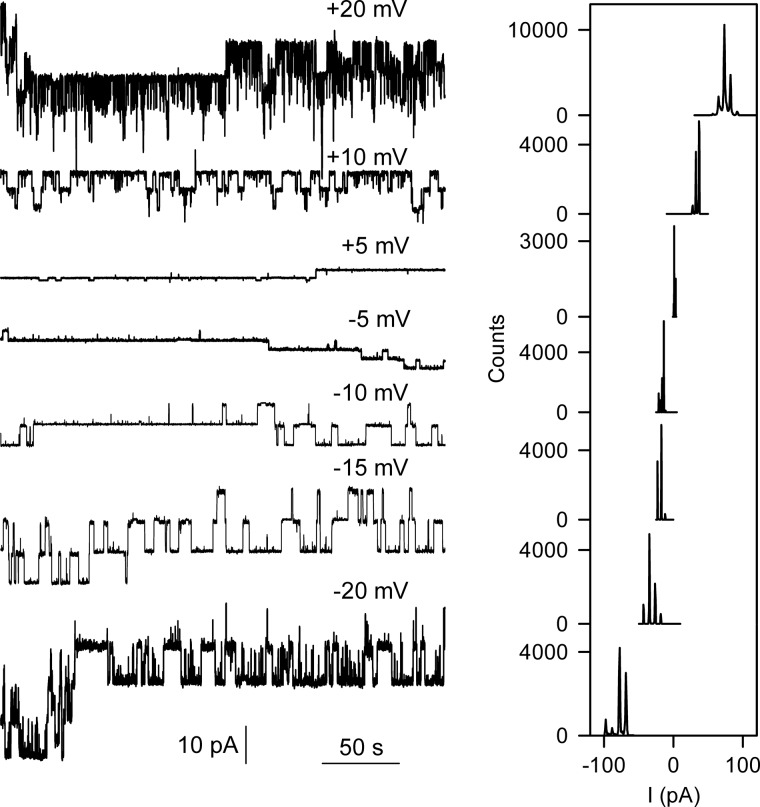
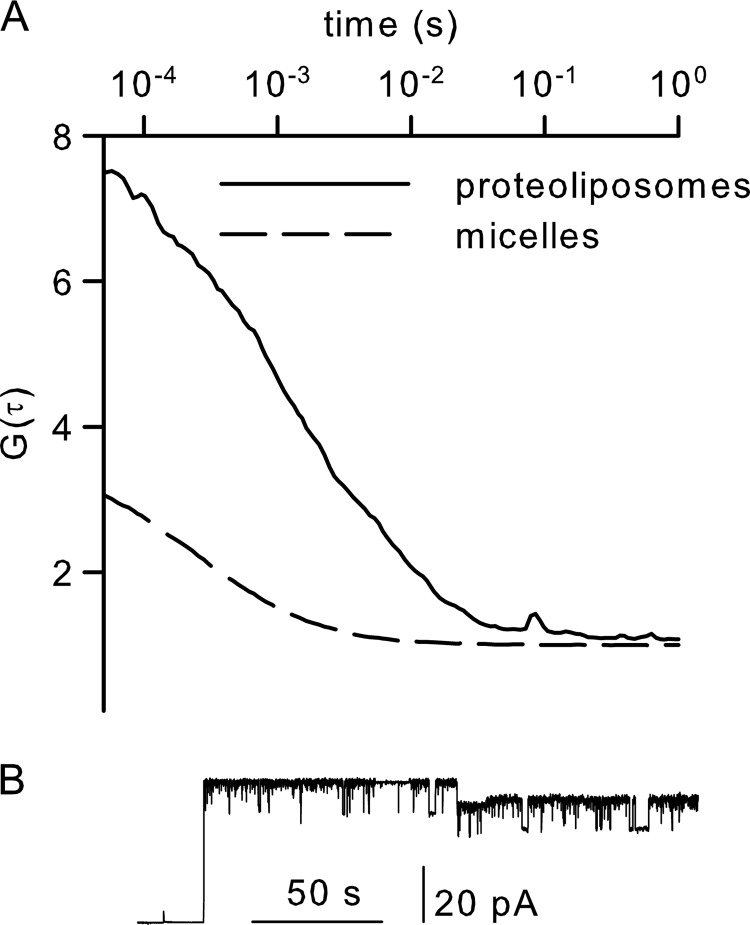
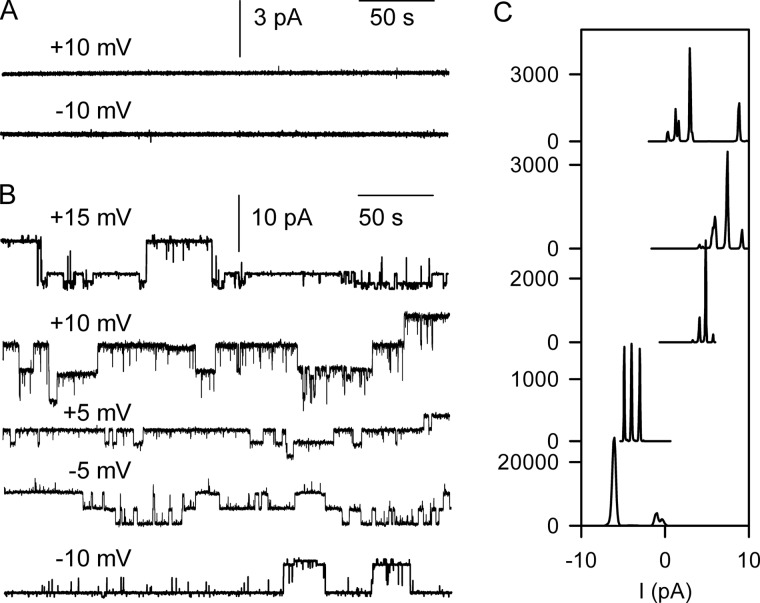
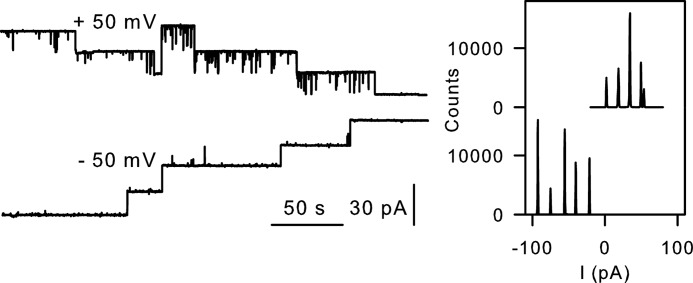
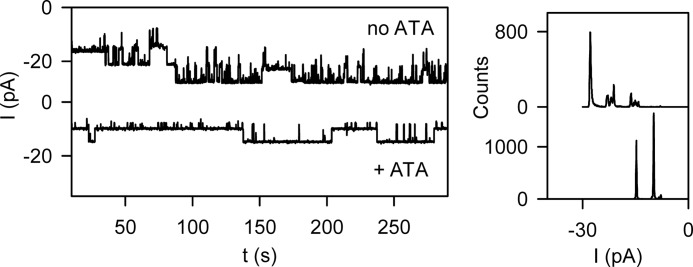
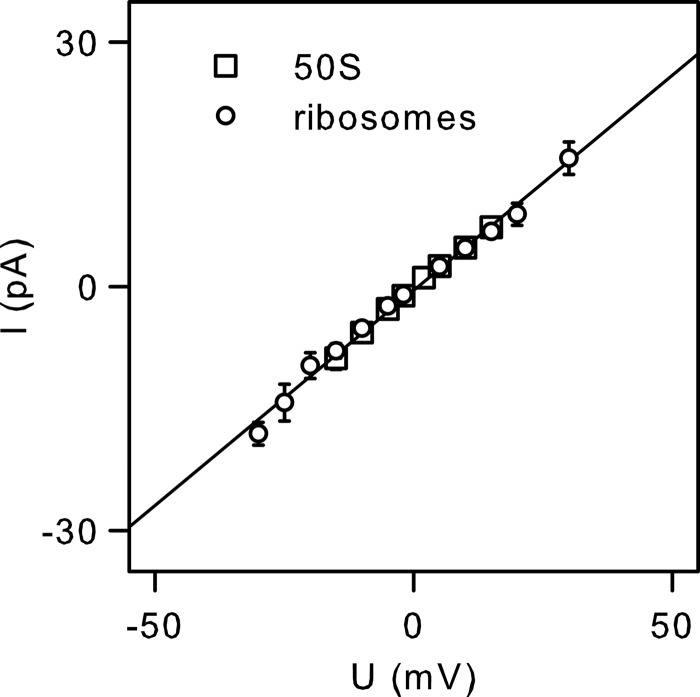
In co-translational translocation, the ribosome funnel and the channel of the protein translocation complex SecYEG are aligned. For the nascent chain to enter the channel immediately after synthesis, a yet unidentified signal triggers displacement of the SecYEG sealing plug from the pore. Here, we show that ribosome binding to the resting SecYEG channel triggers this conformational transition. The purified and reconstituted SecYEG channel opens to form a large ion-conducting channel, which has the conductivity of the plug deletion mutant. The number of ion-conducting channels inserted into the planar bilayer per fusion event roughly equals the number of SecYEG channels counted by fluorescence correlation spectroscopy in a single proteoliposome. Thus, the open probability of the channel must be close to unity. To prevent the otherwise lethal proton leak, a closed post-translational conformation of the SecYEG complex bound to a ribosome must exist.
在共翻译易位中,核糖体漏斗和蛋白质易位复合物 SecYEG 的通道对齐。为了使新生链在合成后立即进入通道,一个尚未确定的信号触发 SecYEG 密封塞从孔中移位。在这里,我们表明核糖体与静止 SecYEG 通道的结合引发了这种构象转变。纯化和重建的 SecYEG 通道打开形成一个大的离子导电通道,其导电性与塞子缺失突变体相当。每个融合事件插入平面双层中的离子导电通道的数量大致等于在单个蛋白脂质体中通过荧光相关光谱计数的 SecYEG 通道的数量。因此,通道的开放概率必须接近 1。为了防止否则致命的质子泄漏,与核糖体结合的 SecYEG 复合物的封闭翻译后构象必须存在。