Key Laboratory of Economic Plants and Biotechnology, Kunming Institute of Botany, Chinese Academy of Sciences, Kunming, China.
PLoS One. 2013 Apr 30;8(4):e62865. doi: 10.1371/journal.pone.0062865. Print 2013.
Plant cell culture represents an alternative source for producing high-value secondary metabolites including paclitaxel (Taxol®), which is mainly produced in Taxus and has been widely used in cancer chemotherapy. The phytohormone methyl jasmonate (MeJA) can significantly increase the production of paclitaxel, which is induced in plants as a secondary metabolite possibly in defense against herbivores and pathogens. In cell culture, MeJA also elicits the accumulation of paclitaxel; however, the mechanism is still largely unknown.
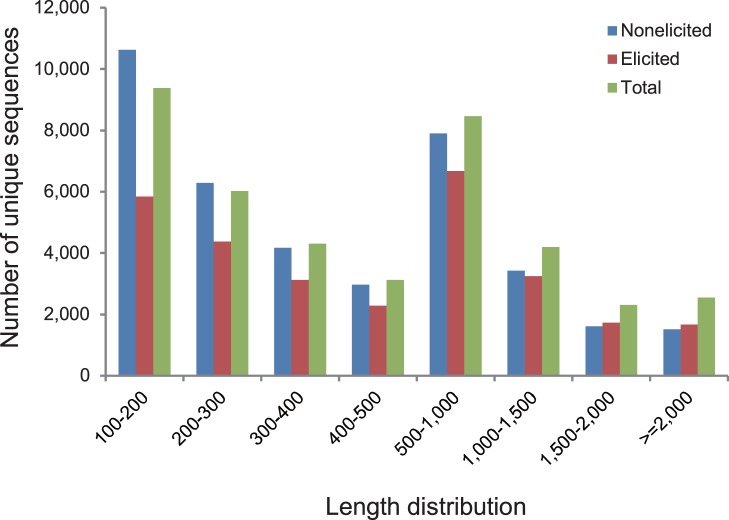
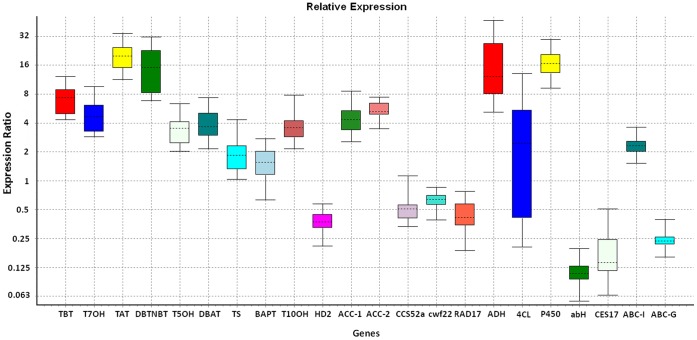
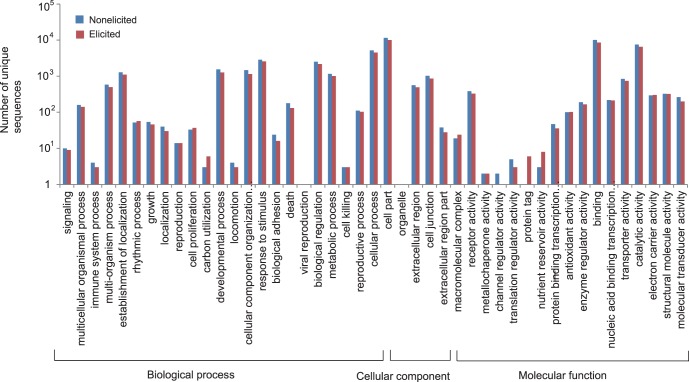
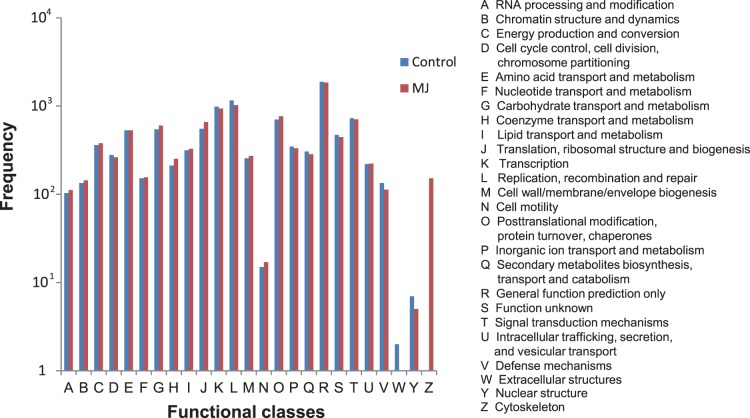
METHODOLOGY/PRINCIPAL FINDINGS: To obtain insight into the global regulation mechanism of MeJA in the steady state of paclitaxel production (7 days after MeJA addition), especially on paclitaxel biosynthesis, we sequenced the transcriptomes of MeJA-treated and untreated Taxus × media cells and obtained ∼ 32.5 M high quality reads, from which 40,348 unique sequences were obtained by de novo assembly. Expression level analysis indicated that a large number of genes were associated with transcriptional regulation, DNA and histone modification, and MeJA signaling network. All the 29 known genes involved in the biosynthesis of terpenoid backbone and paclitaxel were found with 18 genes showing increased transcript abundance following elicitation of MeJA. The significantly up-regulated changes of 9 genes in paclitaxel biosynthesis were validated by qRT-PCR assays. According to the expression changes and the previously proposed enzyme functions, multiple candidates for the unknown steps in paclitaxel biosynthesis were identified. We also found some genes putatively involved in the transport and degradation of paclitaxel. Potential target prediction of miRNAs indicated that miRNAs may play an important role in the gene expression regulation following the elicitation of MeJA.
CONCLUSIONS/SIGNIFICANCE: Our results shed new light on the global regulation mechanism by which MeJA regulates the physiology of Taxus cells and is helpful to understand how MeJA elicits other plant species besides Taxus.
植物细胞培养代表了生产高附加值次生代谢产物的替代来源,包括紫杉醇(Taxol®),紫杉醇主要在红豆杉中产生,已广泛用于癌症化疗。植物激素茉莉酸甲酯(MeJA)可显著增加紫杉醇的产量,作为一种次生代谢产物,它可能在植物防御草食动物和病原体方面发挥作用。在细胞培养中,MeJA 也会引起紫杉醇的积累;然而,其机制在很大程度上仍不清楚。
方法/主要发现:为了深入了解 MeJA 在紫杉醇产生的稳定状态(添加 MeJA 后 7 天)下对紫杉醇的全局调控机制,特别是对紫杉醇生物合成的调控机制,我们对 MeJA 处理和未处理的 Taxus × media 细胞的转录组进行了测序,获得了约 3250 万个高质量读数,通过从头组装获得了 40348 个独特序列。表达水平分析表明,大量基因与转录调控、DNA 和组蛋白修饰以及 MeJA 信号网络有关。所有 29 个已知参与萜类骨架和紫杉醇生物合成的基因都被发现,其中 18 个基因在 MeJA 诱导后转录丰度增加。通过 qRT-PCR 实验验证了紫杉醇生物合成中 9 个基因的上调变化。根据表达变化和先前提出的酶功能,鉴定出了紫杉醇生物合成中多个未知步骤的候选基因。我们还发现了一些可能参与紫杉醇运输和降解的基因。miRNA 的潜在靶标预测表明,miRNA 可能在 MeJA 诱导后的基因表达调控中发挥重要作用。
结论/意义:我们的研究结果为 MeJA 调节红豆杉细胞生理的全局调控机制提供了新的线索,有助于了解 MeJA 如何诱导红豆杉以外的其他植物产生次生代谢产物。