Nabal Maria, Barcons Miquel, Moreno Roberto, Busquets Xavier, Trujillano Javier J, Requena Antonio
Family and Community Medicine, Palliative Care Support Team, Arnau de Vilanova University Hospital, ICS Institut de Reserca Biomédica de Lleida (IRBL), Lleida, Spain ; Ufiss Cuidados Paliativos, Hospital Universitario Arnau de Vilanova, Av. Rovira Roure 80, Lleida, 25198 Spain.
Springerplus. 2013 Apr 22;2(1):177. doi: 10.1186/2193-1801-2-177. Print 2013 Dec.
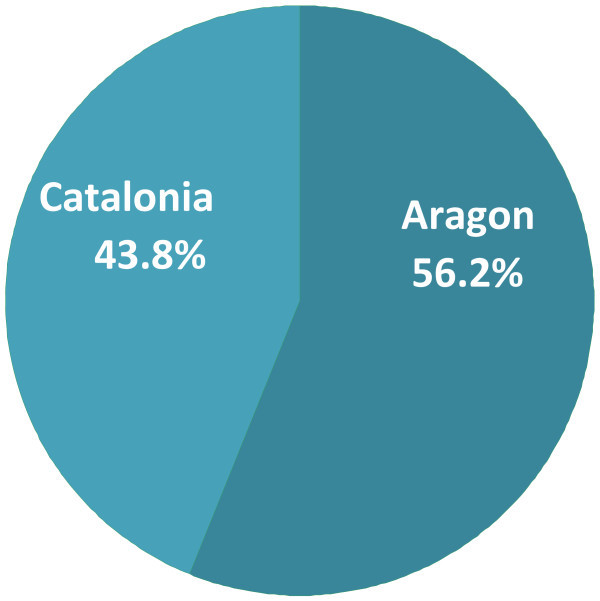
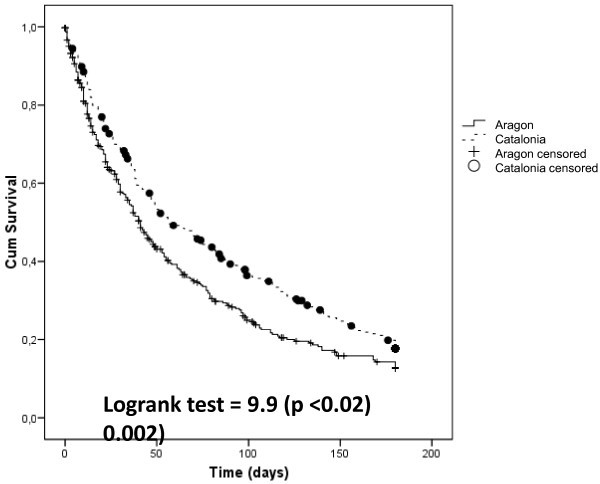
Patients attended by palliative care teams: are they always comparable populations? To answer this question we have compared the basic epidemiological characteristics of patients attended by home palliative care teams (HPCT) in two autonomous regions of Spain. We carried out a coordinated analytical, observational and prospective study in two Spanish autonomous regions: Aragon and Catalonia. Data were kept during each home care visit according to patients' needs. Inclusion criteria were: advanced cancer, over 18 years old and first contact with a HPCT. The recruitment period was 6 months. Variables included were: Survival time (days), age, sex, primary disease and extension, place of residence. Functional and cognitive state, and co-morbidity. 10 signs/symptoms: asthenia, anorexia, cachexia, dysphagia, xerostomy, dyspnoea, oedemas, level of consciousness, presence of delirium, presence of pressure ulcers and some treatment data. Others variables considered were: responsible team, origin, destination when discharge, date and place of death, number of visits made and duration of monitoring. We developed a comparison between groups by Chi-squared test or the non-parametric Mann-Whitney U test and a survival analysis by Kaplan-Meier curves and the logrank test to determine differences between factors. The SPSS version 15.0 software package was used. 698 patients were included, 56.2% from Aragon and 43.8% from Catalonia. 60.3% were males, without differences between the regions. Characteristics relative to age, sex, place of residence and extension of oncological diseases were similar for both groups. We found significant differences between the two populations relative to survival time, co-morbidity, functional state, presence and intensity of a number of symptoms and the treatments, patient monitoring and the their destination after discharge. We can conclude that palliative care teams cover different profiles of patients with regard to their co-morbidity, functional, cognitive and symptomatic states. It must be pointed that the organization of palliative care services and their experience appears to condition the profile of patients they attend. There is a need of consensus on the basic descriptors for palliative care patients in order to ensure that results will be comparable.
他们总是具有可比性的群体吗?为了回答这个问题,我们比较了西班牙两个自治区接受居家姑息治疗团队(HPCT)护理的患者的基本流行病学特征。我们在西班牙的两个自治区阿拉贡和加泰罗尼亚开展了一项协调的分析性、观察性和前瞻性研究。根据患者需求在每次居家护理访视期间记录数据。纳入标准为:晚期癌症、年龄超过18岁且首次与HPCT接触。招募期为6个月。纳入的变量包括:生存时间(天)、年龄、性别、原发疾病及扩散情况、居住地点、功能和认知状态以及合并症。10种体征/症状:乏力、厌食、恶病质、吞咽困难、口干、呼吸困难、水肿、意识水平、谵妄的存在、压疮的存在以及一些治疗数据。其他考虑的变量包括:负责的团队、来源、出院时的去向、死亡日期和地点、访视次数以及监测持续时间。我们通过卡方检验或非参数曼 - 惠特尼U检验进行组间比较,并通过卡普兰 - 迈耶曲线和对数秩检验进行生存分析以确定因素之间的差异。使用了SPSS 15.0软件包。共纳入698例患者,其中56.2%来自阿拉贡,43.8%来自加泰罗尼亚。60.3%为男性,各地区之间无差异。两组在年龄、性别、居住地点和肿瘤疾病扩散方面的特征相似。我们发现这两个人群在生存时间、合并症、功能状态、多种症状的存在及严重程度、治疗、患者监测以及出院后的去向方面存在显著差异。我们可以得出结论,姑息治疗团队在患者的合并症、功能、认知和症状状态方面涵盖了不同类型的患者。必须指出的是,姑息治疗服务的组织及其经验似乎决定了他们所护理患者的类型。为确保结果具有可比性,需要就姑息治疗患者的基本描述符达成共识。