Unit of Shoulder and Elbow Surgery, D. Cervesi Hospital, Via L. Van Beethoven 1, 47841, Cattolica, RN, Italy,
J Orthop Traumatol. 2013 Dec;14(4):283-90. doi: 10.1007/s10195-013-0242-2. Epub 2013 May 7.
Acromioclavicular (AC) dislocation involves complete loss of articular contact; it is defined as chronic when it follows conservative management or unsuccessful surgical treatment.
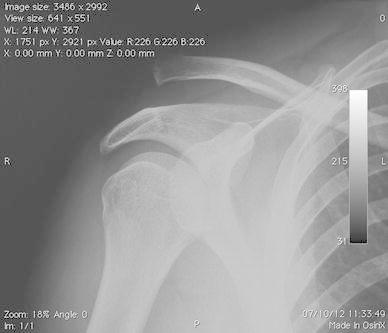
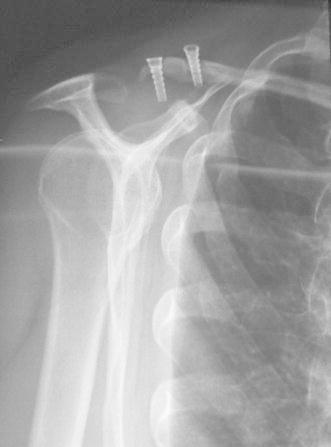
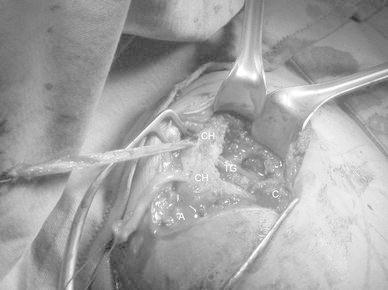
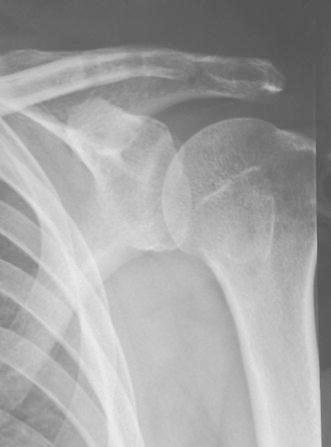
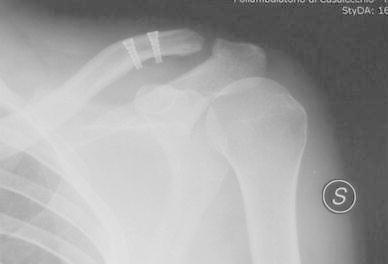
The study compared the clinical and radiographic outcomes of AC joint stabilization performed in 40 patients with chronic dislocation using a biological allograft (group A) or a synthetic ligament (group B). Demographic data included: M/F: 25/15; mean age: 35 ± 3.2 years; previous surgery in 11 patients, including Weaver-Dunn (3), coracoacromial ligament repair (4), stabilization with K-wires (4). Dislocation was type III in 14 (35 %) and type IV in 26 (65 %) patients. Clinical assessment was with the Constant-Murley score (pre- and postoperative) and with the modified UCLA score. Enrollment started in January 2004 and was completed in March 2008. Patients were evaluated at 1 and 4 years. Postoperative X-rays were examined to assess joint stability in the coronal and axial planes, coracoclavicular ossification, and signs of AC joint osteoarthritis and distal clavicular osteolysis.
The "biological" group achieved significantly better clinical scores than the "synthetic" group at both 1 and 4 years. Poor subjective satisfaction and lower clinical scores were found in the 3 patients (1 from group A and 2 from group B) who experienced complete postoperative dislocation. No significant correlations were found with other radiographic parameters.
The biological graft afforded better clinical and radiographic outcomes than the synthetic ligament in patients with chronic AC joint instability. Fixation to the clavicle constitutes the main weakness of both approaches and needs improving.
肩锁关节(AC)脱位涉及关节完全丧失接触;当它遵循保守治疗或手术治疗失败时,被定义为慢性。
本研究比较了 40 例慢性脱位患者使用生物移植物(A 组)或合成韧带(B 组)进行 AC 关节稳定化的临床和影像学结果。人口统计学数据包括:男女比例 25/15;平均年龄 35 ± 3.2 岁;11 例患者有既往手术史,包括 Weaver-Dunn(3 例)、肩锁韧带修复(4 例)、K 线固定(4 例)。脱位类型为 III 型 14 例(35%),IV 型 26 例(65%)。临床评估采用 Constant-Murley 评分(术前和术后)和改良 UCLA 评分。招募于 2004 年 1 月开始,2008 年 3 月完成。患者在 1 年和 4 年时进行评估。术后 X 线检查评估冠状面和轴面关节稳定性、肩锁关节骨化以及 AC 关节骨关节炎和锁骨远端骨溶解的迹象。
在 1 年和 4 年时,“生物”组的临床评分明显优于“合成”组。3 例患者(A 组 1 例,B 组 2 例)出现完全术后脱位,主观满意度差,临床评分低。与其他影像学参数无显著相关性。
在慢性 AC 关节不稳定患者中,生物移植物比合成韧带提供更好的临床和影像学结果。固定到锁骨是两种方法的主要弱点,需要改进。