Ludwick Teralynn, Brenner Jennifer L, Kyomuhangi Teddy, Wotton Kathryn A, Kabakyenga Jerome Kahuma
Clinical Associate Professor, University of Calgary, Alberta Children's Hospital, 2888 Shaganappi Trail NW, Calgary, AB, Canada T3B 6A8. E-mail:
Health Policy Plan. 2014 May;29(3):388-95. doi: 10.1093/heapol/czt025. Epub 2013 May 6.
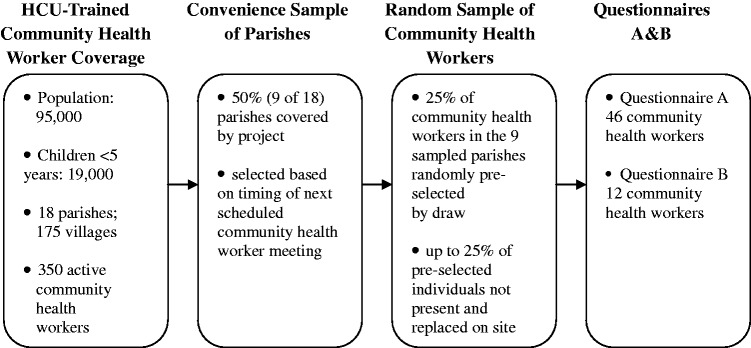
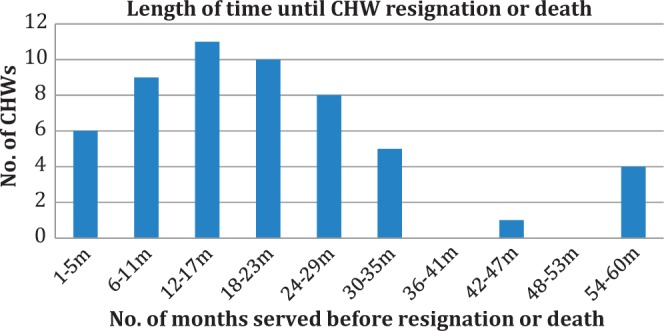
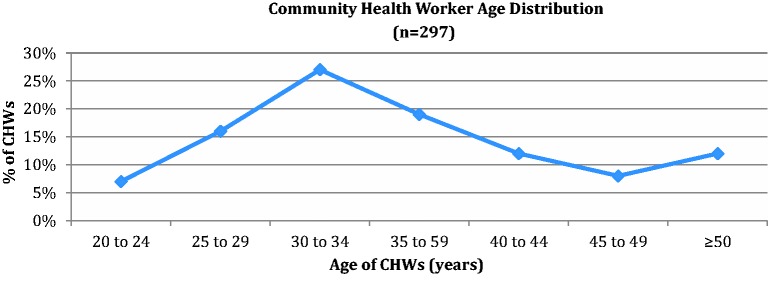
Globally, health worker shortages continue to plague developing countries. Community health workers are increasingly being promoted to extend primary health care to underserved populations. Since 2004, Healthy Child Uganda (HCU) has trained volunteer community health workers in child health promotion in rural southwest Uganda. This study analyses the retention and motivation of volunteer community health workers trained by HCU. It presents retention rates over a 5-year period and provides insight into volunteer motivation. The findings are based on a 2010 retrospective review of the community health worker registry and the results of a survey on selection and motivation. The survey was comprised of qualitative and quantitative questions and verbally administered to a convenience sample of project participants. Between February 2004 and July 2009, HCU trained 404 community health workers (69% female) in 175 villages. Volunteers had an average age of 36.7 years, 4.9 children and some primary school education. Ninety-six per cent of volunteer community health workers were retained after 1 year (389/404), 91% after 2 years (386/404) and 86% after 5 years (101/117). Of the 54 'dropouts', main reasons cited for discontinuation included 'too busy' (12), moved (11), business/employment (8), death (6) and separation/divorce (6). Of 58 questionnaire respondents, most (87%) reported having been selected at an inclusive community meeting. Pair-wise ranking was used to assess the importance of seven 'motivational factors' among respondents. Those highest ranked were 'improved child health', 'education/training' and 'being asked for advice/assistance by peers', while the modest 'transport allowance' ranked lowest. Our findings suggest that in our rural, African setting, volunteer community health workers can be retained over the medium term. Community health worker programmes should invest in community involvement in selection, quality training, supportive supervision and incentives, which may promote improved retention.
在全球范围内,卫生工作者短缺问题继续困扰着发展中国家。社区卫生工作者正日益受到重视,以便将初级卫生保健服务扩展到服务不足的人群。自2004年以来,乌干达健康儿童组织(HCU)一直在乌干达西南部农村地区培训志愿社区卫生工作者,以促进儿童健康。本研究分析了由HCU培训的志愿社区卫生工作者的留存率和积极性。它呈现了5年期间的留存率,并深入了解了志愿者的积极性。研究结果基于对2010年社区卫生工作者登记册的回顾以及一项关于选拔和积极性的调查结果。该调查包括定性和定量问题,并通过口头方式向项目参与者的便利样本进行了询问。在2004年2月至2009年7月期间,HCU在175个村庄培训了404名社区卫生工作者(69%为女性)。志愿者的平均年龄为36.7岁,平均育有4.9个孩子,且接受过一些小学教育。96%的志愿社区卫生工作者在1年后仍留在岗位(389/404),2年后为91%(386/404),5年后为86%(101/117)。在54名“退出者”中,离职的主要原因包括“太忙”(12人)、搬家(11人)、经商/就业(8人)、死亡(6人)以及分居/离婚(6人)。在58名问卷受访者中,大多数(87%)报告称是在一次包容性的社区会议上被选中的。通过两两排序来评估受访者对七个“激励因素”的重要性。排名最高的是“改善儿童健康状况”、“教育/培训”以及“被同龄人寻求建议/帮助”,而金额微薄的“交通补贴”排名最低。我们的研究结果表明,在我们非洲的农村地区,志愿社区卫生工作者能够在中期内得以留存。社区卫生工作者项目应在社区参与选拔、高质量培训、支持性监督和激励措施方面进行投入,这可能有助于提高留存率。