Janelia Farm Research Campus, Howard Hughes Medical Institute, Ashburn, Virginia United States of America.
PLoS One. 2013 May 1;8(5):e63407. doi: 10.1371/journal.pone.0063407. Print 2013.
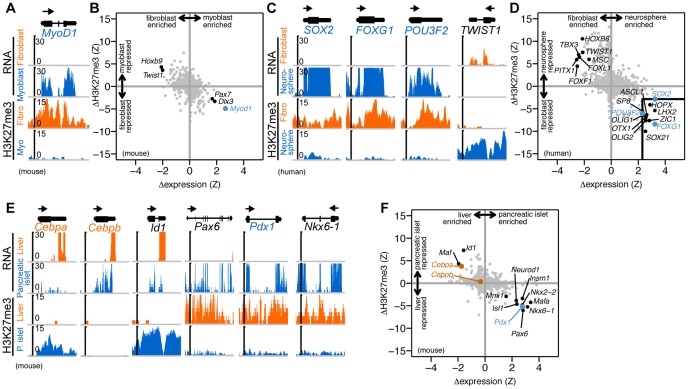
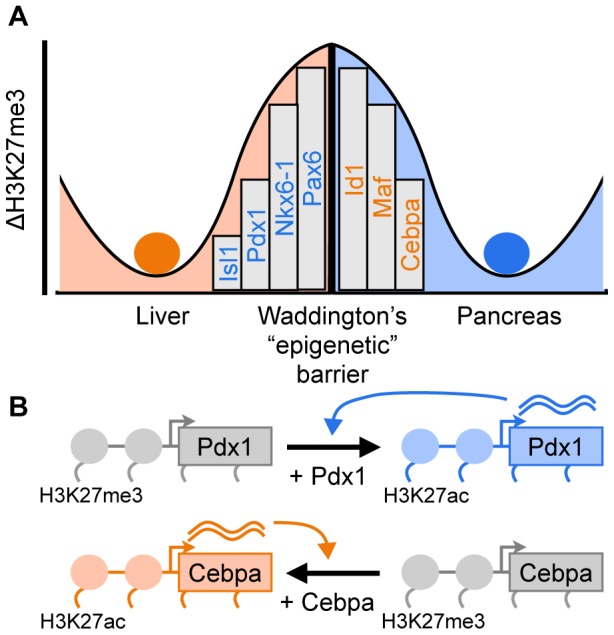
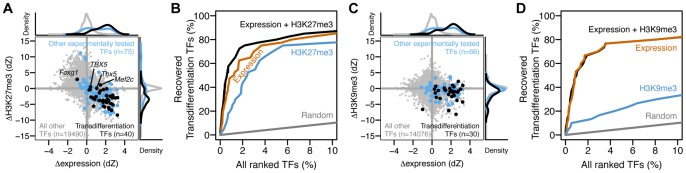
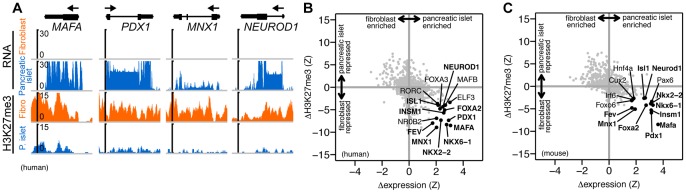
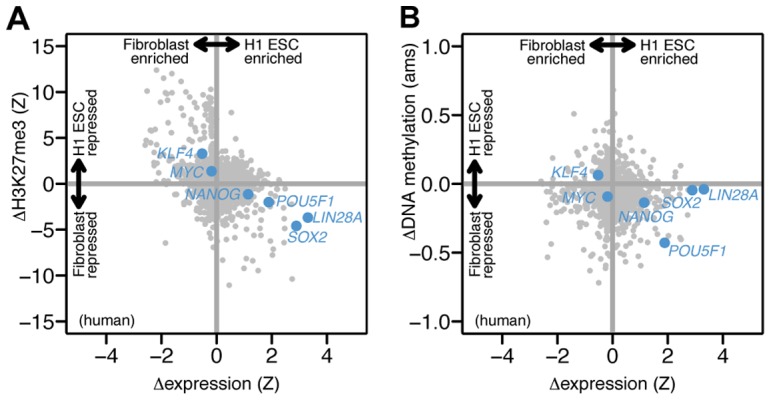
Transcription factors that can convert adult cells of one type to another are usually discovered empirically by testing factors with a known developmental role in the target cell. Here we show that standard genomic methods (RNA-seq and ChIP-seq) can help identify these factors, as most are more strongly Polycomb repressed in the source cell and more highly expressed in the target cell. This criterion is an effective genome-wide screen that significantly enriches for factors that can transdifferentiate several mammalian cell types including neural stem cells, neurons, pancreatic islets, and hepatocytes. These results suggest that barriers between adult cell types, as depicted in Waddington's "epigenetic landscape", consist in part of differentially Polycomb-repressed transcription factors. This genomic model of cell identity helps rationalize a growing number of transdifferentiation protocols and may help facilitate the engineering of cell identity for regenerative medicine.
通常通过测试在目标细胞中具有已知发育作用的因子来经验性地发现能够将一种类型的成体细胞转化为另一种类型的转录因子。在这里,我们表明标准的基因组方法(RNA-seq 和 ChIP-seq)可以帮助识别这些因子,因为大多数因子在源细胞中受到更强的多梳抑制,并且在目标细胞中表达更高。这一标准是一种有效的全基因组筛选方法,可显著富集能够转分化多种哺乳动物细胞类型的因子,包括神经干细胞、神经元、胰岛和肝细胞。这些结果表明,正如 Waddington 的“表观遗传景观”所描绘的那样,成体细胞类型之间的障碍部分由差异多梳抑制转录因子组成。这种细胞身份的基因组模型有助于合理化越来越多的转分化方案,并可能有助于促进再生医学中细胞身份的工程设计。