Computational Biology Group, CIC bioGUNE-BRTA (Basque Research and Technology Alliance), Bizkaia Technology Park, Derio, Spain.
Wyss Institute for Biologically Inspired Engineering at Harvard University, Boston, MA, USA.
Nat Commun. 2021 Mar 12;12(1):1659. doi: 10.1038/s41467-021-21801-4.
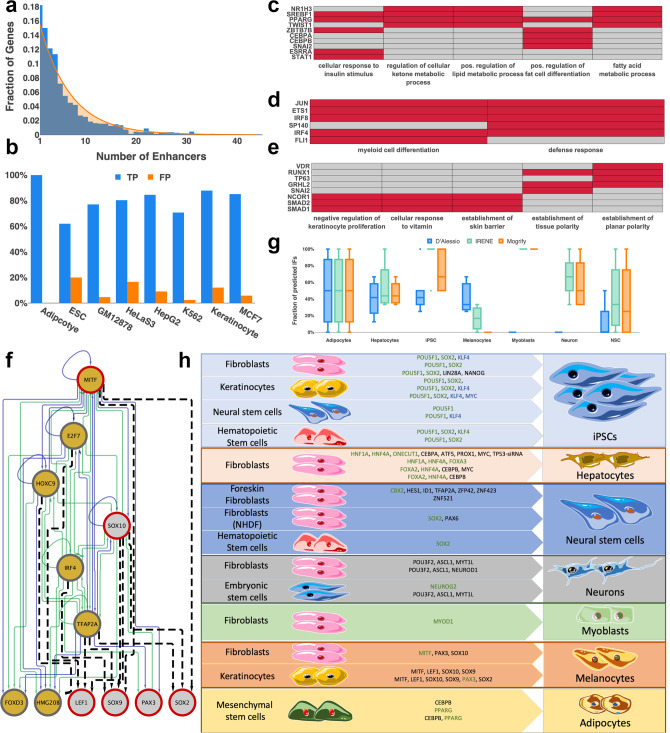
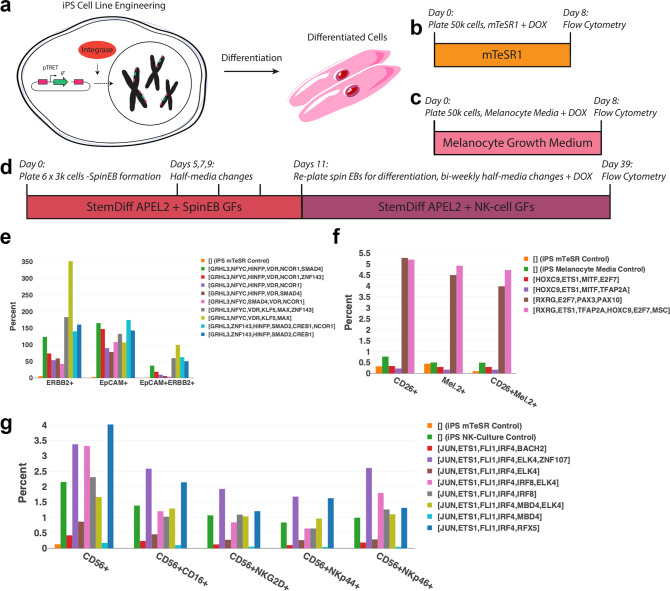
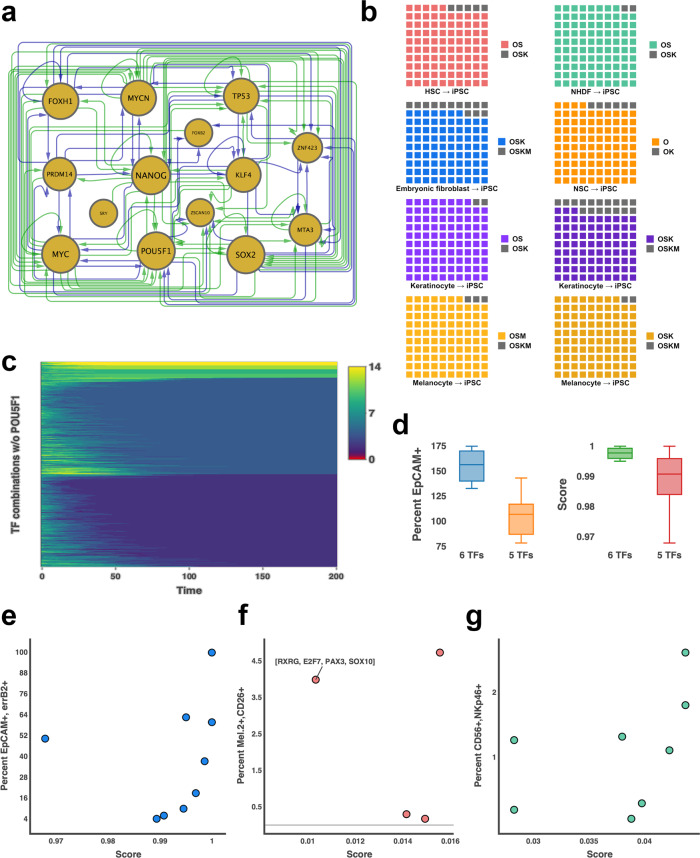
Human cell conversion technology has become an important tool for devising new cell transplantation therapies, generating disease models and testing gene therapies. However, while transcription factor over-expression-based methods have shown great promise in generating cell types in vitro, they often endure low conversion efficiency. In this context, great effort has been devoted to increasing the efficiency of current protocols and the development of computational approaches can be of great help in this endeavor. Here we introduce a computer-guided design tool that combines a computational framework for prioritizing more efficient combinations of instructive factors (IFs) of cellular conversions, called IRENE, with a transposon-based genomic integration system for efficient delivery. Particularly, IRENE relies on a stochastic gene regulatory network model that systematically prioritizes more efficient IFs by maximizing the agreement of the transcriptional and epigenetic landscapes between the converted and target cells. Our predictions substantially increased the efficiency of two established iPSC-differentiation protocols (natural killer cells and melanocytes) and established the first protocol for iPSC-derived mammary epithelial cells with high efficiency.
人类细胞转化技术已成为设计新的细胞移植疗法、生成疾病模型和测试基因疗法的重要工具。然而,尽管基于转录因子过表达的方法在体外生成细胞类型方面显示出巨大的潜力,但它们通常转化率低。在这种情况下,人们付出了巨大的努力来提高现有方案的效率,而计算方法的发展在这方面可以提供很大的帮助。在这里,我们介绍了一种计算机引导的设计工具,它将一个用于对细胞转化的指令因子(IFs)的更有效组合进行优先级排序的计算框架(称为 IRENE)与一种基于转座子的基因组整合系统结合起来,以实现高效传递。特别是,IRENE 依赖于一个随机基因调控网络模型,该模型通过最大化转化细胞和目标细胞之间的转录和表观遗传景观的一致性,系统地对更有效的 IFs 进行优先级排序。我们的预测大大提高了两种已建立的 iPSC 分化方案(自然杀伤细胞和黑色素细胞)的效率,并建立了第一个高效的 iPSC 衍生的乳腺上皮细胞方案。