Cavendish Laboratory, University of Cambridge, Madingley Road, Cambridge CB3 0HE, UK.
Nat Commun. 2013;4:1780. doi: 10.1038/ncomms2790.
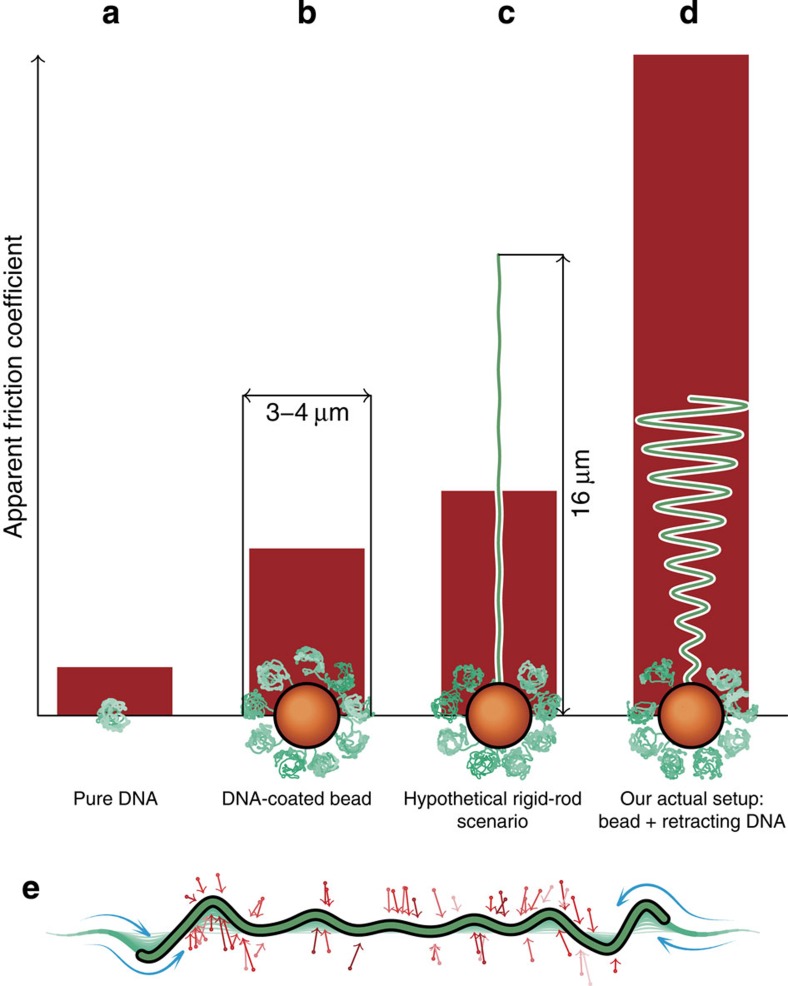
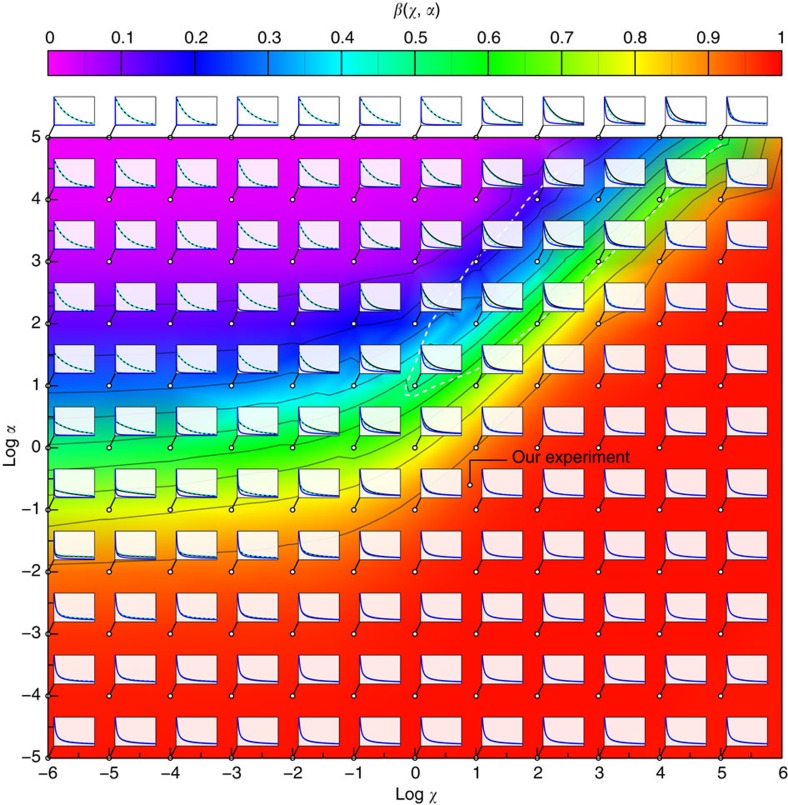
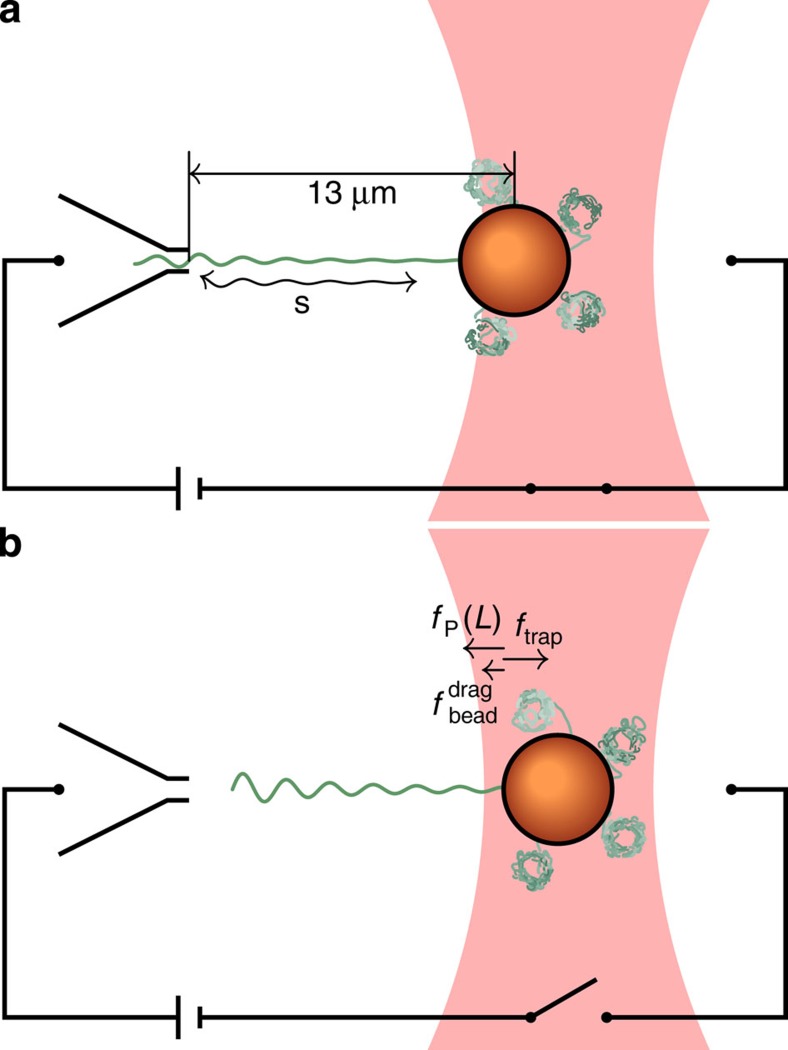
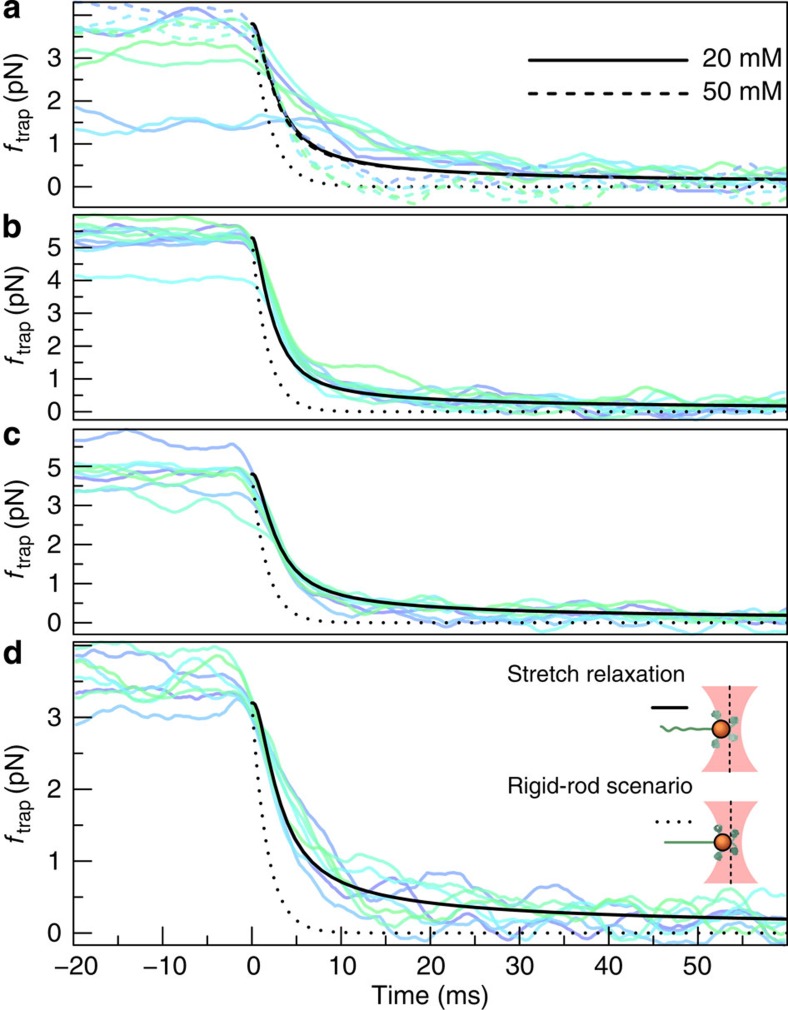
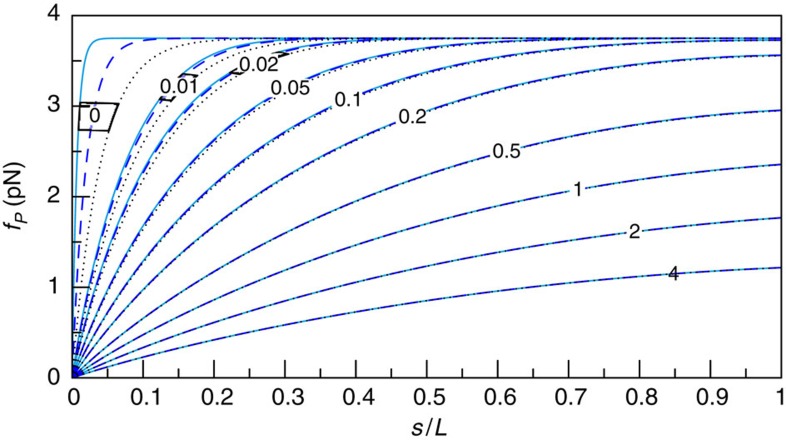
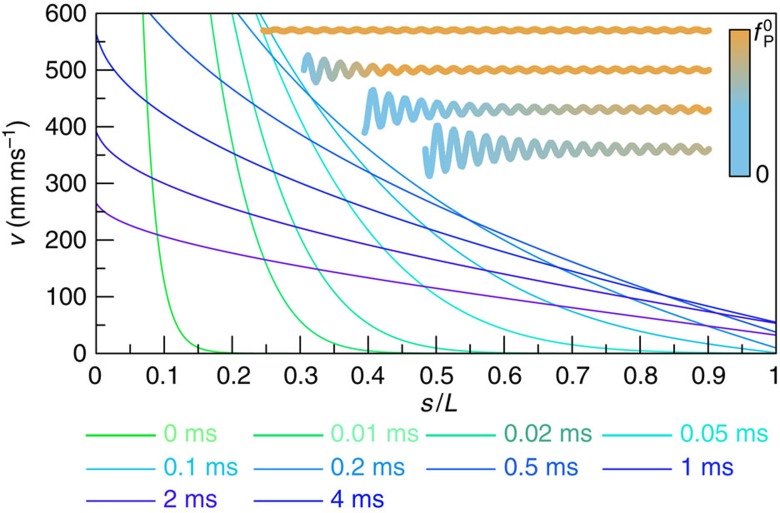
Macroscopic objects are usually manipulated by force and observed with light. On the nanoscale, however, this is often done oppositely: individual macromolecules are manipulated by light and monitored with force. This procedure, which is the basis of single-molecule force spectroscopy, has led to much of our quantitative understanding of how DNA works, and is now routinely applied to explore molecular structure and interactions, DNA-protein reactions and protein folding. Here we develop the technique further by introducing a dynamic force spectroscopy set-up for a non-invasive inspection of the tension dynamics in a taut strand of DNA. The internal contraction after a sudden release of the molecule is shown to give rise to a drastically enhanced viscous friction, as revealed by the slow relaxation of an attached colloidal tracer. Our systematic theory explains the data quantitatively and provides a powerful tool for the rational design of new dynamic force spectroscopy assays.
宏观物体通常通过力来操纵,并通过光来观察。然而,在纳米尺度上,情况往往相反:通过光来操纵单个大分子,并通过力来监测。这种方法是单分子力谱学的基础,它使我们对 DNA 如何工作有了很多定量的了解,现在已被常规应用于探索分子结构和相互作用、DNA-蛋白质反应和蛋白质折叠。在这里,我们通过引入一种动态力谱设置,进一步发展了这项技术,对紧绷 DNA 链中的张力动力学进行非侵入式检查。分子突然释放后内部的收缩导致粘性摩擦力显著增强,这一点通过附着的胶体示踪剂的缓慢松弛得以揭示。我们的系统理论对数据进行了定量解释,并为新的动态力谱分析的合理设计提供了有力工具。