CNRS, Unité Mixte de Recherche 5287, Institut de Neurosciences Cognitives et Intégratives d'Aquitaine, Université de Bordeaux Talence, France.
Front Neural Circuits. 2013 May 3;7:80. doi: 10.3389/fncir.2013.00080. eCollection 2013.
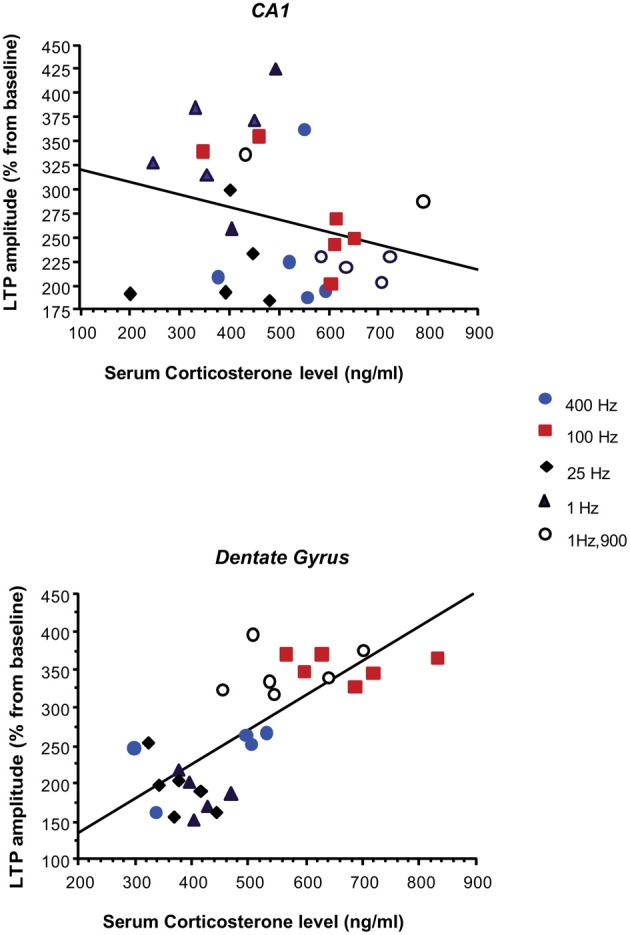
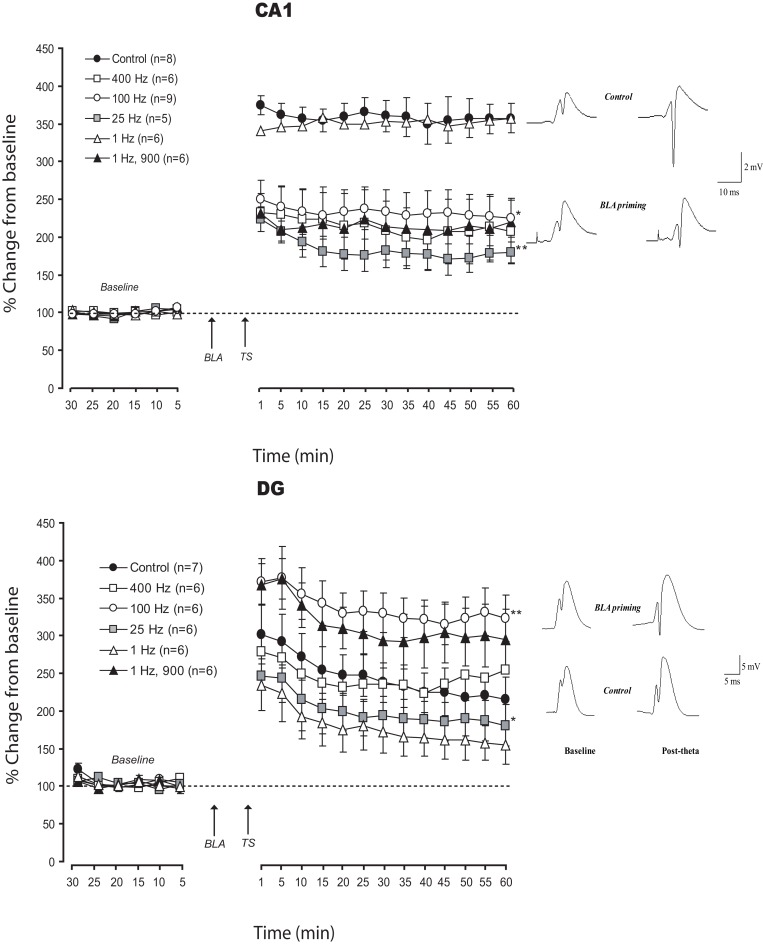
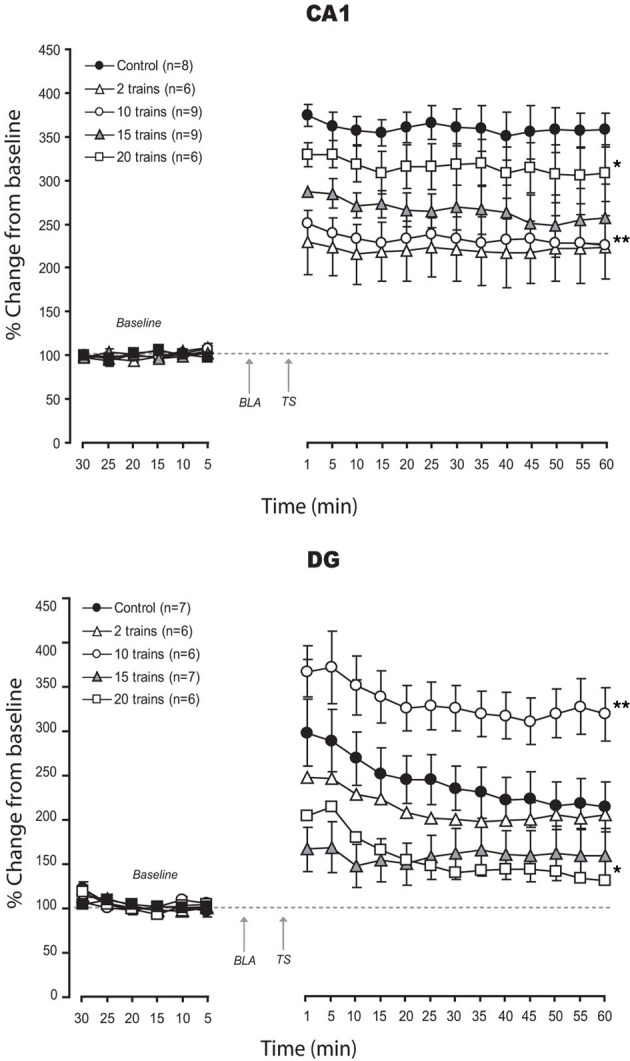
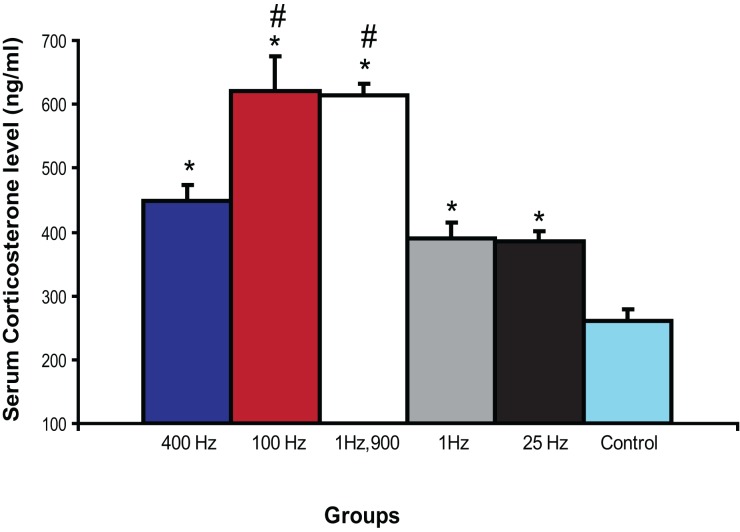
Stress-induced activation of the amygdala is involved in the modulation of memory processes in the hippocampus. However, stress effects on amygdala and memory remain complex. The activation of the basolateral amygdala (BLA) was found to modulate plasticity in other brain areas, including the hippocampus. We previously demonstrated a differential effect of BLA priming on long-term potentiation (LTP) in the CA1 and the dentate gyrus (DG). While BLA priming suppressed LTP in CA1, it was found to enhance it in the DG. However, since the amygdala itself is amenable to experience-induced plasticity it is thus conceivable that when activity within the amygdala is modified this will have impact on the way the amygdala modulates activity and plasticity in other brain areas. In the current study, we examined the effects of different patterns of BLA activation on the modulation of LTP in the DG and CA1, as well as on serum corticosterone (CORT). In CA1, BLA-priming impaired LTP induction as was reported before. In contrast, in the DG, varying BLA stimulation intensity and frequency resulted in differential effects on LTP, ranging from no effect to strong impairment or enhancement. Varying BLA stimulation patterns resulted in also differential alterations in Serum CORT, leading to higher CORT levels being positively correlated with LTP magnitude in DG but not in CA1. The results support the notion of a differential role for the DG in aspects of memory, and add to this view the possibility that DG-associated aspects of memory will be enhanced under more emotional or stressful conditions. It is interesting to think of BLA patterns of activation and the differential levels of circulating CORT as two arms of the emotional and stress response that attempt to synchronize brain activity to best meet the challenge. It is foreseeable to think of abnormal such synchronization under extreme conditions, which would lead to the development of maladaptive behavior.
应激诱导的杏仁核激活参与了海马体记忆过程的调节。然而,应激对杏仁核和记忆的影响仍然很复杂。已经发现外侧杏仁核(BLA)的激活可以调节包括海马体在内的其他大脑区域的可塑性。我们之前证明了 BLA 引发对 CA1 和齿状回(DG)中的长时程增强(LTP)的不同影响。虽然 BLA 引发抑制了 CA1 中的 LTP,但发现它增强了 DG 中的 LTP。然而,由于杏仁核本身容易受到经验诱导的可塑性的影响,因此可以想象,当杏仁核内的活动发生改变时,这将对杏仁核调节其他大脑区域的活动和可塑性的方式产生影响。在当前的研究中,我们检查了不同的 BLA 激活模式对 DG 和 CA1 中 LTP 调节的影响,以及对血清皮质酮(CORT)的影响。在 CA1 中,BLA 引发像以前报道的那样损害了 LTP 的诱导。相比之下,在 DG 中,变化的 BLA 刺激强度和频率导致了对 LTP 的不同影响,从没有影响到强烈的损害或增强。变化的 BLA 刺激模式也导致了血清 CORT 的不同改变,导致更高的 CORT 水平与 DG 中的 LTP 幅度呈正相关,但与 CA1 中无关。这些结果支持了 DG 在记忆方面的不同作用的观点,并在此基础上增加了 DG 相关记忆方面的可能性,即在更情绪化或压力大的情况下会增强。认为 BLA 激活模式和循环 CORT 的不同水平作为情绪和应激反应的两个分支,试图使大脑活动同步以最好地应对挑战,这是很有趣的。可以预见的是,在极端条件下会出现这种同步的异常,这将导致适应不良行为的发展。